| HIGH-DEF DISC NEWS TAGGED "PLASMA" | Receive High-Def Disc News via RSS |
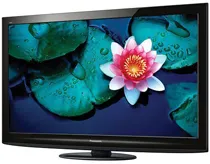
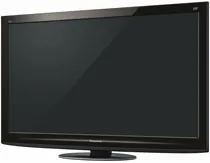
Panasonic Announces 2011 Plasma Dates and Pricing
Thu Mar 03, 2011 at 12:00 PM ETTags: Panasonic, Plasma, Price Announcement (all tags)
The company believes plasma can make a huge comeback, starting with this year's sets.
The folks over at Panasonic are big fans of plasma technology, a TV tech that's on a strong rebound after a few really rocky years. In the fourth quarter of 2010, Panasonic plasmas were up 10 percent year-to-year. That's a number that Panasonic is hoping to beat with its 2011 plasma line.
The VT30 is the high-end model of Panasonics new plasmas. It comes in 55 and 65 inch sizes with pricing at $2,799 and $4,299 respectively. In all, Panasonic is offering 12 plasmas that handle 1080p and 3D starting at a price of $1,099 for the 42 inch ST30.
Panasonic's S30 line is for those that want a 1080p resolution but don't need 3D added in to the mix. You can nab a 46 inch S30 for under $1,000 and $1,099 will get you a 50 inch set.
Those looking for the biggest sets at the lowest prices can check out the X3 line, which offers a 720p picture and a low price tag. The 42 inch X3 will retail at $599 while the 50 inch set comes in at $799.
Source: PR Newswire
See what people are saying about this story in our forums area, or check out other recent discussions.
Plasma Sales are on the Rebound
Mon Feb 07, 2011 at 02:00 PM ETTags: Plasma, Samsung, Panasonic (all tags)
Plasma shipments grew year-over-year in every quarter of 2010.
Plasma seemed all but finished just a few years ago and manufacturers quickly pulled out of the business. It looks like the retreat came too soon though, as plasma shipments are up.
According to Display Search analysts, plasma is set to make a strong rebound, going as far as saying that the limiting factor for plasma sales is supply-limited. That's a very good sign for companies still bringing plasma sets to the market.
Part of the reason for the success of plasma displays is the relative cheapness when compared to LED LCD sets. When customers can pick up a decent looking 50 inch plasma for under $1,000 all those old plasma preconceptions seem to fade away.
Panasonic, Samsung and LG all enjoyed tremendous plasma sales growth averaging nearly 30 percent. Much of that was in sizes of 50 inches and higher.
Source: TWICE
See what people are saying about this story in our forums area, or check out other recent discussions.
Samsung Roundtable – CES 2011
Fri Jan 07, 2011 at 09:30 PM ETTags: Samsung, 3D TVs, HDTVs, Plasma, CES 2011 (all tags)
I was lucky enough to be invited to sit in on a roundtable meeting with some of Samsung’s top brass along with twenty or so other press members. A lot of questions got asked and we got some great answers.
The panelists:
Kevin Lee – VP, Smart TV Partnerships
Bong-Ku Kang – SVP, Product Marketing Group
Hyo-Gun Lee – VP Software Group R&D Team
John Revie – SVP Home Entertainment
Traffic was bad and monorail lines were long so the panel got started a bit later than planned. There were a few quick introductions and then we went straight into the Q&As. Unless there are quotes around a line, it’s not a direct quote but a shorter paraphrased response. Some of these answers went on for a while.
Q: Samsung has created a new panel tech called PLS. Will that be available in consumer level televisions any time soon?
Kevin Lee: There are currently no plans to put PLS tech into consumer TVs. PLS is made for very specific product categories like medical equipment.
Q: Why not?
Kevin Lee: The requirements for medical equipment are very specific and medical companies aren’t as held back by price as normal consumers. While PLS provides wider viewing angles and a better picture, it also costs dramatically more.
Q: Other companies are going with glasses-free and passive 3D Displays but you’re sticking with active. Why is that?
Kevin Lee: Samsung’s primary concern for televisions is image quality, which is something that passive and glasses-free sets can’t provide. Glasses-free sets also offer very limited viewing angles, which works for smaller sets but not large scale ones.
Q: What is your Google TV strategy? What do consumers actually want from their connected TV?
John Revie: 60% of 2011 TVs are 3D, 70% are connected and include web-browsing. People want a variety of things, but we’ve set aside a few key features for consumers so prevent the choice from becoming overwhelming. Google set-top boxes and Blu-ray players are coming, but there are no current plans for a television with Google TV included.
Q: You’ve been talking a lot about US releases, but do you have anything exciting planned for Europe or Australia?
Kevin Lee: Apps are currently available globally, but Samsung is currently working on making more local content in other countries. The BBC iPlayer is a great example, but we’re willing to take on more partners in other countries. “We welcome any partner who can provide attractive content.”
Q: What challenges have you run into in finding content partners for your connected TVs. What concerns do they express.
Kevin Lee: Finding a winning strategy is the key. Samsung has an open platform and provides great opportunities. We’re not running into any concerns. Internet TVs aren’t a big issue with our content providers.
Q: With your LCDs as good as they are, how long until Samsung stops making Plasmas?
Kevin Lee: Production costs for plasmas keep getting cheaper, letting us deliver more screen at a lower price. Because of this, we won’t be stopping plasma production any time soon. We see it going on for another ten years.
Q: What can you tell us about Carbon Nano Tube (CNT) backlighting technology?
Bong-Ku Kang: CNT technology is currently under development, but it’s not the only tech we’re working on. With CNT there are technology limitations and cost limitations, so we have no idea if or when it will make it out. We’ve got a lot under development, so it’s impossible to tell what will come first.
Q: The new touchscreen remote for your LCD sets can play some content from the TV but not all. Why isn’t all video available?
Hyo-Gun Lee: We’re working with content providers to solve the issue, which is one of digital rights management (DRM).
Q: Are there any plans to enable the use of phones as controllers?
Hyo-Gun Lee: We see the smart controller, smart tablets and smart phones as similar devices. We will implement the same functionality in those devices.
Q: What’s your view on the passive 3D technology being implemented by companies like LG and Vizio?
Bong-Ku Kang: It can’t be sustained long term. There are many limitations including cross-talk and viewing angle that they will not be able to overcome. That’s why we’re going to be sticking with active shutter glasses. It provides a Full HD picture. “We don’t think that (passive tech) can survive forever.”
Kevin Lee: The most important thing for the customer is image quality. In the case of passive technology there is a limitation in image quality. Passive style reduces brightness more than active does and provides better picture quality. That’s why most manufacturers are sticking with active.
Q: Can our network handle a large adoption of Smart TVs? If it really takes off will we be bogged down?
Hyo-Gun Lee: Smart TV will consume more bandwidth, but so will smartphones, tablets and everything else that uses the internet. The need for a better network will either result in an upgrade or help push new technology like adaptive streaming.
Q: Won’t 4K panels be sufficient for full HD with passive technology 3D glasses?
Kevin Lee: Sure, but customers will have to pay significantly more money for a 4K panel. That’s a scenario that doesn’t seem entirely likely.
Q: It’s impossible to buy a high-end TV that isn’t 3D, so how many of those high-end televisions are actually being purchased for the 3D. Do you have any studies on the subject?
John Revie: We don’t have any specific data on that. Most people buy a TV every 5-7 years, so we believe that 3D was a factor for purchases. Maybe they’re not watching 3D yet, but they’re future-proofing themselves.
Q: Can you give us an update on Samsung’s OLED screens?
Bong-Ku Kang: OLED is currently only being mass-produced for very small screens like shoes on cell phones. Larger sizes are in the works, and while Samsung’s main focus is picture quality, price comes into account. OLED production is extremely expensive, making it impractical to produce in large sizes.
See what people are saying about this story in our forums area, or check out other recent discussions.
Plasma Sales Outgrow LCD Sales in 2010
Tue Nov 16, 2010 at 10:00 AM ETTags: Plasma, High-Def Retailing, Industry Trends (all tags)
In particular, the 720p plasma market grew incredibly well.
When money is an issue, you're forced to make a choice about your new TV. You can either sacrifice screen size for better quality and features, or get yourself a big screen with a sub-optimal resolution. The majority of American plasma buyers are choosing the latter.
The surprisingly low pricing on plasmas has sparked a huge surge in sales, increasing sales by 28 percent in the third quarter of 2010. That's impressive, but what's particularly interesting is that the buyers picking up these plasma sets didn't seem to concerned with 1080p.
According to Quixel Research, sales of 42 inch 720p plasmas were up 27 percent, while 50 inch 720p plasmas went up a massive 65 percent. "Hopefully it is clear by now that the HD 720p segment is not dead yet for larger sized TVs," says Quixel's Tamaryn Pratt.
LCD sales went down in the 40 inch range, up in the 60 inch and up 16 percent overall.
Source: TWICE
See what people are saying about this story in our forums area, or check out other recent discussions.
Consumer Reports Says Go Plasma if You Want Good 3D
Thu Nov 04, 2010 at 10:00 AM ETTags: 3D, Plasma, LG, Panasonic, Samsung, Consumer Reports, High-Def Retailing, Industry Trends (all tags)
Of all the sets tested, Panasonic plasmas came out on top.
It's been a long time since a mainstream publication has been in plasma's corner. The poor tech ended up with a lot of bad press early on, but it seems 3D may be changing all that. In the recent TV review from Consumer Reports, Panasonic was singled out as the superior tech.
The testing process used a 3D test pattern developed in-house as well as 3D Blu-rays and recorded 3D programming. While the normal issues, like black level and brightness, still came into account, it was ghosting that topped the list as a problem for 3D.
Panasonic plasmas rank at the top of the list, with LG and Samsung plasma sets follow close behind. The top LCD television was from Sony, and exhibited near plasma quality, but still had more ghosting than the three plasma sets.
Source: Consumer Reports
See what people are saying about this story in our forums area, or check out other recent discussions.
Panasonic Intros New Lower-Priced GT25 Televisions
Wed Aug 18, 2010 at 12:00 PM ETTags: 3D, Panasonic, Plasma (all tags)
The new sets bring the size and price of Panasonic plasmas down a peg.
Panasonic's VT25 plasma line is slick, but until now it's been in the large and expensive range. The smallest set came in at 54 inches and $2,999 – not a budget television by any standards. Their new GT25 series of plasmas brings the size down a touch and the price down significantly.
If you're looking for smaller and cheaper, the 42 inch TC-P42GT25 runs just $1,699. In terms of bang for the buck, the next step up seems like the way to go. The TC-P50GT25 is the new 50 inch version of the set, which comes in $900 cheaper than the 54 inch model at $2,099.
You'll still be getting much of the same functionality in the GT series as with the VT series. GT25 sets feature a 600Hz sub-field drive, a 1080p resolution, 24p playback, and access to web based sources like Netflix and Amazon as well as Skype.
Source: eCoustics
See what people are saying about this story in our forums area, or check out other recent discussions.
Samsung Launches a 50" 3D Plasma for Under $1,000
Thu Aug 12, 2010 at 02:00 PM ETTags: Samsung, Plasma, 3D (all tags)
The PN50C490 comes in at $989, making it the cheapest new 3D set.
Remember back when 3D television was first being brought to market? There was a giant to-do about the price premium you might have to pay for the privilege of owning a 3D set. Samsung just shut that argument down.
Samsung's new 50 inch plasma has an MSRP of $1,099 but is available right now on Amazon for just $989. You're not going find another new 3D television at that price, especially one that large.
The downside is that you're looking at a 720p set. Depending on who you ask, the change in resolution from 720p to 1080p doesn't really matter when you're watching 3D. For two dimensional pictures though, it's pretty noticeable at the size.
If you're looking for 1080p, Samsung's new PNC50C680 comes in at around $1,500, while the 58 inch PN58C680 sells for $2,300.
There's no official date on these sets yet, but Samsung says to expect a release sometime later this month.
Source: Amazon
See what people are saying about this story in our forums area, or check out other recent discussions.
Panasonic Launches a 152 Inch 4K2K Plasma
Thu Jun 10, 2010 at 10:00 AM ETTags: Panasonic, 4K2K, Plasma (all tags)
It's meant for commercial markets of course, but admit it, this is just plain cool.
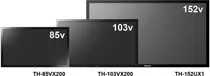
There are three new plasmas that are shipping from Panasonic later this year, but 85 and 103 inch sets just don't excite folks the way they used to. They're the desires of years gone by. But 152 inches, that's a number we can get behind.
And if a 152 inch plasma isn't enough to get you going, keep in mind that Panasonic's display is 3D capable. Still not enough? How about a 4,096 x 2,160 resolution? That's right, it's a massive screen that can do 3D, and it's got a resolution that's over four times that of 1080p.
According to Panasonic's site, the TH-152UX1 weighs in at about 1,300 pounds, so if you want it, you'll have to consider the cost of a crew to move it. Oh, and you'll be shelling out for electricity too. The TH-152UX1 sucks down 4,500 watts.
Source: Panasonic Japan (via Google Translate)
See what people are saying about this story in our forums area, or check out other recent discussions.
Samsung's 3D Plasmas Available Now
Fri May 21, 2010 at 12:00 PM ETTags: Samsung, 3D, Plasma (all tags)
LCDs not your style? Not a fan of Panasonic? Not to worry!
Samsung's 3D plasma sets have finally made it to store shelves. That's welcome news, especially if you like a little choice when it comes to your plasma purchases.
Both the 7000 and 8000 series plasmas offer 3D capability and extras like Internet@TV that let you access social media and video streaming services. They've got 1080p resolutions, an ultra-thin design and an increase in energy efficiency over last year's models.
If you pick up one of Samsung's plasmas in conjuction with a Samsung Blu-ray Player, you'll be able to pick up the 3D Starter kit – which contains a 3D Blu-ray version of 'Monsters vs. Aliens' and two pairs of 3D glasses – for free.
The 7000 series starts with a 50 inch set and an MSRP of $1,999. You can snag it on Amazon for a mere $1,648. The 50 inch 8000, which adds motion judder canceling and Samsungs' Real Black Filter can be had at a list price of $2,299 and a current Amazon sale price of $2067.
Source: Amazon
See what people are saying about this story in our forums area, or check out other recent discussions.
- Discs mentioned in this article: (Click for specs and reviews)
- Monsters vs. Aliens (Blu-ray)
Pioneer Outlines Future Strategies “Post Plasma”
Wed Aug 19, 2009 at 10:00 AM ETTags: Plasma, Pioneer, Industry Trends (all tags)
Surviving without Plasma will mean stressing A/V expertise.
Pioneer has a long road ahead of it, and as a part of the recently announced restructuring plans, that’s a road devoid of plasma televisions. In a conversation with Twice, Russ Johnston said that the company’s core philosophy won’t change. Pioneer will still be “focused on engineering excellence and a maniacal commitment to create the best possible home-theater experiences.”
After spending time researching the competition’s brand messages, marketing, and of course benchmarking their products, Pioneer has come forward with a three pronged process to ensure their place in the future of home entertainment.
To start, Pioneer will be reminding customers of the quality of their offerings. After significant benchmarking, the company found, in the words of Russ Johnston, “our products stood on their own and stood out as leadership products.” In the past, he and others felt that the company lost sight of that on many of their products due to their focus on displays.
Pioneer will be stressing its relationship with professionals, including musicians, movie producers, and production houses. They’ll also be focusing on their work with London’s Air Studios and THX, to explain and stress the importance of certification from both.
Lastly, Pioneer will focus on the balance of their product line. While some companies may make excellent displays, they might also make terrible speakers. Pioneer wants consumers to know that they do it all and they do it all well.
Pioneer isn’t dropping quality, nor are they making themselves more commonplace. “The current economy put a lot of pressure on companies” said Johnston, “They put custom-installation lines online, and others are in or will be in retailers they've never been in before.” Pioneer on the other hand, won’t be expanding distribution, and the Pioneer Elite line will remain a non-internet brand.
See what people are saying about this story in our forums area, or check out other recent discussions.