-
 Auton’s Dream Machine Hides a TV Under Your Bed[teaser]No space for that bedroom set? Think again. [/teaser] Let’s face it, no matter how cool it would be to have a TV at the foot of your bed it comes off as a bit juvenile. Like living in a basement or painting your walls black, there are some things that just seem cooler when you’re young. Auton, the leader of the TV lift market, has a solution that lets you keep your TV and the grown-up bedroom look. The Dream Machine is a motorized device that hides under your bed. With the push of a button, the Dream Machine slides your TV out from under the bed and rotates it up to a normal viewing angle. It can handle a TV of up to 120lbs and the only limit on size appears to be what can fit under your bed. Of course, home automation doesn’t come cheap. Sliding television solutions are a pretty expensive undertaking, and the Dream Machine is no exception. Pricing starts at $13,999 and goes on up to $22,999. Yes, that comma’s in the right place; the device that slides a TV from under your bed runs as much as twenty three thousand dollars. Source: AutonPosted Mon Apr 19, 2010 at 09:00 AM PDT by:
 -
 'Percy Jackson & the Olympians: The Lightning Thief' Blu-ray Detailed[teaser]The fantasy adventure bound for Blu-ray in June has now been fully detailed. [/teaser] As previously reported, 20th Century Fox is preparing 'Percy Jackson & the Olympians: The Lightning Thief' for a Blu-ray release on June 22. The Blu-ray/DVD/Digital Copy combo pack will feature 1080p video, a DTS-HD Master Audio 5.1 soundtrack, and supplements include: 5 Deleted Scenes, Discover Your Powers Quiz, and The Book Comes to Life. Exclusive to the Blu-ray will be 5 More Deleted Scenes, Secrets of the Gods, Inside Camp Half-Blood, On Set with Brandon T. Jackson, Meet the Demigods, Composing for the Gods: and A Conversation with Christophe Beck. Suggested list price for the Blu-ray has been set at $39.99. You can find the latest specs for 'Percy Jackson & the Olympians: The Lightning Thief' linked from our Blu-ray Release Schedule, where it's indexed under June 22.Posted Mon Apr 19, 2010 at 08:00 AM PDT by:
 -
 Netflix Adds Closed Captioning to PC Streaming[teaser]Coming to other devices this fall, along with 5.1 audio. [/teaser] As great as Netflix streaming is, there’s a lot that it just can’t do. Obviously, Netflix titles lack DVD extras, commentary tracks and additional languages, but subtitles are finally an option. The rollout has just begun, so all titles aren’t yet available with subtitles. In fact, only 100 titles are currently closed captioned. It’s not a lot, but Netflix is working to fill the library. If you want to check it out for yourself, seasons 1-4 of Lost all sport the new feature. It’s simple enough to enable. The closed caption button sits right next to the full screen button, and a simple toggle kicks it on and off. It might not be a big deal to most viewers, but adding closed captioning will be a boon to viewers with hearing disabilities. It’s only on PC for now. According to Neil Hunt on the official Netflix blog, “We have similar technology working in the lab for some of our game console, Blu-ray, and DTV platforms, which will roll out in releases starting this fall, along with support for 5.1 audio.” Source: Netflix BlogPosted Mon Apr 19, 2010 at 07:00 AM PDT by:
 -
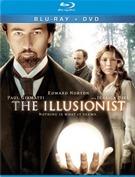 'The Illusionist' Materializes on Blu-ray[teaser]The magical mystery/romance often compared to Christopher Nolan's 'The Prestige' is finally getting a domestic Blu-ray release in June. [/teaser] In an early announcement to retailers, 20th Century Fox is bringing the catalog title 'The Illusionist' starring Edward Norton, Jessica Biel, and Paul Giamatti to Blu-ray on June 8. The movie was previously available on the format as imports from Italy and Canada. The Blu-ray will feature 1080p video, a DTS-HD Master Audio 5.1 soundtrack, and although supplements still have to be revealed, this release will be a Blu-ray/DVD combo pack. Suggested list price for the Blu-ray is $24.99. You can find the latest specs for 'The Illusionist' linked from our Blu-ray Release Schedule, where it's indexed under June 8.Posted Mon Apr 19, 2010 at 06:00 AM PDT by:
 -
 HD Advisor 54, Where Are You?Editor's Note: Each Friday, High-Def Digest's own HD Advisor will answer a new round of questions from our readers. If you have home theater questions you need answered, send an email to [email protected]. If you've already sent a question and don't see it answered yet, please be patient as we work our way through them. To browse through previously answered questions, visit the main HD Advisor page. Answers by Joshua Zyber D-BOX Motion Code Q: Will D-BOX ever become affordable to the average consumer? A: For those unfamiliar with it, D-BOX is a motion effect simulator that works by vibrating and jostling your seat in sync with the movie you're watching. The movements are programmed to be specific to each movie. For example, if you watch a car chase and the character takes a sharp turn, your chair will lean in the appropriate direction to follow the action. To use this, you must have a piece of D-BOX equipped furniture, and a motion control box connected to your Blu-ray player. Some Blu-ray titles have the necessary motion codes embedded on the disc. For other movies, you may need to download the codes first. How much enjoyment you get out of this is largely a matter of personal preference. Some viewers will find it very gimmicky. When overdone, the furniture movements may feel too much like an amusement park ride. This may be more appropriate for some types of movies than others. D-BOX is expensive, especially if you buy furniture with the motion hardware pre-installed. The company also sells standalone platform devices that can be mounted to existing furniture, but they aren't exactly cheap either. The platforms need to be large and sturdy enough to move your seat in a variety of specific directions. Remember also that when you buy D-BOX, you're paying not only for the hardware, but also for the programmers who watch each movie and create the motion codes specific to each scene. Personally, I find D-BOX to be overkill. You can get about 90% of the same effect with a tactile transducer, such as this Aura Bass Shaker available for $44.50 from Parts Express. The Bass Shaker is small, affordable, and easy to mount on any piece of furniture. The Bass Shaker can be connected by wiring out from the speaker terminals on your A/V receiver, but that's not necessarily the most effective method. I recommend connecting the subwoofer output on the receiver to a small amp. (I use the Dayton SA100, which sells for just over $100.) Then connect the Bass Shaker to the amp with speaker wire. Doing it this way offers more control over the amount of power and vibration you get from the transducer. Of course, you may already have a real subwoofer connected to the receiver's subwoofer output. If necessary, a simple coax Y-adaptor will work fine. Send one cable to your subwoofer and the other to the transducer amp. Tactile transducers vibrate during bass activity in the movie soundtrack. This is not scene specific, and will not move your chair in a variety of directions like D-BOX. But, in all honesty, you get a lot of the same experience for a fraction of the price. And they work on any movie at all, not just those that have been explicitly programmed for it. Letterbox vs. Windowbox Q: I bought 'Paprika' on Blu-ray, and noticed that the image was letterboxed on all four sides. A bit of research showed that the actual resolution was 1824x992. And that this is not the only anime with this problem. 'Jin-Roh: The Wolf Brigade' supposedly has the same issue. Why is this? A: What you describe is called "windowboxing" or sometimes "pictureboxing." ("Windowboxing" is more generally accepted.) The appearance of black bars around a video image can be categorized as follows: Letterboxing = Black bars above and below the movie picture. Pillarboxing = Bars on the sides of the picture. (Ex. 'Casablanca'.) Windowboxing = Bars on all four sides. The intent of windowboxing is to counter the effects of television overscan, which I've written about previously. Shrinking the movie picture down a bit ensures that every part of the image will be visible to the viewer, despite any overscan his or her TV may apply. This concept is popular among some major anime studios, who reason that their animation is very cluttered with detail around the edges that needs to be seen. Even the venerable Criterion Collection went through a phase where they windowboxed some of their DVD transfers. (Fortunately, Criterion stopped doing that in time for Blu-ray.) The windowbox process was developed with good intentions. However, in today's HDTV age, it's really just a needless nuisance. Many digital televisions offer a "Dot by Dot" or "Native" viewing mode that will disable overscan (sometimes only on HD input signals, though). When watched that way, a windowboxed disc like 'Paprika' shows a smaller picture with pointless bars around all four sides of the frame. This can be very distracting. If you're able to, you may want to turn your television's overscan back on for just that movie. Be sure to turn it off again afterwards, of course. Ideally, a high-def transfer should present the movie in its best possible quality, assuming an optimal playback display. When studios try to manipulate a transfer in expectation of sub-optimal display, they only succeed in reducing its quality for viewers with better equipment. Video Processors Q: For those outputting to a native 1080p display, is there any noticeable improvement to picture quality by adding an outboard video processor/scaler to the mix? Popular opinion suggests that the dedicated nature of such a unit (I'm thinking specifically of the DVDO products) might yield superior image quality. I am using a Denon 2500BTCI and a Yamaha RXV-1900 receiver, connected to a Panasonic PTAE-3000U 1080p LCD projector. A: Full disclosure: I'm a long-time DVDO owner, and currently use the VP50PRO processor in my playback chain. (I'm a bit disgruntled with the company at the moment, and have considered trading out to competitor Lumagen. But that's a story for another day.) I personally find a lot of benefit in a good video processor. However, with all the advances in A/V equipment over the last few years, this is very much a niche product that most viewers won't need. Video processors have evolved over the years from the early "line doublers" (which merely deinterlaced a standard-def 480i signal to 480p) to add source switching, resolution scaling, aspect ratio control, and other adjustments to the video signal. As recently as just a few years ago, most HDTVs were built with cheap and poor-quality scaling chips that would do a lousy job upconverting a standard-def signal for display on their screens. Even progressive scan and upconverting DVD players varied wildly in quality. A good standalone video processor could ensure that all signal sources were accurately deinterlaced and cleanly scaled to the screen's native resolution with a minimum of artifacts. We've come a long way in a short amount of time, though. Blu-ray discs encoded with native 1080p content need no deinterlacing or scaling for display on a 1080p screen. They're generally best-served with the simplest, least-tampered signal transmission. For those sources that do still require processing (such as DVDs or TV broadcasts), today's HDTVs and home theater projectors often have high quality scaling chips installed to do the job. And if your display doesn't, chances are that your Blu-ray player or A/V receiver might. By and large, there isn't much need for standalone video processors anymore. Most of the companies that built their reputations with VP products have now switched business strategies to focus on licensing their chips to the manufacturers of those other products. For example, I found thisPosted Fri Apr 16, 2010 at 11:00 AM PDT by:
 -
 Optoma Releases Projectors for Gamers[teaser]The new line of GameTime projectors is affordable, capable, and portable. [/teaser] Projectors are great for movies, and depending on your arrangement, they can be even better for games. Especially if you’re on the move a lot. Optoma’s new line of GameTime projectors was designed with that in mind. Despite the name, the GT360 was created with Wii players in mind. It’s the entry level GameTime projector, but it’s more than enough for the Wii. It’s got an 800 x 600 resolution, and supports input resolutions of up to 1080p. You’ll be able to pick it up for $599. The GT720 was designed to work with high definition consoles. Its 1280 x 800 widescreen resolution will handle a 720p signal with ease, but you won’t be getting full 1080p. Like the GT360, it’s got twin 5-watt speakers for audio. It’s the highest priced of the GameTime series at $799. Falling somewhere between the two is the GT700. It’s got the same resolution as the 720, but sacrifices a bit when it comes to brightness. It boasts 2300 lumens, rather than the 2500 of the others, and a contrast ratio of 2,500:1. It’s also a bit cheaper, at $749. Source: OptomaPosted Fri Apr 16, 2010 at 10:45 AM PDT by:
 -
 Tim Burton's 'Alice in Wonderland' Dated and Detailed for Blu-ray[teaser]Take a twisted journey down the rabbit hole in high-definition this June! [/teaser] Disney/Buena Vista has just officially announced 'Alice in Wonderland' for Blu-ray on June 1. The film’s opening weekend made 'Alice in Wonderland' the highest-grossing non-sequel opening weekend in history, the biggest March opening of all time, the biggest 3D opening of all time, and the biggest IMAX opening of all time. The release will be available in a single Blu-ray edition or a Blu-ray/DVD combo pack with 1080p video, a DTS-HD Master Audio 5.1 soundtrack, and a ton of supplements. Those shared with the DVD release include: Finding Alice – It’s all things Alice. This featurette includes Tim Burton’s vision for the characters, differences from the book and Disney’s version of Alice and how she evolves as both a character and actor as she takes an adventure through Wonderland. The Mad Hatter – Audiences are provided with a deeper look into the world of the Mad Hatter. Check out Johnny Depp’s early sketches, make-up, costumes and how they digitally enhanced his eyes. Effecting Wonderland – A behind-the-scenes piece on the different technologies used to create some of the most beloved characters in the film – Stayne, Tweedledee, Tweedledum, Bandersnatch and the Red Queen. Blu-ray exclusives will include: The Futterwacken Dance – Futterwhat? Check out the making of the timeless dance called the Futterwacken. The Red Queen – The creation of the Red Queen from start to finish, including early Tim Burton sketches showcasing costume designs, make-up and digital effects. Time-Lapse: Sculpting the Red Queen – A short time-lapse piece showing Helena Bonham Carter as she gets her make-up done. A three-hour process can be watched in just a few short minutes. The White Queen – An interview with Anne Hathaway, who plays Wonderland’s good queen, about her character’s journey throughout the process of the film. Scoring Wonderland – Composer Danny Elfman and Tim Burton discuss the music for the movie. Stunts of Wonderland – A featurette highlighting some of the biggest stunts in the film. Making the Proper Size – An inside look at the visual effects process of growing and shrinking Alice. See how filmmakers used different techniques to stay true to the storyline. Cakes of Wonderland – Take a trip to “Cake Divas” where the creators of the EAT ME cakes provide viewers with details about how they made the smallest crumb to the largest cake in scale. Tea Party Props – Tea cups, saucers, cakes and more. Prop master Doug Harlocker gives an overview of all the props used to bring the famous tea party scene together visually. Here's a peek at the packaging: Suggested list price for the Blu-ray is $39.99 and $44.99 (combo pack). You can find the latest specs for both editions of 'Alice in Wonderland' linked from our Blu-ray Release Schedule, where they are indexed under June 1.Posted Fri Apr 16, 2010 at 10:05 AM PDT by:
 -
 'The Secret of the Grain' Announced and Detailed for Blu-ray[teaser]The winner of four César awards including best picture and director is receiving the Criterion Blu-ray treatment this July. [/teaser] The Criterion Collection is working on Abdellatif Kechiche’s 'The Secret of the Grain' for high-definition release on July 27. The Blu-ray will feature 1080p video, Arabic/French DTS-HD Master Audio soundtracks, and supplements will include: New video interview with Kechiche; Sueur, Kechiche's captivating extended version of the film's climactic belly dancing sequence, featuring a new introduction by the director; New video interview with film scholar Ludovic Cortade; Excerpt from a 20 heures télévision interview with Kechiche and actress Hafsia Herzi; Video interviews with Herzi, actress Bouraouïa Marzouk, and the film's musicians; Theatrical trailer; and a booklet featuring a new essay by film critic Wesley Morris. Suggested list price for the Blu-ray is $39.95. You can find the latest specs for 'The Secret of the Grain' linked from our Blu-ray Release Schedule, where it is indexed under July 27.Posted Fri Apr 16, 2010 at 10:00 AM PDT by:
 -
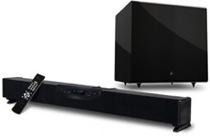 Aperion’s SLIMstage30 Soundbar is Simple but Customizable[teaser]And as the name implies, it’s nice and thin to match your wall mounted HDTV. [/teaser] Sound bars have, in the past, mainly been marketed to the same crowd that picks up HTiBs. They’re usually pretty simple and don’t offer much in the way of options. Plug in the soundbar and you’re done. It just sort of takes over. Aperion’s new SLIMstage30 gives you a bit more. “Audio enthusiasts also want the ability to 'tweak' the system for optimal sound in their home,” says marketing VP Ed de la Fuente. “After giving them an accurate starting point, we made sure to include that functionality as well” For starters, the SLIMstage30 isn’t just limited to one input. It can accept standard RCA cables as well as digital coax and digital optical signals. It’s also got outputs for rear speakers and a subwoofer, in case you want to expand your sound. You can pick up the SLIMstage30 for $599 on its own, or paired up with the Aperion Bravus 8A Subwooferfor $799. Source: AperionPosted Fri Apr 16, 2010 at 09:00 AM PDT by:
 -
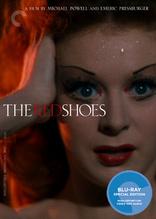 Blu-ray to Wear 'The Red Shoes'[teaser]The enthralling ballerina spectacle featuring Oscar-winning sets and music will slip a tutu on Blu-ray this summer. [/teaser] The Criterion Collection has just announced Michael Powell and Emeric Pressburger's 'The Red Shoes' starring Moira Shearer for high-definition on July 20. The Blu-ray release will feature 1080p video, an English LPCM mono soundtrack, and supplements will include: Audio commentary by film historian Ian Christie, featuring interviews with stars Marius Goring and Moira Shearer, cinematographer Jack Cardiff, composer Brian Easdale, and filmmaker Martin Scorsese; Introductory restoration demonstration with Scorsese; Profile of "The Red Shoes" (2000), a 25-minute documentary; Video interview with Thelma Schoonmaker Powell, Michael Powell's widow; Gallery from Scorsese's collection of The Red Shoes memorabilia; The "Red Shoes" Sketches, an animated film made from Hein Heckroth's painted storyboards; Readings by actor Jeremy Irons of excerpts from Powell and Pressburger's novelization of The Red Shoes and the original Hans Christian Andersen fairy tale; Theatrical trailer; and a booklet featuring an essay by Ian Christie. Suggested list price for the Blu-ray is $39.95. You can find the latest specs for 'The Red Shoes' linked from our Blu-ray Release Schedule, where it is indexed under July 20.Posted Fri Apr 16, 2010 at 08:00 AM PDT by: