-
 HD Advisor '67: The Summer of Love. Far Out, Man!Editor's Note: Each Friday, High-Def Digest's own HD Advisor will answer a new round of questions from our readers. If you have home theater questions you need answered, send an email to [email protected]. If you've already sent a question and don't see it answered yet, please be patient as we work our way through them. To browse through previously answered questions, visit the main HD Advisor page. Answers by Joshua Zyber Dolby ProLogic II vs. DTS Neo:6 Q: Since the last HD Advisor column dealt with surround formats, I thought I would keep it in the same vein: What has your experience been with Dolby ProLogic II Cinema vs. DTS NEO:6 Cinema? Do you have a preference? There are still several movies on premium cable channels that are in HD but only output in digital stereo. A: As I mentioned in last week's column, Dolby ProLogic II is an audio decoding process that will take a 2-channel sound signal and convert it to multi-channel format through the use of matrixing techniques. Specifically, ProLogic II will convert a 2-channel signal to 5.1 channels. ProLogic IIx will convert up to 7.1 channels, and the new ProLogic IIz will add height channels on top of that (for a 9.1 configuration). But Dolby isn't the only company that offers this feature. Competing programs are built into most A/V receivers on the market. As you mention, one of the most ubiquitous and notable is DTS Neo:6. Another common alternative is SRS Circle Surround II. In essence, these products do the same thing as ProLogic II. They convert a 2-channel audio signal to multi-channel format. (DTS Neo:6 can convert to 6.1 configuration.) However, each program uses unique algorithms that will deliver different results in regard to how directional steering is handled. For example, ProLogic II sends all movie dialogue to the front center channel, and has a centered focus for sound effects that aren't specifically mixed with steering cues. DTS Neo:6 tends to spread the sounds out a bit more. Which is considered "better" than another is largely a matter of subjective preference. If your receiver offers more than one, try them all and see which you like. My own Denon receiver includes Dolby ProLogic IIx and DTS Neo:6. I've tested them, and came to the conclusion that I personally prefer ProLogic IIx. Its steering sounds the most natural and organic to me, while Neo:6 sounds a little forced and artificial. Your mileage may vary. Also in Dolby's favor is the fact that ProLogic IIx can be applied to any audio input signal at all, from 2 channels to 7.1. It works on any audio codec, whether Dolby, DTS, or raw PCM. This makes it ideal to leave set as a default. I know that whatever audio source I feed into the receiver, ProLogic IIx will take care of it and deliver results to my liking, without needing me to manually adjust any settings. Neo:6, on the other hand, only works with 2-channel sources. Blu-ray Disc Space Usage Q: I've been looking at disc space usage of various films, and it seems many Blu-ray discs are authored with a lot of space left unused on the disc. Would it not be better to encode the film and features at a higher bit rate and make use of this unused space? Is there a reason why this isn't done? A: Oh, how I wish that Blu-ray players were never built with bit rate meters, Blu-ray software in computers didn't display these stats, and people would stop obsessing over things like bit rate or space usage! Yes, boiled down to its absolute most basic and simplistic concept, more disc space used means less compression used, and less compression is theoretically better than more compression. However, the real world factors that come into play during movie encoding and disc authoring are much more complex than that. As I argued in my Specs vs. Reality article a couple years ago, bit rate and disc storage are just numbers on a screen. They tell you nothing about how a movie actually looks or sounds during playback. The AVC/MPEG-4 and VC-1 codecs used for Blu-ray video are incredibly efficient compression formats. They're specifically designed to maintain high visual fidelity even at low bit rates. Further, the number of bits needed for any given scene in any given movie will vary wildly depending on the complexity of the visual content in each frame. The skill of the compressionist and the quality of the work is always more important than the bit rate used, which is little more than an arbitrary number. It tells you nothing about the video or what was needed to compress it. No, this doesn't mean that I think all Blu-rays are encoded flawlessly. That isn't the case at all. Studios have been known to let sloppy work slip through. However, we must judge the quality of each disc based on how it actually looks, not based on how many bits the file uses. It's equally possible to create a lousy video image with a high bit rate, or a great image with a low bit rate. Both have been done many times over on Blu-ray already. Watching the bit rate stats go up and down simply isn't an accurate measure of picture quality. In other words, watch the movie, not the bit rate meter. As for why a studio would want to compress a movie down to a smaller file size when the disc has extra space left over, you must consider that the studio may plan to use the file for other purposes than just Blu-ray, such as digital downloads. A smaller file size may be needed for that, and it's less expensive for the studio to encode the movie once for multiple purposes than to encode it separately for each use. Does this excuse a studio from using a sub-standard encode with visible compression errors on a Blu-ray disc? Not at all. I just want people to learn to judge that based on what they actually see when watching the movie, not based on the arbitrary and misleading numbers displayed on the bit rate readout. Video to Film Back to Video Transfers Q: Why is that when the time comes to do a home video transfer (be it DVD or Blu-ray) of a movie shot on video, such as 'Paranormal Activity', 'Jackass: The Movie', 'The Blair Witch Project', etc., that the studio doesn't use the original materials for the transfer? What I mean is, they shoot a film like 'Paranormal Activity' and 'The Blair Witch Project' on video because that medium captures how they want the movie to look. When it goes to theaters, they have to transfer the video to film. So, when it then gets released on video, why do they not use the original, and in many cases much clearer video elements? Films like 'Jackass', 'Paranormal Activity', 'Blair Witch' and '28 Weeks Later' look terrible on DVD. The video to film process causes the source material to lose color, and detail. When you watch deleted scenes on many of these discs, the scenes are usually in their original digital video state and look much better than the actual movie itself. A: This often depends on the specifics of each movie's production and the stylistic decisions made by the filmmakers. There aren't blanket rules that we can mandate for how movies such as these should be transferred to home video. When you mention that the behind-the-scenes footage (transferred directly from video) for some of these movies sometimes looks clearer than the movies themselves, you assume that it was the intent of the filmmakers to present you with a crystal clear image. That isn't always the case. For example, I'm going to assume that you meant to say '28 Days Later' above. (The sequel, '28 Weeks Later', was shot on 16mm film.) '28 Days Later' is notoriously one of the worst-looking Blu-rays on the market. Much of that is deliberate. Almost the entire movie was shot on standard-definition video, using a consumer camera set for a mode that barely records 240 lines of resolution. Directly Danny Boyle wanted the movie to look as gritty, grainy, and just plain ugly as possible. That's the aesthetic of the piece. By the time he made that movie, Boyle was already an accomplished director with several hit films under his belt. If he'd wanted to make a high-gloss production, he easily could have. Even with the camera he chose to use, he could have set it for another mode that would have recorded a better-looking image. He didn't want that. The very final scene in the movie was shot on 35mm film in order to provide a dramatic contrast between the end of the movie and everything that preceded it. Likewise, 'The Blair Witch Project' was shot with a mix of SD video and 16mm film. One of the characters in the movie shoots his POV footage with a video camcorder, and the other with a film camera. There's meant to be a contrast between how good one looks and how poor the other does as the scenes alternate between characters. In both of these examples, the video footage was transferred to film and then back to video again in order to maintain that contrast with the better-looking footage shot natively on film. This isn't the case for every movie shot on video. Although movies such as 'Zodiac' and 'The Curious Case of Benjamin Button' were shot on video, they were intended to have a very slick and polished appearance, with as much clarity as possible. When these movies were brought to Blu-ray, they were transferred directly from the original video files without any film step in between. Homework Assignment: You Be the Advisor The HD Advisor knows many things, but he doesn't know everything. Some questions are best answered with a consensus of opinions from our readers. If you can help to answer the following question, please post your response in our forum thread linked at the end of this article. Your advice and opinions matter too! Blu-ray Lens & Disc Cleaners Q: I haven't been able to find a Blu-ray lens cleaner. When you ask people that work at electronics stores (and supposedly have some appropriate knowledge), they look at you funny. I have one for DVDs and CDs, but I know that Blu-ray players have 2 lasers...red and blue. Don't I need a different lens cleaner for Blu-ray? Also, I'm looking for a good automated Blu-ray disc cleaner. I've been told you should clean them radially (from inside out) rather than in a circular fashion. The problem is that all the automated cleaners I've seen (and own) seem to clean in a circle. Can you provide some guidance? JZ: It's been a while, but I mentioned way back in an early column that I usually advise against using abrasive lens cleaners. They may do more harm than good. In most cases, there's almost never a need to clean the internals of a DVD or Blu-ray player unless you've had catastrophic playback errors. With that said, assuming you still want one anyway, I'm honestly not sure whether you'd need a separate cleaning disc for the Blu-ray laser. I'm inclined to think you wouldn't. But if some of our readers are more familiar with this topic, please let us know in the forum thread linked at the end of this article. Likewise, I've never bothered to use automated disc cleaners. The protective coating on Blu-ray discs makes them pretty easy to clean by simply wiping with a lint-free cloth. Since I don't do a lot of renting, I've never had much of a problem with dirty discs. I'll admit this may be more of an issue for renters. So I'll leave the recommendations for lens cleaners to our other readers who may have more experience in this area. Check back soon for another round of answers. Keep those questions coming. Joshua Zyber's opinions are his own and do not necessarily reflect those of this site, its owners or employees.Posted Fri Jul 16, 2010 at 12:11 PM PDT by:
 -
 HDD Spotlight Bargain: 'Carlito's Way' Blu-ray $13.99 at Amazon[teaser]Own one of the best films by Brian De Palma for a great price! [/teaser] Amazon has reduced the price of 'Carlito's Way' starring Al Pacino and Sean Penn to $13.99 (48% off suggested list price). Click here to order this highly recommended crime drama on Blu-ray today!Posted Fri Jul 16, 2010 at 11:50 AM PDT by:
 -
 ViewSonic's NexTV VMP75 is Available Now[teaser]It plays video files, streams Netflix and is available a few days before the expected release date. [/teaser] If you've been looking for a cheap media player that handles all the basics, you may want to take a look at the NexTV VMP75, which was made available today, just a few days before the anticipated July 19th release date. It was available on Amazon earlier today, but it's recently been updated to a preorder. We spoke with NewEgg customer service though, and they assured us that the item available for shipping now. It's got Netflix capabilities baked right in, but it also handles a full range of video, audio and picture formats. You can stream MPEG, DivX, XviD, MKV, FLV and a variety of other video files from your networked computer, or simply play them from a USB storage device. The NexTV VMP75 is no slouch on the audio side. It handles the usuals, like MP3 and AAC, as well as a few others like FLAC, Dolby Digital, and DTS. It's also compatible with the full range of picture files such as JPEG, GIF, PNG and TIFF. It's even subtitle compatible. The one thing it doesn't do out of the box is network wirelessly. You can pick up a WiFi adapter, but if you don't, you'll need to plug it in if you want to stream. Source: NewEgg via Engadget HDPosted Fri Jul 16, 2010 at 11:00 AM PDT by:
 -
 'House' and 'Paths of Glory' Announced for Blu-ray[teaser]Another pair of classic titles is being released by the Criterion Collection at the end of October. [/teaser] Criterion has announced Nobuhiko Obayashi’s 1977 psychedelic ghost tale 'House' for a Blu-ray on October 26. The Blu-ray will feature 1080p video, a Japanese LPCM mono soundtrack, and supplements include: Constructing a House, a new video piece featuring interviews with director Nobuhiko Obayashi, story scenarist and daughter of the director Chigumi Obayashi, and screenwriter Chiho Katsura; Emotion, a 1966 experimental film by Obayashi; New video appreciation by director Ti West (House of the Devil); Theatrical trailer; and an essay by Chuck Stephens. Criterion will also be bringing Stanley Kubrick's 'Paths of Glory' starring Kirk Douglas on the same date. The Blu-ray will feature 1080p video, an English LPCM mono soundtrack, and supplements will include: New audio commentary by critic Gary Giddins; Television interview from 1979 with star Kirk Douglas; New video interviews with Kubrick's longtime executive producer Jan Harlan, Paths of Glory producer James B. Harris, and actress Christiane Kubrick; Excerpt from a French television program about real-life World War I executions similar to the events dramatized in Paths of Glory; Theatrical trailer; and an essay by Kubrick scholar James Naremore. Suggested list price for each Blu-ray has been set at $39.95. You can find the latest specs for 'House' and 'Paths of Glory' linked from our Blu-ray Release Schedule, where it's indexed under October 26.Posted Fri Jul 16, 2010 at 10:00 AM PDT by:
 -
 ‘Dollhouse: Season Two’ Blu-ray Detailed[teaser]The second and final season of Joss Whedon's TV series hitting Blu-ray this October has now been fully detailed. [/teaser] As previously reported, 20th Century Fox is prepping ‘Dollhouse: Season Two’ for a Blu-ray release on October 12. The Sci-Fi TV series stars Eliza Dushku as Echo—an “Active” in a secretive group of individuals for hire—who have their personalities wiped clean and can imprint whichever personality the employer desires. The three disc Blu-ray set will feature 1080p video, a DTS-HD Master Audio 5.1 soundtrack, and supplements will include: Audio commentaries on episodes "Vows" and "Belonging," Defining Moments, Looking Back, outtakes, deleted scenes, and exclusive to the Blu-ray will be a third audio commentary for "Getting Closer." Suggested list price for the Blu-ray set is $59.99. You can find the latest specs for 'Dollhouse: Season Two’ linked from our Blu-ray Release Schedule, where it's indexed under October 12.Posted Fri Jul 16, 2010 at 08:00 AM PDT by:
 -
 LG May Intro 7.8mm Thick Consumer Level TVs[teaser]IFA 2010 is just around the corner, and LG is expected to show up in a big way. [/teaser] In the last year or so, the race to make the thinnest TV seems to have slowed and the focus has been put on 3D technology above all else. Once the industry picks something new to focus on, the rest tends to get left behind. LG isn't stopping though, and rumor has it that at the IFA tradeshow in the beginning of September, LG will be showing off a nearly two dimensional TV that's capable of 3D images. This is all thanks to a new tech that the company is calling Nano Full LED. In LG's new LED backlit set, there will be a small screen that uses micro lenses to make lighting even more granular. That is, lighting will be much more accurate to what's showing on the screen. LG's new set will be 7.8mm thick, which would make it one of the thinnest mass produced televisions of all time, if not the thinnest. Other companies, and even LG have shown off thinner sets, but none of them made it to store shelves. Source: I4UPosted Fri Jul 16, 2010 at 07:30 AM PDT by:
 -
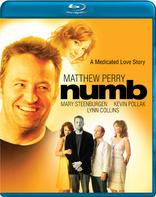 'Numb' Announced for Blu-ray[teaser]Matthew Perry thinks he's losing his high-definition mind this September. [/teaser] Image Entertainment is bringing the rom-com 'Numb' co-starring Lynn Collins, Kevin Pollak, and Mary Steenburgen to Blu-ray on September 7. The Blu-ray will feature 1080p video, a DTS-HD Master Audio 5.1 soundtrack, and no supplements have been revealed so far. Suggested list price for the Blu-ray is $17.97. You can find the latest specs for 'Numb' linked from our Blu-ray Release Schedule, where it's indexed under September 7.Posted Fri Jul 16, 2010 at 07:00 AM PDT by:
 -
 Hulu Plus Preview Now Available On the PS3[teaser]Select PlayStation Plus Subscribers Can Access It Now[/teaser] The hotly anticipated Hulu Plus service is finally available to a select group of PlayStation Plus subscribers. If you've got access, you'll know it thanks to a message when you turn your system on. If not, you'll be able to download the application and request an invite to the program. Early posts about the service are generally positive. It's got a few bugs of course, but it's definitely far better executed that the disappointing Netflix service. The user interface is optimized for use with a PS3 controller and doing things like switching picture quality is as simple as tapping R1. To access the preview, you'll need to be a PlayStation Plus subscriber, but thankfully that's not the case when it comes to the full service. When Hulu Plus launches in full, both Playstation Plus subscribers and non-subscribers will have access. You'll still have to shell out the $10 monthly fee to Hulu Plus of course. Source: PlayStation.BlogPosted Fri Jul 16, 2010 at 06:30 AM PDT by:
 -
 'Seven Samurai' on Blu-ray![teaser]Akira Kurosawa’s landmark 1954 epic is bound for Blu-ray this October. [/teaser] The Criterion Collection has announced 'Seven Samurai' for a Blu-ray release on October 19. One of the most beloved movie epics of all time, Akira Kurosawa’s Seven Samurai (Shichinin no samurai) tells the story of a sixteenth-century village whose desperate inhabitants hire the eponymous warriors to protect them from invading bandits. This three-hour ride—featuring legendary actors Toshiro Mifune and Takashi Shimura—seamlessly weaves philosophy and entertainment, delicate human emotions and relentless action into a rich, evocative, and unforgettable tale of courage and hope. Specs have yet to be revealed, but supplements will include: Audio commentary with Film scholars David Desser, Joan Mellen, Stephen Prince, Tony Rayns, and Donald Richie; Audio commentary with Japanese film expert Michael Jeck; A 50-minute documentary on the making of Seven Samurai, part of the Toho Masterworks series Akira Kurosawa: It Is Wonderful to Create; My Life in Cinema, a two-hour video conversation between Akira Kurosawa and Nagisa Oshima produced by the Directors Guild of Japan; Seven Samurai: Origins and Influences, a new documentary looking at the samurai traditions and films that impacted Kurosawa's masterpiece; Theatrical trailers and teaser; Gallery of rare posters and behind-the scenes and production stills; and a booklet featuring essays by Peter Cowie, Philip Kemp, Peggy Chiao, Alain Silver, Kenneth Turan, Stuart Galbraith, Arthur Penn, and Sidney Lumet and an interview with Toshiro Mifune. Suggested list price for the 3-disc Blu-ray release has been set at $49.95. You can find the latest specs for 'Seven Samurai' linked from our Blu-ray Release Schedule, where it is indexed under October 19.Posted Fri Jul 16, 2010 at 06:00 AM PDT by:
 -
 'The Magician' and 'The Darjeeling Limited' Announced for Blu-ray[teaser]Two great titles will be released in early October as part of the Criterion Collection. [/teaser] Criterion says Ingmar Bergman's 1958 drama 'The Magician' starring Max Von Sydow is slated for a Blu-ray on October 12. The Blu-ray release will feature 1080p video, an LPCM soundtrack, and supplements include: New visual essay by Bergman scholar Peter Cowie; Brief 1967 video interview with director Ingmar Bergman about the film; Rare English-language audio interview with Bergman, conducted by filmmakers Olivier Assayas and Stig Björkman; and a booklet featuring an essay by critic Geoff Andrew, a reprinted essay by Assayas, and an excerpt from Bergman's autobiography Images: My Life in Film. On the same day, Criterion will also release Wes Anderson's 2007 film 'The Darjeeling Limited' starring Owen Wilson, Adrien Brody, and Jason Schwartzman. Specs have yet been revealed, but supplements will include: Anderson's short film Hotel Chevalier (part one of The Darjeeling Limited), starring Natalie Portman, with commentary by Anderson; Audio commentary featuring Anderson and cowriters Jason Schwartzman and Roman Coppola; Behind-the-scenes documentary by Barry Braverman; Anderson and filmmaker James Ivory discussing the film's music; Anderson's American Express commercial; On-set footage shot by Coppola and actor Waris Ahluwalia; Audition footage, deleted and alternate scenes, and stills galleries; Original theatrical trailer; and a booklet featuring an essay by critic Richard Brody and original illustrations by Eric Anderson. Suggested list price for each Blu-ray is $39.95. You can find the latest specs for 'The Magician' and 'The Darjeeling Limited' linked from our Blu-ray Release Schedule, where it is indexed under October 12.Posted Thu Jul 15, 2010 at 12:15 PM PDT by: