-
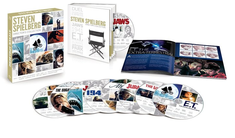 'Steven Spielberg Director's Collection' Dated for Blu-ray[teaser]The box set of eight films on Blu-ray is up for pre-order at Amazon. [/teaser] In an early announcement to retailers, Universal will be releasing 'Steven Spielberg Director's Collection' on Blu-ray on October 14. Steven Spielberg is one of the most prolific directors in motion picture history. Spanning over 40 years, Steven’s career began as a teenager when he made his way onto the Universal backlot and befriended studio executives. His passion and talent quickly developed, allowing him to direct an unprecedented number of blockbuster films. The Steven Spielberg Director’s Collection showcases a selection of the Academy Award winner’s unforgettable movies filmed for Universal, including his very first TV feature, Duel, and his first theatrical release, The Sugarland Express, and blockbusters such as Jaws, E.T. The Extra-Terrestrial and Jurassic Park. Steven’s work has captivated audiences worldwide and continue to set the standard for filmmaking. DISC 1 - Duel. Supplements will include: A Conversation with Director Steven Spielberg, Steven Spielberg and the Small Screen, Richard Matheson: The Writing of Duel, Photograph and Poster Gallery, and Trailer. DISC 2 - The Sugarland Express. The only supplement will be a trailer. DISC 3 - Jaws. Supplements include: The Making of Jaws, The Shark Is Still Working: The Impact & Legacy of Jaws, Jaws: The Restoration, Deleted Scenes and Outtakes, From the Set, Storyboards, Production Photos, Marketing Jaws, Jaws Phenomenon, and Theatrical Trailer. DISC 4 - 1941. Supplements include: The Making of 1941, Deleted Scenes, Production Photographs, and Theatrical Trailers. DISC 5 - E.T. The Extra-Terrestrial. Supplements include: Deleted Scenes, Steven Spielberg & E.T., The E.T. Journals, A Look Back, The Evolution and Creation of E.T., The E.T. Reunion, The Music of E.T. : A Discussion with John Williams, The 20th Anniversary Premiere, Designs, Photographs and Marketing, Theatrical Trailer, and Special Olympics TV Spot. DISC 6 - Always. The only supplement is a trailer. DISC 7 - Jurassic Park. Supplements include: Return to Jurassic Park, The Making of Jurassic Park, Original Featurette on the Making of the Film, Steven Spielberg Directs Jurassic Park, Hurricane in Kauai, Early Pre-Production Meetings, Location Scouting, Phil Tippett Animatics: Raptors in the Kitchen, Animatics: T-Rex Attack, ILM and Jurassic Park: Before and After the Visual Effects, Foley Artists, Storyboards, Production Archives: Photographs, Design Sketches and Conceptual Paintings, Jurassic Park: Making the Game, and Theatrical Trailer. DISC 8 - The Lost World: Jurassic Park. Supplements include:Returning to Jurassic Park, Deleted Scenes, The Making of the Lost World, Original Featurette on the Making of the Film, The Jurassic Park Phenomenon: A Discussion with Author Michael Crichton, The Compie Dance Number: Thank You Steven Spielberg from ILM, ILM & The Lost World: Before and After the Visual Effects, Production Archives: Production Photographs, Illustrations and Conceptual Drawings, Models, The World of Jurassic Park, The Magic of ILM, Posters and Toys, Storyboards, and Theatrical Trailer. Suggested list price for the Blu-ray is $199.98. You can find the latest specs for 'Steven Spielberg Director's Collection' linked from our Blu-ray Release Schedule, where it's indexed under October 14.Posted Thu Jul 3, 2014 at 12:00 PM PDT by:
 -
 Samsung Discontinues Video & Media Hub[teaser]The company is closing its digital video store for smart TVs and mobile devices. [/teaser] Samsung has announced the termination of its Video and Media Hub. As of July 1, users can no longer purchase or rent movies and TV shows through the service. Likewise, after August 1, users will no longer be able to re-download previously purchased content. Customers with existing downloaded media can still watch their content through the video player until the end of 2014. With that said, Samsung recommends that users transfer their media files to the company's new video partner, M-GO. Developed through a joint venture between Technicolor and Dreamworks, M-GO is a streaming and downloading service that offers all of the latest movies and TV shows. Current Samsung Video and Media Hub users can now transfer their library of purchased videos (not rentals) to M-GO free of charge. Likewise, Samsung users will receive up to an additional $13 in promotional credit for making the switch. M-GO is now available for download on several Samsung devices through the Google Play Store. Source: Samsung via EngadgetPosted Thu Jul 3, 2014 at 10:30 AM PDT by:
 -
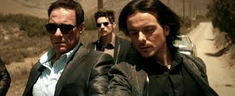 'Swelter' Dated for Blu-ray[teaser]Keith Parmer's explosive crime drama is up for pre-order at Amazon. [/teaser] In an early announcement to retailers, Well Go USA will be releasing 'Swelter' on Blu-ray on August 12. Swelter is the story of the most notorious robbery in Las Vegas history. Five men, nicknamed the Rat Pack, hit the Luxor Casino for over one hundred million dollars. Four of the men are soon captured, while one barely escapes. Ten years later, after blasting their way out of a maximum-security prison, the four jailed members of the Rat Pack are hot on the trail of their former accomplice and the remaining ten million in stolen cash. The trail leads them to a dying desert town less than a hundred miles from the scene of the crime where they find their former partner is not the man he once was...he's become a law-abiding sheriff without any memory of his past. The sheriff must now remember his violent history in order to protect all that he holds dear. Specs haven't been revealed yet, but supplements include: Interviews with the cast and crew: Jean-Claude Van Damme, Writer/Director Keith Parmer, Grant Bowler, Josh Henderson, Lennie James & Alfred Molina, and a Trailer. Suggested list price for the Blu-ray is $29.98. You can find the latest specs for 'Swelter' linked from our Blu-ray Release Schedule, where it's indexed under August 12.Posted Thu Jul 3, 2014 at 10:00 AM PDT by:
 -
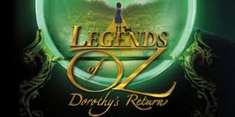 'Legends of Oz: Dorothy's Return' Blu-ray Announced[teaser]The animated musical adventure brings Blu-ray back to the Emerald City this August. Pre-order here. [/teaser] In an early announcement to retailers, 20th Century Fox will be bringing 'Legends of Oz: Dorothy's Return' on Blu-ray on August 26. Kids of all ages will love this musical, animated journey back to the magical world of Oz that features a legendary cast, including Lea Michele from TV's "Glee," Dan Akroyd, Martin Short, Jim Belushi, Patrick Stewart, Kelsey Grammer and more. A devious new villain, the Jester, rules over Oz and Dorothy must return from Kansas to rescue her old friends: the Lion, the Scarecrow and the Tin Man. Set to irresistible new songs from Academy Award-nominated singer/songwriter Bryan Adams and featuring a host of delightful new characters, this animated return to Oz is sure to be a family-favorite filled with fun and laughs for generations to come. Specs have yet to be revealed, but supplements will include: Legends of Oz: The Music of Oz, Legends of Oz: The Legacy of Oz, Sing Along the Yellow Brick Road, Legends of Oz: Activity Sheet, and Theatrical Trailer. Suggested list price for the Blu-ray is $29.99. You can find the latest specs for 'Legends of Oz: Dorothy's Return' linked from our Blu-ray Release Schedule, where it is indexed under August 26.Posted Thu Jul 3, 2014 at 08:00 AM PDT by:
 -
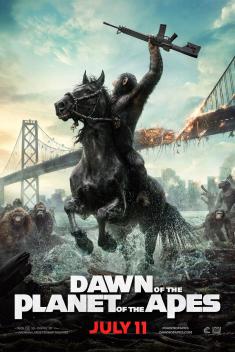 Dolby Atmos: 'Dawn of the Planet of the Apes' Quick Look and Updates About Home Implementation[teaser] Dolby Laboratories invited High-Def Digest to an early 'Dawn of the Planet of the Apes' screening, presented in conjunction with LA Times' Hero Complex and, of course, 20th Century Fox. The screening took place at the TCL Chinese Theatres, a six-plex sibling to the recently renovated, historic TCL Chinese IMAX. Our particular auditorium was upgraded from a 5.1 setup to the new object-based Dolby Atmos surround format on April 1st of this year. During this conversion, Dolby installed 18 new JBL 9320 overhead speakers, bass management for the 28 existing side and rear surrounds, and they performed some maintenence on the five existing behind-the-screen speakers (now individual channels).[/teaser] Dolby made tech headlines last week by finally announcing Atmos for home cinemas, but this night was all about the theatrical experience, which was topped by a spoiler-heavy filmmaker Q&A. Feel free to read that HERE, but you probably want to see the film first. Dawn of the Mini Review I'll leave the full review to my colleagues over in The Bonus View, but my initial instinct is to start pitching this movie as hard as possible because it's that good. A cut above the normal blockbuster, 'Dawn' is emotional, thrilling, suspenseful, and pretty much a master class in action filmmaking. It's a movie you're teenager-self would absolutely adore. But also one your adult self wouldn't later hate your teenager self for loving. Given my initial praise for 'Rise of the Planet of the Apes', expectations have been high. Despite my best efforts to keep an even keel, 'Dawn' exceeds expectations in so many ways. The set-pieces are white-knuckle, edge-of-your-seat experiences, and the filmmakers are smart to juxtapose bombastic ferocity with tender character moments. A movie without villains, it's a drama tackling deep themes about the nature of humanity, about our inherent fears and thirst for violence. Honestly, I'm simply in awe anyone could make a film this complex and character-rich in the current corporate studio system, and can't wait to see this franchise grow. Especially after director Matt Reeves agreed to return for the next installment. Granted, you might not feel the same way, but if you do I'm sorry for stoking blogger hyperbole flames. Please know my excitement, my desire to get the word out that the filmmakers have succeeded, is also tempered with the notion that I don't want anyone to know what actually happens in the film...Before he or she experiences it first hand. Because that's the best way to see 'Dawn'. Completely free and open. If you're already sold on the project, step away from the computer now. Stop watching trailers. Close your eyes when ads pop up on the TV. I'm not kidding, if you're a 'Planet of the Apes' fan, in any way, just go. It's a thrilling, emotional experience, one that will only be undermined by the marketing department's final push to put butts in seats. The latest trailer and TV spots feature numerous images from the movie's final reel, which disgusts me. Even this incredibly evocated Teaser Trailer -- which has no hard spoilers, and doesn't depict what this movie is really about -- shows you images best discovered on your own. So that's it. 'Dawn of the Planet of the Apes' is grand-yet-grounded blockbuster filmmaking and worth the price to see it on the biggest screen possible with the best sound available (more on this in a moment). Dawn of A Few Plot Details For Those Who Want Them For those who must know a little bit about the plot before dipping a toe in these cinematic waters, 'Dawn' takes place ten years ('winters') after the events of the first film. After a global pandemic, created as an attempt to cure Alzheimer's, wiped out humanity, Caesar and his band of super-intelligent apes have taken to the forests north of San Francisco where they are doing quite well. They've built home-like structures in the trees, hunt for food, and are using their increased brain power to build a society. In fact, it has been two winters since anyone has seen a single man. It is a time of peace... Until human survivors show up looking for a hydro power plant in the apes' territory. Caesar alone must decide what to do. If he sends the humans away, they will surely return to start a war. But, if Caesar helps the humans turn the city's power back on, is he betraying his own kind, and making a potential enemy stronger? 'Dawn of the Planet of the Apes' in Dolby Atmos Enhancing 'Dawn of the Planet of the Apes', we have another impressive Dolby Atmos mix. At this point, two years into the format, I find myself torn in a couple different directions. Now that the novelty has warn off, it's pretty much impossible to rank all of these releases. Theatrical (and home) surround sound experiences continue to push what's possible in terms of dynamic range and directional panning. We've come to expect sonic aggression. But movies like 'Dawn' remind me of the auditory marvels filmmakers are still able to achieve. 'Dawn of the Planet of the Apes' excels in juxtaposing delicate character moments with surges of percussive violence. There are numerous sequences set in the pattering rain, which then launch into cracking gunfire and other actions beats. Basically, what I'm starting to learn about Atmos, and numerous other surround formats, is the more you push things -- the more croweded individual moments become -- the less it really matters. With loud moments and auditory overload, with lots of guns and explosions, it's harder to tell the difference between 5.1 and 7.1 and Atmos. But when the scene itself is tame... When there are small moments in the rain... When there are little world-building details... When there are a hundred apes all around us, each calling out at different times... That's when Atmos shows its true potential because it fades away into an invisible, life-like quality. I know some of you thought the IMAX mix outperformed the Atmos version, but I think 'Gravity' is still my favorite theatrical sound experience because the Atmos mix was so measured, so precise in its vocal and effects arrangements. 'Dawn' has a similar quality in the way it balances action with character, sonic overload with intimate clarity. Either way, I personally loved 'Dawn of the Planet of the Apes' for its character work, photo realistic visual effects, suspenseful action sequences, and a top-tier sound mix, all of which should make one hell of a Blu-ray, especially if it rolls out in the home version of Atmos set to debut later this year. Speaking of which... A Few Updates About Dolby Atmos in the Home While we're at it, last week High-Def Digest broke the news that Dolby Atmos is finally making its way into our homes, which was then followed by announcements from partners Onkyo and Pioneer about their first Atmos products. In the forums, we've been chatting about the possibilities, asking tons of questions, and I even reached out to my Dolby contacts. As a few other sites have already reported, Dolby wrote a follow-up blog to clear up some early misconceptions. Feel free to read the whole thing, but here are the highlights: Atmos is scalable, focusing on individual objects rather than channels. In cinemas, Atmos works in any configuration from 9.1 to 64.4, but is often somewhere in the middle. However, the home version is slightly different. For starters, Dolby is working to recalibrate the way we think of our home theatre setups. For example, the minimum Atmos setup is described as "5.1.2", which translates into five standard surround sound speakers at ear level (left, center, right, surrround right, surround left), one subwoofer, and two height channels. In this configuration, you will need an AV reciever (or amplification) for seven channels plus a powered subwoofer. Depending on budget, Atmos in the home is capable of 24.1.10 (twenty-four surrounds, one sub, ten overhead), though at present, the most powerful Atmos AV Reciever will have 32-channels. The key to all of this is that, as home theatre enthusiasts, we have to think in "channels" mainly for logical pruposes -- running wire, amplification, etc. -- but content producers won't be producing different mixes for the guy with "5.1.2" versus "24.1.10" because Atmos-enabled tracks adapt to your home theatre environement. Pretty impressive. You will most likely need to purchase new gear, but maybe not. The saddest part for any tech geek. Saving up. Droppping mad cash. And then you need to replace gear to get the newest evolution of a sound format. Damn it! Right now, we know Onkyo, Pioneer, Denon, and Marantz are going to produce Dolby Atmos capable AV Recievers. While Denon and Marantz have only listed model numbers, Pioneer and Onkyo have already started advertising and detailing their new products HERE and HERE (a lot of great information there, so definitely check those out). So far, Pioneer is topping out at 9-channel AV Recievers capable of 5.1.4, 7.1.2, and 9.1 Atmos setups. Denon, Marantz, and Onkyo have also proposed 11-channel AV Recievers capable of up to 7.1.4 and 9.1.2 Atmos configurations. However, unless you own a Pioneer Elite SC-85, SC-87, or SC89, or an Onkyo TX-NR838, TX-NR737, TX-NR636, you will most likely need an new AVR to experience Atmos in the home. [Personal side-note plee to Denon: please please please firmware upgrade the AVR-2113ci] What about speakers? Here things get a little easier (potentially). In an optimized setup, Dolby recommends four height channels -- front and back stereo pairs. However, one pair will suffice. For the most precise experience, you will want to install the height channels in your ceilding. The challenge, of course, will be installation costs and running wire. But the good news is you can use conventional ceiliing-mounted speakers. If you don't want to, or cannot, install speakers in your ceiling, you have the option of purchasing Atmos-enabled speakers. Onkyo and Pioneer both announced front and surround speakers that feature traditional horizontally firing drivers as well as a vertical-firing driver designed to bounce the height channels off 8-14 foot, flat ceilings (taller ceilings and diagnol rooflines will cause problems). However, this method would require replacing two-to-four of your speakers, which isn't cheap, and what if you love the speakers you already own? As a final option, Onkyo announced add-on speaker modules, which are essetially vertically-firing satellite speakers you set atop your current speakers. These come in pairs. To recap, if you happen to own one of the firmware-upgradable AVRs, all you need to do to experience Atmos is to install two speakers in your ceiling, or purchase a couple add-on modules. Without the upgradable AVR, you're looking at the cost of a new Reciever plus at least two new speakers or add-on modules. If you're designing a new room, or have a bigger budget, the sky is really the limit. And, if you wait a year or two, I'm sure there will be plenty more options, but, while prices should drop over time, the challenge here is that extra amplified channels (done well) always always costs more. If you're cool with a seven-channel 5.1.2 setup, it should be a pretty affordable goal. For those seaking an eleven-channel 7.1.4 Atmos configuration, I'm not sure if a price drop is in the immediate future. What About Dolby Atmos Content? Dolby Atmos will be an extension of Dolby TrueHD (via Blu-ray Disc) and Dolby Digital Plus (via Streaming). All current Blu-ray players, and HDMI cables, should be able to handle Atmos assuming you are outputing sound via bitstream. No specific Atmos Blu-rays (or digital downloads) have been announced, but the obivous guess is to look at films releasing in Atmos this year that are mentioned in the Dolby press releases. 'Godzilla', 'Noah', 'Dawn of the Planet of the Apes'. Maybe even 'Edge of Tomorrow'. These titles are definitely coming to Blu-ray later this year, so why not? It all depends on which studios have deals to release Blu-rays in DTS-HD MA; I'm sure there are tons of negotations going on behind the scenes right now. Regardless, it's hard to tell just yet, but guess what, you don't technically even need Dolby Atmos Blu-rays to experience Atmos. Say what? Unlike its theatrical cousin, which requires a specific mix, Dolby Atmos home cinema recievers will be able to adapt, or process, native stereo, 5.1 and 7.1 content -- ie, your existing Blu-rays and DVDs and even your cable/satelitte receivers -- into Atmos. Bascially, if you ever run ProLogic IIx to get a 7.1 mix out of stereo and 5.1 tracks, Atmos promises to do the same for overhead height channels. Basically, part of me is starting to wonder if Atmos (in the home) is a reconfigured version of ProLogic IIz, which added height-but-not-overhead channels. ~~~ Thanks again to Dolby and Hero Complex for a great night. 'Dawn of the Planet of the Apes' is an awesome cinema experience, one I can't wait to experience again theatrically and most likely at home on Blu-ray. If we're lucky, it might even be one of the first Dolby Atmos enabled Blu-rays.Posted Thu Jul 3, 2014 at 06:15 AM PDT by:
 -
 'Dawn of the Planet of the Apes' Q&A with Matt Reeves, Gary Oldman, and Andy Serkis[teaser]High-Def Digest recently attended an early Hero Complex screening of 'Dawn of the Planet of the Apes' presented by Dolby. If an exciting, emotional, and powerful film weren't enough to win the evening, director Matt Reeves along with stars Gary Oldman and Andy Serkis stopped by for a question and answer session.[/teaser] Below you will find the transcript of this Q&A hosted by the Mark Olsen of the L.A. Times. It's a pretty incredible look into the development and production of the film, along with the way two extremely talented artists approach their respective crafts. However, if you have not seen 'Dawn' just yet -- which, at this point, is probably most of you -- I would suggest holding off on reading this Q&A because this post-screening event is brimming with SPOILERS of all kinds, big and small. First, second, and final warning, friends. Proceed with caution until you've had a chance to see 'Dawn' for yourself, or if you don't care about spoilers. Mark Olsen: This is the kind of movie Hollywood's not supposed to be making. It's got thematic depth, it's got emotional richness, a broad sense of scope. How did this happen? What was it about the first movie that made you want to be involved with the second? Matt Reeves: I have been a lifelong 'Apes' fan. I love 'Planet of the Apes', 'Beneath the Planet of the Apes'. I love the TV show. I have the dolls. And desperately wanted to be an ape, actually. Loved that John Chambers makeup. Was really mad I couldn't get a mask to articulate the way Roddy McDowall's did. Man, why is mine not like that? So when I saw 'Rise [of the Planet of the Apes]', the thing that blew me away was how Andy played Caesar and that Weta was able to translate it in such a way that I could emotionally identify with the most human character in the story, which was not a human, it was an ape. I was like, wow, I just got my childhood wish of becoming an ape, but emotionally instead of looking like one. Amazingly, the studio called me and they said, we'd like to talk to you about doing [the sequel], and I was incredibly excited because of how moved I was, but also because it had been a lifelong interest of mine. So I watched ['Rise'] again, and came in and spoke about it. The movie they pitched me was not this movie. We started in post-apocalyptic San Francisco and the apes... It wasn't Caesar's movie. He was one of the characters, but I wasn't sure I was going to do this movie. So they said, wait, what would you do? I said, well you guys just did something miraculous. You created a hero in Caesar, and you found a way to completely reinvent these movies because this gives you a reason to do them. The idea of that emotional identification with the apes, entering the inner lives of apes, that's crazy. So I said, I think this needs to start with Caesar, and I don't think you should start with the post-apocalyptic, which is of course important feature in these stories. I think you should start thinking that the humans might be gone. That we might have destroyed ourselves. So almost like '2001' with the dawn of man sequence, we have the dawn of intelligent apes sequence. It's almost terrifying at first, and then we go on. I hope that we could have a sequence like that great one in 'Rise' where we're in the ape habitat for 15 minutes and it's almost like silent film. I figured [the studio executives] were going to say I think you should leave now. But then I said, what's so cool about 'Rise' is that it sets you on the beginning toward a trajectory toward the '68 film. That world [in 'Rise'] is nothing like the world of 'Planet of the Apes'. Obviously, this is the one moment... that moment in time where it could have gone differently. It could have been 'The Planet of the Humans and the Apes'. And that became the impetus of the story. I pitched it to them and thought they would say, goodbye, and they said, that sounds great, are you in? And I was like, wait you're going to let me do that story? So I was shocked, because I didn't think they'd let me do that story. But they said yes and we dove in. Tell me a little bit more about developing the parallel story between Caesar and Koba, and then the humans. Matt Reeves: I felt it was really important to the story that there be no villains. To me, the great thing about 'Planet of the Apes' as a world, as a story, as a metaphor, is that obviously the conceit is that they are animals have taken over the world, but the secret is we are the animals that have taken over the world. So these apes are really us, and looking into the face of apes, we see ourselves. So I thought, wow, here we are making a summer blockbuster that's really a drama and I thought there was an opportunity to have empathy for all the characters so you come to understand the anatomy of violence. And you could also be drawn into the potential for connection. Because this could have gone another way. It's actually a poignant idea, I thought, wouldn't it be great if we could create two families: An ape family that's on the ascendency, and a human family that has just gone through the worst tragedy in the history of humanity, a family that is fractured in pieces that is trying to find a way to come together to heal itself? So you have these two families, almost like a mythic western, these two tribes that both want to survive, that are both on this same area of land and the question is, will they turn to violence, or is there another way? To let all of that play out in a way you understood how each character arrived at their worldview. How Koba, having been treated the way he was would have a very justifiable worldview. And Dreyfus [Gary Oldman's character] having lost his entire family to a flu that came from the apes would have an understandable mistrust and terror of them. But also that there would be a chance to try to find a way and see if there was a way to make [cohabitation] work. And that's what the story became. Andy, I wanted to ask you about the response to the character of Caesar. Have you been surprised by how much people responded to the character from the previous film and were you excited by the idea of returning and digging deeper with that character? Andy Serkis: Yeah, what I loved about Caesar when I first read the original script for 'Rise', it was incredibly... you know, I almost forgot it was an ape. The trajectory of the character, what he'd gone through, playing a character from infancy through where he believes he's human, in effect, and then getting to a point in his adolescence where he realizes he's an outsider, and his father was not his real father, and is suddenly discarded and thrown in with a bunch of apes who he cannot connect with. So again, he feels outside and very, very conflicted. Having to somehow find a way of galvanizing them and leading them to freedom and breaking out and taking that responsibility. Forget the fact that he was an ape. The trajectory of playing that character was incredible. I just forgot he was an ape for a moment. It was just that well written. It wasn't patronizing and didn't undermine the integrity of being an ape; it was just this complex, rich mix of an internal conflict of someone who feels an outsider. So coming into this story, Matt [Reeves] and I met, and he told me where he wanted to drop anchor with this story, which was ten years later and Caesar now being responsible for taking on the mantle of leadership into another generation. It just became an even more enriched and complex experience. I think it's fair to say it's one of the most challenging rolls I've played, in a sense. We didn't want to get to a place where the apes are too articulate, particularly Caesar. We didn't want to jump a few generations and they're all sitting around chatting quite freely and very articulate. We wanted to find this moment, as Matt was saying, where we're really seeing them and every aspect about them evolving. Caesar has inherited this enhanced intelligence drug, the ALZ drug, so he's rapidly evolving in many ways. Finding the journey though his physicality and his emotional intelligence and his sense of being a leader, responsibility of course of having a family, a counsel, a wider circle, and an entire community to take care of. And throughout that see this evolution, this reawakening of his human side once he comes into contact with Malcolm [Jason Clarke's character]. We spent most of this film very, very minutely pitching the character up and down, twisting and turning over the course of many takes and many scenes, trying to really identify his journey. To not over anthropomorphize, not make him too human, and yet keep some of his ape behavior and really play that in terms of conflict. So it was a great challenge. Gary, Matt was saying the story doesn't have a traditional villain. I think in some ways, in a more simplistic version of the story, your character [Dreyfus] might be the most villainous, but here he's not the warmonger. He's not a hawk in the way that character could be. Was that one of the things that appealed to you, that it was much richer and complicated, more than simply a guy who just wants to fight the apes? Gary Oldman: When I first read the script, it says 'Dawn of the Planet of the Apes' on the cover. And then when I turned the last page, it was a surprising read because it was about family and community and loss and compassion and all of these things. It was just not what I expected. And Matt and I had a conversation. As he said, it was a purposeful thing not to make anyone a villain in the traditional sense. The character Dreyfus, in fact, gives Malcolm the benefit of the doubt. At one point, [Malcolm] says I'm gonna go back [to speak with Caesar], and Dreyfus says to him, you have three days. Now, [Dreyfus] is airing on the side of caution because he's saying, look I'm going to the armory and I'm going to have a Plan B. But he's not lacking compassion. Like Andy's Caesar, [Dreyfus] has this mantle of leadership and responsibility, and when the apes turn up at the camp, it does reignite that loss and that pain and blame, I guess, too. Look, Dreyfus wants to save the human race, I mean, thank you. And don't forget that the medicine that helps Caesar's wife and also helps him when he's shot is 20th Century medicine, which is a human invention... Andy Serkis: Tested on apes, though. [Audience laughter.] Gary Oldman: Where do you come down, you know, that's a shame. We should all just jump into the sea. [More audience laughter.] Gary Oldman: For me, [Dreyfus] makes the heroic gesture. He makes the ultimate sacrifice. Matt Reeves: The apes attack the humans completely unjustified. What Mark Bomback, the writer, and I really wanted to create in this moment just before it happens is that [the humans and the apes] are incredibly close. They miss making it go another direction -- though it might have unwound in another way because, again, this is all about our nature -- but there was a chance that the first step [to coexistence] could have worked. They restored the power. The humans would have left. There was this bond that had been created. Malcolm could have explained it to [Dreyfus]. But it all turns. So what is [Dreyfus] supposed to think at the end? It's a very sacrificial gesture that he makes. He does believe he is saving the human race. One of the thing that I felt strongly about, the things that drove the characters to extremism that had a lot to do with family. Dreyfus had lost his family and at that point, giving the memory of his family...he's going to sacrifice himself because it's the last thing he can do. The last gesture he could make that might give his life meaning. [Dreyfus] wasn't meant to be a villain. Did you feel like you had to top the Golden Gate Bridge sequence from the first film? Matt Reeves: We had a battle scene where you couldn't root for the apes. I'm sure some people do because there's that certain pleasure of going, yeah here they go, but it's meant to be a tragedy. That was a challenge because, here's a moment that supposedly the audience is waiting for. Apes are holding machine guns in each arm and riding horses and all this stuff that everybody thinks the big summer movie's supposed to do. And I wanted you to feel sadly about it. I wanted you to feel like it was a nightmare. A fever dream. Something terrible. And I kept pinching myself that they were letting us make this movie. I suppose the thing that's sort of the more traditional thing is the mythic showdown -- in a way that I absolutely love -- between Caesar and Koba, and Malcolm and Dreyfus below, in this suspense sense. The movie is a war drama, and people are expecting... so much of the 'Planet of the Apes' is watching the humans get theirs, watching us be destroyed by the apes. And I wanted exactly the opposite. It was an nontraditional thing for a studio to let us do. What is it about the image of an ape on a horse with a gun? Andy Serkis: It is interesting seeing animals using other animals as transport. I remember we talked about it. It's a very strange thing. What other situation do you ever see that happen? It just doesn't really happen that often. [Matt Reeves cracks up.] Andy Serkis: Actually, I have to say, the horse we had on set -- mine was called Shirley -- didn't really like us being apes. We went and had riding lessons leading up to the shoot, and we went as apes. Mounted the horses as apes. Dismounted. The way that we held them. Making these vocalizations. Really, just to train them so when we turned up on set, they weren't going to be freaked out... And then we turned up on set and they were freaked out. Matt Reeves: And one of the performers was freaked out about horses, and he was giving bad mojo to the horses and, suddenly, Shirley was not so happy. Andy Serkis: Actually, I'm going to hand this off to Gary. He can tell you the story from his perspective, as to what he saw when he walked out, when the doors first opened at the compound. Gary Oldman: When [the apes] first appear at the compound, we have that wonderful shot of the blank screen that sort of separates, and you see Caesar there on the horse. The horse freaked out when you said "Apes!". And it started doing this sideways, I don't know what you call it, a horsey shuffle, and he hit the other horse and then the other horse and they all started getting freaked out by this. So what happened is, they put the main actors, I think there were about five, and they put them on red step ladders that they had got from Home Depot, or something like that. So my image of first working with Andy Serkis is a man in a unitard with a camera strapped to his head on a stepladder... [Audience laughter.] Andy Serkis: That was our show of strength. Matt, I have to ask you. Andy has done this sort of performance capture work a number of times. What was it like then for you to be stepping into this world for the first time? Matt Reeves: I was actually really terrified because the thing that's most important to me as a director in working on a movie, is actually my collaboration with the actors. Not having done mo-cap before, know about it obviously and Andy through his work, I was like, how exactly is it done, even though I know sort-of how it's done. I thought, wouldn't there be an obstacle to my interaction with him? Would there be some technical thing I needed to know about, how to work so we could navigate this thing together? The first thing I did was ask for the footage of Andy from 'Rise', from the whole movie, with him wearing his facial cam and the unitard. And then I asked to see every shot of Caesar so I could see what's going on. It was a huge relief because I saw immediately the reason I was so affected by Caesar was that Andy was giving an incredibly emotional performance. In fact, in certain scenes, scenes that I had been deeply affected by when I watched the movie, I saw Andy doing even more. That scene where he was against the glass being abandoned, in 'Rise', he gets so emotional, pressing his face against the glass. Andy was doing all of that. And, in fact, there's a mixture, a kind of rage that he has of being left that he's crying. But there was even more vulnerability in his eyes. There was even more there. I was blown away. I actually spoke to Weta. I was so blown away that they could do this. Andy doesn't look like an ape, but you're translating his performance onto the anatomy of an ape. That's astonishing. I said, but I even noticed in a few places, that something he was doing, and I thought, can we get even more of that? And they said, absolutely. That's what we're here about. We're here to try and get as much of the emotion that the actors give and put them into faces of the apes. So the exciting thing was that the staging of the scene, the shooting of the scene is, to begin with, absolutely the same as anything I've ever done. Basically, the [mo-cap performers] are wearing these cameras, these outfits, but once you forget about that, it's basically, I'd say to Andy, where do you think you'd stand in this scene? I thought there'd be some technical, oh wait I gotta make sure we get the gizwagonflu, but none of that happened. The hard part was after that. The hard part was getting actors who played the humans to replay their scenes afterwards and make it clear to them that the shot that had just happened with Andy, that might have been amazing, was not what I could use in the movie. That was reference for Weta. And it meant that the thing that might have happened that was magic they had to recreate on their own. For the most part. There were some shots where I said, come on, they're so good, you guys gotta find a way to just paint Andy out and actually put Caesar over him. There are a few shots like that in the movie, but in general the actors had to reproduce it. We had to get the camera operators to reproduced certain shots. All the shots that Andy was in, without him in it. So I got the camera operator doing this [mimes looking at playback monitors], what did Andy do? And it's a very weird... You need those things because those are the shots you put Andy into. That's really hard, and the editing is the biggest... perplexing [wants to curse, but doesn't]. It's crazy because these ape shots take forever to do. The last shot of the movie, that's the last shot we finaled. We finaled that probably a week ago Thursday. Literally, saw it, there it is, came in, put it in, okay last day, good, there it is, let's put it in. And that process means that you're spending a long time looking at the movie in a form that it's not going to be in. The great thing is, it actually works. There's a version of the movie I could show you -- I won't, but I could, or we might one day -- which is the actors interacting not with apes, but with humans and other humans in unitards and head cams. For the first five minutes, you're going, this is the weirdest thing I've ever seen, but it actually works. You actually get emotionally involved because of the performances. You actually take the leap, like seeing theatre or something. That part of it, I have to ignore 90 percent of what else is in the frame. Ignore the fact that Andy doesn't look like an ape. When you're doing mo-cap, huge crowd scenes, each of those performances is actually a performance, but you don't get them all at once. You have to build them and layer them. So when we shot on the set, like what Gary was saying, it was five guys on ladders, yet that scene has literally a thousand apes in it. We had to build all those shots. So your mind starts to twist, and you start thinking this is never going to work and I'm going to look like an idiot. I have no idea how Rupert Wyatt, doing the first movie, because I at least knew that 'Rise' had worked, but he didn't know. He certainly knew other movies that had done it had worked, but I would have had a nervous breakdown. And I almost did. Andy, are you anticipating the technology, knowing the next stage that is to come, or are you in the scene with the actors as if you were in a costume? Andy Serkis: There's nothing to anticipate. There is nothing other than the moment. Acting the part. Playing the part. And working with the director and the other actors. Being in the moment. Inhabiting the character. And living it. There's no difference. You do that whether you're playing a live action role or a performance capture role. The acting process is entirely the same. There is no magic. The great thing about this movie, with the pressure of the shoot and the scale of the production, that Matt, to his credit, spend every single day, every single moment, creating the performances with actors on that set. With a huge film crew standing there waiting to get shots underway, where to set the cameras and everything. It wasn't about that. And that's very, very unusual on a film of this size. It was entirely about the drama. Entirely about mining every single moment for its dramatic content. As an actor, and I maintained this through every single performance capture I've ever played versus a live action role, there is absolutely no difference whatsoever. You have to imagine what your character looks like. One thing you do get to do, in the rehearsal bay, you're working in a motion capture volume where I can see on, like a magic mirror, it's the equivalent of getting a costume on for the first time, when you go in for a costume fitting for an actor and you put on a pair of shoes or you put on a jacket. Whatever. And you start to feel like, yeah this feels like the character. You do that in the motion capture stage by looking a big screen where I can see Caesar standing there. And I raise my right arm, and Caesar raises his right arm. And I get into character. I start to move my body around and Caesar starts to move his body around in real time to what I'm doing. Your body then encodes that, your muscle memory encodes that, so when you go onto set, you know what your "costume" is. But that's the only difference. The rest of it is purse acting. Gary Oldman: It does put some new challenges to the acting process. I don't know if the Actor's Studio, or Stella Alder, has updated their program for those moments where, okay, now you've got to [act] to no one. [Laughter] "you've caught the magic, now you really need..." I guess, it's the same way you do it in a play, but in that way you have found it in rehearsal, and you've had weeks and weeks of rehearsal so you are actually recreating every night, or trying to capture every night something you found in the rehearsal that was just instinctive. And then technique takes over. But [acting against motion capture] is somewhat a new compartment for acting, doing a performance, doing a take, and then [the director] saying to the actor, now you've got to recreate it without anybody there. Matt Reeves: The thing is, with green screen, that kind of stuff you've had to do for a long time. But on this level of intimacy, that's unusual. But that's actually the part of it that I think will change as the technology changes. Someday people will look back and say, they did it like that? And it worked? Because it's absurd. The basic part of it, the important part which this became, is getting in a space with actors and finding the truth of the scene and then shooting that scene. Some of these other processes, I think, will go away. [recording cuts out. My apologies. I just learned iPhones won't record sound AND take pictures at the same time.] What references or Easter Eggs to the original series did you put into the film? Matt Reeves: There are references like "ape not kill ape", the idea of the cannon. There are a lot of details that refer back. Even the idea of apes on horses, that's a reference to [the originals]. That's why people, who know the series, got so excited. That's the thing that I remember. When I saw that first movie, and the nets get thrown over the humans, and you look up and see that gorilla on horseback, it's the craziest thing you've ever seen. So ['Dawn'] is meant to be both new, because you've never seen an ape, tribal-like, dawn of apes thing, but a lot of the details actually refer back to the trajectory of the originals. So the movie is on that trajectory. The ideas was to show the seeds of certain things. We're doing things like the language. On the [ape compound] wall, there were pictograms. If you look back at the pictograms, you'll actually see the history...the idea is Caesar is starting a whole new civilization. Actually on there is the Golden Gate Bridge, because that incident is really seminal to the creation of the ape world, to reflect the conflict that happened there. "Ape not kill ape", obviously, the beginnings of laws. So there are a lot of details, but I wouldn't describe them as Easter Eggs because they're quite apparent in the movie. ~~~ Thanks again to Dolby for hosting us, and Hero Complex for the terrific Q&A. If audience reaction is any indication, the movie works really well, and is a rare summer blockbuster that is equal parts intelligent, human drama and suspenseful action. I can't recommend it highly enough.Posted Thu Jul 3, 2014 at 06:10 AM PDT by:
 -
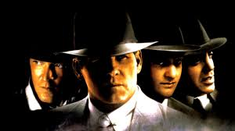 'Mulholland Falls' Announced for Blu-ray[teaser]Lee Tamahori's 1996 murder mystery is bound for Blu-ray in October. [/teaser] In an early announcement to retailers, Kino will be bringing 'Mulholland Falls' on Blu-ray on October 7. In 1950s Los Angeles, Max Hoover (Nick Nolte) leads an elite squad of four detectives who play by their own rules, dealing with criminals the only way they know how - with deadly force. But when they investigate the murder of a beautiful young woman (Jennifer Connelly), the detectives find themselves embroiled in a high-level conspiracy...and faced with a terrifying secret that the US government is determined to keep hidden - at any price. Specs, supplements, and suggested list price have yet to be revealed. You can find the latest specs for 'Mulholland Falls' linked from our Blu-ray Release Schedule, where it's indexed under October 7.Posted Thu Jul 3, 2014 at 06:00 AM PDT by:
 -
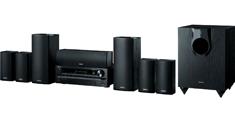 HDD Gear Deal Spotlight: TVs, Receivers & Speaker Systems[teaser]For a limited time, Amazon is offering up to 45 percent off select HD gear items! [/teaser] As part of the online retailer's ongoing sales and promotions, Amazon is running limited time deals on several TVs, receivers, and speaker systems. Sharp LC-70SQ15U 70-inch Aquos Q+ 1080p TV - Currently $2,198 (19 percent off its retail price). Sony XBR55X850B 55-Inch 4K TV - Currently $2,298 (23 percent off its retail price). Denon AVR-E300 5.1 Channel Receiver - Currently $249 (45 percent off its retail price). Denon DHT-S514 Home Theater Soundbar System - Currently $499 (17 percent off its retail price). Onkyo HT-S5600 7.1-Channel Home Theater System - Currently $449 (25 percent off its retail price). As always, these deals will only be active for a limited time while supplies last. Make sure to stay tuned to High-Def Digest for more sales and special promotions!Posted Wed Jul 2, 2014 at 04:30 PM PDT by:
 -
 'Homeland: The Complete Third Season' Blu-ray Announced[teaser]The third season of the riveting series is planned for Blu-ray in September. You can pre-order here. [/teaser] In an early announcement to retailers, 20th Century Fox will be bringing 'Homeland: The Complete Third Season' on Blu-ray on September 9. As Carrie (Emmy® winner Claire Danes) and Saul (Emmy® winner Mandy Patinkin) search for the truth behind the bombing of CIA headquarters, lines are blurred between friend and foe and no one can be trusted. While hiding a stunning secret of her own, Carrie helps recruit Brody (Emmy® winner Damian Lewis) for a dangerous mission that could offer him a chance at redemption. But when the plan unravels and Brody is targeted deep inside Iran, he must put his life in Carrie’s hands, leading to one of the most suspenseful and shocking season finales in TV history. The Blu-ray set will feature 1080p video, a lossless 5.1 soundtrack, and supplements will include: “Homeland” Season Three: The Tower of David – Filming in Puerto Rico; The Last Days: Filming the Season Finale; Commentary on Season Finale Episode “The Star”; and Deleted Scenes. Suggested list price for the Blu-ray is $59.99. You can find the latest specs for 'Homeland: The Complete Third Season' linked from our Blu-ray Release Schedule, where it's indexed under September 9.Posted Wed Jul 2, 2014 at 12:00 PM PDT by:
 -
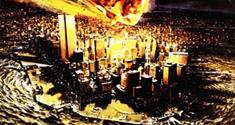 'Meteor' Blu-ray Bound[teaser]The sci-fi flick is on a collision course toward Blu-ray in September. You can pre-order the movie now. [/teaser]In an early announcement to retailers, Kino is preparing 'Meteor' for Blu-ray on September 26. Brace Yourself For The Biggest Catastrophe The World Has Ever Seen! Outer space can hardly contain all the stars that round out the extraordinary cast in this spellbinding thriller about a five-mile-wide meteor on a catastrophic collision course with earth. Specs and supplements have not been announced yet. Suggested list price for the Blu-ray is $29.95. You can find the latest specs for 'Meteor' linked from our Blu-ray Release Schedule, where it's indexed under September 26.Posted Wed Jul 2, 2014 at 10:00 AM PDT by: