Editor's Note: Each Friday, High-Def Digest's own HD Advisor will answer a new round of questions from our readers. If you have home theater questions you need answered, send an email to [email protected].
If you've already sent a question and don't see it answered yet, please be patient as we work our way through them. To browse through previously answered questions, visit the main HD Advisor page.
Answers by Joshua Zyber
A/V Receivers and PAL Video
Q: I'm originally from the UK, but I'm moving to the U.S. with all my PAL DVDs. I'm going to get a completely new home theater set-up and decided to go for a multi-region/multi-system Blu-ray player and a multi-system TV. I'm guessing the quality will be slightly better without being first converted to NTSC. However, I am unsure about the A/V receiver. I know it deals with the video signal as well as the audio. So would the A/V receiver also have to be multi-system, or would the signal just pass though to the TV?
A: On most modern A/V receivers, if you route your video through the receiver, you have two options. You can set the receiver to simply pass through the video signal unprocessed. (Whatever you send in is what comes out the other end.) Or you can have the receiver deinterlace and/or scale the video. (For example, upconverting a standard-definition source to HD.) In most cases, I recommend simply passing through the video signal untouched. DVD upconversion is generally best performed at the disc player. However, it's been a recent trend for many receivers to include top-end scaling solutions such as Silicon Optix or Anchor Bay processing. So this may not necessarily be an inflexible rule.
I can't speak for every receiver brand or model on the market, but in my experience, most receivers will pass through both NTSC and PAL without issue. PAL compatibility is a more critical issue in both the disc player and in the TV, either of which might reject the PAL signal.
At the very least, all of the Denon receiver models that I've used in my own home theater have passed through native PAL successfully. If some of our other readers have experience with different receivers that aren't compatible with PAL video, I invite them to post those details in the forum thread linked at the bottom of this article.
Keep in mind that even if you buy a multi-system capable Blu-ray player, you will still encounter the issue of region coding. Blu-ray players sold in North America are locked to Region 1 for DVD and Region A for Blu-ray. If the player is PAL-compatible, it may play European discs that are authored as region-free, but it won't play any DVDs that have been authored as Region 2, or any Blu-rays authored as Region B.
To get around that problem, you'll have to specifically purchase a unit that's been modified to disable the region code restriction, or purchase a Do-It-Yourself modification kit. JVB Digital is a good source for either. I personally have an OPPO BDP-83 player that I modified with a DIY kit from JVB. The kit was relatively affordable, and very easy to install. The machine has successfully played any DVD or Blu-ray from anywhere in the world that I've thrown at it.
What Happened to Dolby TrueHD?
Q: Having upgraded my system to take full advantage of the lossless codecs from Dolby and DTS, it's been somewhat disheartening to see the number of titles available in Dolby TrueHD slow to little more than a trickle in 2010. Can we expect to see more Dolby TrueHD titles in the future or has DTS-HD Master Audio become the de facto standard for Blu-ray? Also, what is the likelihood of seeing both TrueHD and DTS-HD Master Audio as options on a single Blu-ray disc?
A: It's true that there does seem to be a trend in recent months for home video studios to move away from Dolby TrueHD and toward DTS-HD Master Audio. TrueHD isn't completely being phased out, but the momentum in the market is with DTS.
I suspect that this primarily has to do with the core+extension design of DTS-HD Master Audio, which incorporates a backwards compatible standard DTS soundtrack integrated as a "core" within the audio signal. Hardware not compatible with the full lossless sound format can simply ignore the MA extension and only read the core. This means that the studio only has to author one soundtrack on the disc for all purposes. Dolby TrueHD, on the other hand, requires that a separate backwards compatible DD 5.1 soundtrack must be added to the disc along with the lossless TrueHD track. (Sometimes it's "hidden," so you may not see it listed in the disc menus; but the player will fall back to it if your equipment doesn't support TrueHD.)
This isn't to say that one lossless format is better than the other. The end result of either is the same bit-for-bit identical copy of the studio master. However, for backwards compatibility purposes, DTS-HD Master Audio may be more convenient. The lossy DTS core also tends to offer a higher level of fidelity than DD 5.1 for those listeners who can't take advantage of the full lossless track.
As far as I'm aware, only two movie discs have been authored with both Dolby TrueHD and DTS-HD Master Audio options: 'Close Encounters of the Third Kind' and 'Top Gun'. [Correction: Reader Stephan has pointed out that 'The Final Countdown' does as well.]
In the case of 'Top Gun', the two tracks come from different sound mixes. The DTS version was remixed for 6.1, while the TrueHD version is an older 5.1 mix. However, other than isolated examples like this, there is little reason for any Blu-ray to be authored with both lossless formats. TrueHD and Master Audio produce identical results. Lossless is lossless. The inclusion of both is just a waste of disc space that could be better utilized for other purposes, such as including bonus features or increasing the video bit rate.
LFE Calibration and 'Digital Video Essentials'
Q: I have a question regarding the LFE +10 dB boost that happens in equipment. I have a Sony BDP-S550 BD Player with the newest firmware, that is connected to an Onkyo 707 receiver. (The Sony can't be forced to output LPCM on encoded signals like DD, DTS, TrueHD and DTS-MA). Now that I calibrated the set through Audyssey automatic setup, I manually checked the calibration with 'Digital Video Essentials' and an SPL meter. Everything was fine except for the subwoofer. That spiked up like mad. Then I lowered the LFE volume setting in the Onkyo for all encoded signals with -10 dB and pronto, the subwoofer signal was dead on now! This makes me think that the Sony BDP-S550 player already does the +10dB boost on encoded signals (while this should only be done in the receiver). It doesn't happen on LPCM tracks. Am I right with this, or is something else going on?
JZ: To get to the bottom of this issue, I sought assistance from my friend Chase, who knows a lot more about the nitty gritty of audio engineering than I do. In researching the problem, he made an interesting discovery.
Chase: My initial thought was that the problem was misdiagnosed. Assuming he is connected via HDMI using bitstream, the BD player is not adding the +10 dB boost. This would only happen with analog or possibly native/decoded PCM. Even that's pretty rare.
It's possible that Audyssey MultEQ missed the SPL for the subwoofer. It's also possible that he didn't account for all the variables involved in verifying SPL, such as the actual modulation level on the disc for LFE vs. mains, the DialNorm value, the frequency content of the LFE test noise, and the effect of the subwoofer low-pass filter(s) on that test noise.
The Onkyo 707 is THX certified, which makes it especially tricky to verify levels using a test disc like 'DVE' that is encoded at DialNorm value -31. (Tests must be conducted with master volume at a confusing -4 dB from reference.) 'DVE' doesn't have a PCM track, so I'm not sure how he would verify that the problem doesn't occur with a PCM input.
With that said, I ran some tests and it looks like your reader discovered something interesting. Let me start by saying that I verify channel levels using an excellent test disc distributed by Gold Line. I have never employed 'DVE' for that purpose. However, I got 'DVE' out today to see if anything interesting turned up, and it did.
In a THX controller, channel levels should always be set using the internally generated noise, as it's accurate. If verification is needed, the standard procedure is to set the master volume to reference (0dB) and measure 500 Hz to 2 kHz narrowband pink noise at -30 dBFS for main channels and 40-80 Hz narrowband pink noise at -40 dBFS for LFE (DialNorm -27 for DD-encoded signals). This should produce 75 dB C-weighted at the listening position for all channels.
(For a non-THX controller, use test noise encoded at DialNorm -31, or turn the master volume up 4dB.)
Posted Fri Jul 2, 2010 at 11:45 AM PDT by:
Joshua Zyber
 'Elf: Ultimate Collector's Edition' Blu-ray Announced[teaser]Buddy returns to Blu-ray just in time for the holidays with some extra goodies. [/teaser] Warner Brothers has announced a special 'Elf: Ultimate Collector's Edition' starring Will Ferrell and James Caan for Blu-ray on October 26. The Blu-ray itself will be identical to the previously released 'Elf' disc, but it will be repackaged in a collectible tin with an Elf CD soundtrack sampler, a festive stocking, gift tags, and a magnetic picture frame. Suggested list price for the Blu-ray is $49.99. You can find the latest specs for 'Elf: Ultimate Collector's Edition' linked from our Blu-ray Release Schedule, where it's indexed under October 26.Posted Tue Jul 6, 2010 at 10:00 AM PDT by:
 Blu-ray Gets 'Frozen'[teaser]Brrrrrr... Prepare to feel the chill on Blu-ray this September. [/teaser] In an early announcement to retailers, Starz/Anchor Bay has announced Adam Green's 'Frozen' starring Shawn Ashmore, Kevin Zegers, Emma Bell, and Ed Ackerman is coming to high-definition on September 28. The film is basically 'Open Water' but with three snowboarders stuck on a chairlift at a ski resort with no way of getting down. Specs and supplements have yet to be revealed, but suggested list price for the Blu-ray is $19.95. You can find the latest specs for 'Frozen' linked from our Blu-ray Release Schedule, where it's indexed under September 28.Posted Tue Jul 6, 2010 at 08:00 AM PDT by:
 'The Hangover: Extreme Hangover Edition' Blu-ray Announced[teaser]One of the funniest comedies of 2009 is getting a double dip this October.[/teaser] Warner Brothers is bringing 'The Hangover: Extreme Hangover Edition' starring Bradley Cooper, Ed Helms, and Zach Galifianakis to Blu-ray on October 12. The release appears to be identical to the previous 'The Hangover Blu-ray, except this edition will include a 28-page wedding album containing photos from both the Vegas wedding and the lost camera as well as new BD-Live content including Iron Mike Online Teaser and Cursing Mash-Up. Suggested list price for the Blu-ray is $49.99. You can find the latest specs for 'The Hangover: Extreme Hangover Edition' linked from our Blu-ray Release Schedule, where it's indexed under October 12.Posted Tue Jul 6, 2010 at 06:00 AM PDT by:
 HD Advisor Limit: 65Editor's Note: Each Friday, High-Def Digest's own HD Advisor will answer a new round of questions from our readers. If you have home theater questions you need answered, send an email to [email protected]. If you've already sent a question and don't see it answered yet, please be patient as we work our way through them. To browse through previously answered questions, visit the main HD Advisor page. Answers by Joshua Zyber A/V Receivers and PAL Video Q: I'm originally from the UK, but I'm moving to the U.S. with all my PAL DVDs. I'm going to get a completely new home theater set-up and decided to go for a multi-region/multi-system Blu-ray player and a multi-system TV. I'm guessing the quality will be slightly better without being first converted to NTSC. However, I am unsure about the A/V receiver. I know it deals with the video signal as well as the audio. So would the A/V receiver also have to be multi-system, or would the signal just pass though to the TV? A: On most modern A/V receivers, if you route your video through the receiver, you have two options. You can set the receiver to simply pass through the video signal unprocessed. (Whatever you send in is what comes out the other end.) Or you can have the receiver deinterlace and/or scale the video. (For example, upconverting a standard-definition source to HD.) In most cases, I recommend simply passing through the video signal untouched. DVD upconversion is generally best performed at the disc player. However, it's been a recent trend for many receivers to include top-end scaling solutions such as Silicon Optix or Anchor Bay processing. So this may not necessarily be an inflexible rule. I can't speak for every receiver brand or model on the market, but in my experience, most receivers will pass through both NTSC and PAL without issue. PAL compatibility is a more critical issue in both the disc player and in the TV, either of which might reject the PAL signal. At the very least, all of the Denon receiver models that I've used in my own home theater have passed through native PAL successfully. If some of our other readers have experience with different receivers that aren't compatible with PAL video, I invite them to post those details in the forum thread linked at the bottom of this article. Keep in mind that even if you buy a multi-system capable Blu-ray player, you will still encounter the issue of region coding. Blu-ray players sold in North America are locked to Region 1 for DVD and Region A for Blu-ray. If the player is PAL-compatible, it may play European discs that are authored as region-free, but it won't play any DVDs that have been authored as Region 2, or any Blu-rays authored as Region B. To get around that problem, you'll have to specifically purchase a unit that's been modified to disable the region code restriction, or purchase a Do-It-Yourself modification kit. JVB Digital is a good source for either. I personally have an OPPO BDP-83 player that I modified with a DIY kit from JVB. The kit was relatively affordable, and very easy to install. The machine has successfully played any DVD or Blu-ray from anywhere in the world that I've thrown at it. What Happened to Dolby TrueHD? Q: Having upgraded my system to take full advantage of the lossless codecs from Dolby and DTS, it's been somewhat disheartening to see the number of titles available in Dolby TrueHD slow to little more than a trickle in 2010. Can we expect to see more Dolby TrueHD titles in the future or has DTS-HD Master Audio become the de facto standard for Blu-ray? Also, what is the likelihood of seeing both TrueHD and DTS-HD Master Audio as options on a single Blu-ray disc? A: It's true that there does seem to be a trend in recent months for home video studios to move away from Dolby TrueHD and toward DTS-HD Master Audio. TrueHD isn't completely being phased out, but the momentum in the market is with DTS. I suspect that this primarily has to do with the core+extension design of DTS-HD Master Audio, which incorporates a backwards compatible standard DTS soundtrack integrated as a "core" within the audio signal. Hardware not compatible with the full lossless sound format can simply ignore the MA extension and only read the core. This means that the studio only has to author one soundtrack on the disc for all purposes. Dolby TrueHD, on the other hand, requires that a separate backwards compatible DD 5.1 soundtrack must be added to the disc along with the lossless TrueHD track. (Sometimes it's "hidden," so you may not see it listed in the disc menus; but the player will fall back to it if your equipment doesn't support TrueHD.) This isn't to say that one lossless format is better than the other. The end result of either is the same bit-for-bit identical copy of the studio master. However, for backwards compatibility purposes, DTS-HD Master Audio may be more convenient. The lossy DTS core also tends to offer a higher level of fidelity than DD 5.1 for those listeners who can't take advantage of the full lossless track. As far as I'm aware, only two movie discs have been authored with both Dolby TrueHD and DTS-HD Master Audio options: 'Close Encounters of the Third Kind' and 'Top Gun'. [Correction: Reader Stephan has pointed out that 'The Final Countdown' does as well.] In the case of 'Top Gun', the two tracks come from different sound mixes. The DTS version was remixed for 6.1, while the TrueHD version is an older 5.1 mix. However, other than isolated examples like this, there is little reason for any Blu-ray to be authored with both lossless formats. TrueHD and Master Audio produce identical results. Lossless is lossless. The inclusion of both is just a waste of disc space that could be better utilized for other purposes, such as including bonus features or increasing the video bit rate. LFE Calibration and 'Digital Video Essentials' Q: I have a question regarding the LFE +10 dB boost that happens in equipment. I have a Sony BDP-S550 BD Player with the newest firmware, that is connected to an Onkyo 707 receiver. (The Sony can't be forced to output LPCM on encoded signals like DD, DTS, TrueHD and DTS-MA). Now that I calibrated the set through Audyssey automatic setup, I manually checked the calibration with 'Digital Video Essentials' and an SPL meter. Everything was fine except for the subwoofer. That spiked up like mad. Then I lowered the LFE volume setting in the Onkyo for all encoded signals with -10 dB and pronto, the subwoofer signal was dead on now! This makes me think that the Sony BDP-S550 player already does the +10dB boost on encoded signals (while this should only be done in the receiver). It doesn't happen on LPCM tracks. Am I right with this, or is something else going on? JZ: To get to the bottom of this issue, I sought assistance from my friend Chase, who knows a lot more about the nitty gritty of audio engineering than I do. In researching the problem, he made an interesting discovery. Chase: My initial thought was that the problem was misdiagnosed. Assuming he is connected via HDMI using bitstream, the BD player is not adding the +10 dB boost. This would only happen with analog or possibly native/decoded PCM. Even that's pretty rare. It's possible that Audyssey MultEQ missed the SPL for the subwoofer. It's also possible that he didn't account for all the variables involved in verifying SPL, such as the actual modulation level on the disc for LFE vs. mains, the DialNorm value, the frequency content of the LFE test noise, and the effect of the subwoofer low-pass filter(s) on that test noise. The Onkyo 707 is THX certified, which makes it especially tricky to verify levels using a test disc like 'DVE' that is encoded at DialNorm value -31. (Tests must be conducted with master volume at a confusing -4 dB from reference.) 'DVE' doesn't have a PCM track, so I'm not sure how he would verify that the problem doesn't occur with a PCM input. With that said, I ran some tests and it looks like your reader discovered something interesting. Let me start by saying that I verify channel levels using an excellent test disc distributed by Gold Line. I have never employed 'DVE' for that purpose. However, I got 'DVE' out today to see if anything interesting turned up, and it did. In a THX controller, channel levels should always be set using the internally generated noise, as it's accurate. If verification is needed, the standard procedure is to set the master volume to reference (0dB) and measure 500 Hz to 2 kHz narrowband pink noise at -30 dBFS for main channels and 40-80 Hz narrowband pink noise at -40 dBFS for LFE (DialNorm -27 for DD-encoded signals). This should produce 75 dB C-weighted at the listening position for all channels. (For a non-THX controller, use test noise encoded at DialNorm -31, or turn the master volume up 4dB.)Posted Fri Jul 2, 2010 at 11:45 AM PDT by:
 HDD Spotlight Bargain: 'Predator: Ultimate Hunter Edition' Blu-ray $13.99 at Amazon[teaser]One of Arnold Schwarzenegger's best films is now on sale for over fifty percent off. [/teaser] Amazon has reduced the price of 'Predator: Ultimate Hunter Edition' to just $13.99 (53% off suggested list price). The disc includes movie money to see 'Predators' in theaters and you can order your copy right here, right NOW! It's also worth noting that this new transfer has been heavily filtered with DNR (Digital Noise Reduction) so buyer beware, you may want to order the version we reviewed in 2008 that's going for $11.99!Posted Fri Jul 2, 2010 at 11:30 AM PDT by:
 'Fanboys' Announced for Blu-ray[teaser]The misadventures of four 'Star Wars' fanatics are coming to Blu-ray this July. [/teaser] Vivendi is planning to bring Kyle Newman's comedy 'Fanboys' starring Kristen Bell, Jay Baruchel, Chris Marquette, and Dan Fogler to high-definition on July 27. Nate Boss already reviewed the Canadian import Blu-ray a while ago and you can see his take here. Specs haven't been confirmed yet, but supplements will include: Introduction to the Film by director Kyle Newman and producer Matthew Perniciaro; Commentary by cast and crew; Deleted scenes; The Truth About Fanboys; Star Wars Parallel; 4 Fanboys & 1 Fangirl; The Choreography; Webisodes: Disturbances on the Force; Fanboys Goes Global; Fanboys, The Comic Book; and Fanboys, The Gallery. Suggested list price for the Blu-ray is $19.97. You can find the latest specs for 'Fanboys' linked from our Blu-ray Release Schedule, where it's indexed under July 27.Posted Fri Jul 2, 2010 at 11:00 AM PDT by:
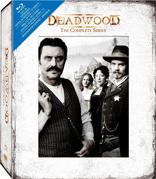 'Deadwood: The Compete Series' Blu-ray Pre-orders Live![teaser]It was a hell of a place to make a fortune, the winner of eight Emmy awards, and it may bring the gold rush to high-definition soon! [/teaser] In an early announcement to retailers, it seems HBO is finally bringing 'Deadwood: The Compete Series' to Blu-ray sometime in the near future. Although no date has been set yet, the release appears to be a 13-disc set containing all 36 episodes in 1080p with a DTS-HD Master Audio 5.1 soundtrack. No special features have been revealed. Suggested list price for this set will be $209.98. You can find the latest specs for 'Deadwood: The Compete Series' linked from our Blu-ray Release Schedule, where it's indexed under PENDING.Posted Fri Jul 2, 2010 at 10:30 AM PDT by:
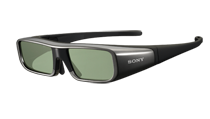 Sony's 3D Glasses Are Now Available for $150[teaser]Sony states 100 hours of battery life, but you'll have to buy replacements since these don't recharge. [/teaser] Sony's 3D glasses have finally hit the market, and they're about what you'd expect from 3D glasses. They're relatively slick looking – or at least as nice looking as the next pair of 3D glasses – and they let you see in 3D. It boggles the mind that more companies don't make their 3D glasses rechargeable though. In addition to each $150 pair of glasses, you'll have to shell out for batteries after they run out. That's pretty inconvenient. Sony doesn't give you a break on glasses for the kids either. Whether you're buying for the young ones or for adults, you'll be paying $150 a pair. And of course, if your TV doesn't have a built in transmitter, you'll have to pick one of those up for an additional $50. Source: Sony StylePosted Fri Jul 2, 2010 at 10:00 AM PDT by:
 Home Automation is the Next Big Thing According to Parks Associates[teaser]The research firm says market penetration could be as high as 20 percent by 2014. [/teaser] Most folks don't have a remote control to manage their curtains or a tablet that lets them turn on their music while dimming the lights. That sort of luxury has historically been within the realm of the super rich. According to Parks Associates, it's going to be taking off in a big way over the next few years. Home controls are incredibly cool, and they're actually not as expensive as one might expect. Parks says that one of the biggest issues is consumer awareness, but thanks to an upcoming push from companies like Best Buy, Radio Shack and Schlage, that issue will be a thing of the past. The main focus, of course, will be entertainment controls like music and movie servers and the devices to manage them. These can be expanded to do lighting, windows and security, which should inspire more folks to jump on the bandwagon. As Parks director Bill Ablondi puts it, "Consumers see the value in these areas, which, once established, can serve as the base for expanded control systems in the home." Source: Home ToysPosted Fri Jul 2, 2010 at 09:00 AM PDT by:
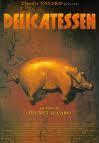 Blu-ray Heads to the 'Delicatessen'[teaser]The critically-acclaimed black comedy from Jean-Pierre Jeunet and Marc Caro has just been announced for Blu-ray release this September. [/teaser] Lionsgate has just announced 'Delicatessen' for a Blu-ray release as part of their StudioCanal Collection on September 21. The film stars Cesár Award winning actors Jean-Claude Dreyfus, Dominique Pinon, and Karin Viard, alongside fellow nominees Marie-Laure Dougnac and Ticky Holgado. The Blu-ray will feature 1080p video, a DTS-HD Master Audio 2.0 soundtrack, and supplements will include: New retrospective documentary with Jean-Pierre Jeunet, Making-of featurette, 20-page collectible booklet written by Empire contributing editor Kim Newman, Audio commentary with the director, The Archives of Jean-Pierre Jeunet. Suggested list price is $39.99. You can find the latest specs for 'Delicatessen' linked from our Blu-ray Release Schedule, where it's indexed under September 21.Posted Fri Jul 2, 2010 at 08:00 AM PDT by: