by Michael S. Palmer
[teaser]To celebrate the August 14th Blu-ray release of Steven Spielberg's horror classic, 'JAWS', Universal invited High-Def Digest to the Universal Studios backlot in Burbank, California to chat with the film's co-writer and production designer, the producer of a Blu-ray exclusive documentary, and a Universal executive who oversaw the film's 35mm restoration alongside Steven Spielberg himself.[/teaser]
One of the most anticipated Blu-ray releases in the format's history, 'JAWS' is part of Universal's 100th Anniversay celebration, and is one of thirteen 2012 Blu-ray releases to receive a full film-resolution restoration (more on that in a minute). Interviews were conducted along the route of Universal's famous tram tour, so every five minutes, a new tram teaming with tourists pulled behind the four interview subjects and, to the screaming delight of everyone involved, the dock exploded in a roar of fire as a mechanical shark rose up to attack anyone with a camcorder.
Simply put, it was a great atmosphere for interviews, but eight minutes with each man was far too short.
First up, we have J. Michael Roddy, the producer of 'The Shark is Still Working'. This fan documentary premiered a few years ago, but appears here as a Blu-ray exclusive. The independently produced film, narrated by Chief Brody himself, took Mr. Roddy and his partners (James Gelet, Jake Gove, Erik Hollander, and Michael McCormack) years to complete. They are honored to be included on the Blu-ray.
J. MICHAEL RODDY
HDD: I've been reading about 'The Shark is Still Working' for many years. It was a pleasure to finally see it. How exciting is it for you, setting out to make a "fan documentary", to have it be an exclusive special feature on the 2012 'JAWS' Blu-ray Disc?
J. MICHAEL RODDY: When the producers and I set out to make this documentary, we wanted to make the ultimate fan documentary. That's why we did it. We wanted it to be for the fans, from the fans. And, you know, it's interesting that's become its own genre now. We really kinda started that ball rolling and it took a long time to get here [7 years!]. The road here had many potholes like the original 'JAWS', which took a long time to get to the theatre after many trials and tribulations. We are so absolutely thrilled to now be a part of the Blu-ray and it now gives us, a small part in our minds, we're part of the 'JAWS' mythology.
HDD: Take us back to the beginning. How did you guys go from fans to documentary filmmakers?
JMR: It's interesting. We were all inspired by 'JAWS'. It was our favorite film. And we were in different areas of the country, working in different
aspects of production. We had the opportunity to interview some of the locals on Martha's Vineyard and realized there were really compelling stories we had never heard before. So as we started to capture that, we realized no one was really talking about the impact. We all know the shark didn't work, but the reason we named our documentary 'The Shark is Still Working' is because the shark not working then means the shark still works 35 years later. So as we really started to define what that could be, the impact, and talking about the legacy of the film, we realized there were so many people positively influenced by this film: shark researchers, conservationists and, most importantly, some of our most amazing filmmakers working today -- Brian Singer, Robert Rodriguez, Stephen Soderbergh, Kevin Smith. They all cited 'JAWS' as the film that made them do what they do. And we said, that's a great story, and everything else fell into place.
HDD: Your documentary covers the huge challenges faced during the film's production. What was the biggest obstacle in making your film?
JMR: The biggest challenge to making 'The Shark is Still Working' is that it was independently produced by five guys that live in different areas of the country, who pooled their own resources together and just had the passion to tell the story. What kept us going is the fact that we were doing it for the fans and we were also doing it for the people who gave us the time -- Roy Schieder, Richard Dreyfuss, Steven Spielberg, Joe Alves, Carl Gottlieb. Every time we had an opportunity to speak with one of those guys, it became another weight of responsibility that became "we have to see this through to the finish line". And the fact that it's now part of the Blu-ray, which is amazing, just gives us...it's such a great end.
HDD: What was the timeline for making the film? How did it go from a discussion ("Hey let's make this documentary") to the final cut?
JMR: We would pool our money together and have interview trips. The Internet was our friend. We had a grassroots campaign and we had a website to let people know what we were doing. And what was amazing is that most of the movie websites that are out there really picked up on it and supported us. So we started getting contacted, saying "well you know I have this piece of information about 'JAWS'" or "my cousin was this person that was in 'JAWS'" or "he knows this person." It was just making the calls to say "this is what we want to do, do you want to be a part of it?" And everybody said yes.
HDD: What was it like meeting Spielberg for the first time?
JMR: Meeting Steven Spielberg was, by far, the coolest experience of this whole documentary production. The cool thing about it is he's just a film geek like us. He sat down and he loves to talk about it. He lives and breathes it. The enthusiasm he had for our film, which is more about the film's impact, he was like a kid in a candy store. He was fantastic.
HDD: When did Universal first talk to you guys about being on the Blu-ray?
JMR: We always hoped it would be part of some type of release. Like all the fans out there, when Blu-rays first came out, we were waiting for 'JAWS'. When's 'JAWS' going to be announced...when's 'JAWS' going to be announced? Probably late last year, Spielberg announced he was working on the restoration and, within a day, we got a call from Universal saying, "you know, you guys have bided your time, we really want your documentary to be a part of this amazing release.
HDD: Awesome! So what would you say is the rarest footage you found, or something audiences may never have seen before, or something you learned that you didn't know about the making of 'JAWS'?
JMR: Some of the rare footage and photos we have in the documentary have never been seen before. One of the coolest things about it is, as we started to talk to people, when 'JAWS' was made in 1974, there wasn't the security around a film like there is today. There wasn't the Internet so no one was nervous if someone took a picture. And we found all these people that had amazing photos and access to the set. Then we found 8MM footage of them making 'JAWS'. It's the highlight of the documentary for us because you get to see views of the shark where you can pick out what scene it is, but it's a different angle. Also, there are scenes like where the old man at the beginning of the film is complaining about the kids karate chopping his white picket fences. Well, they shot that scene and we have footage of them shooting it, and it's like, I never knew they shot that. That's amazing.
HDD: What making-of documentaries inspired you guys to make this film?
JMR: Our mark for this was we wanted this to be a companion to the Laurent Beuzerau 'The Making of JAWS' [also on the Blu-ray]. That is a fantastic documentary. The reason most of us originally bought laserdisc players is for that documentary.
MIKE DARUTY, SVP, UNIVERSAL TECHNICAL OPERATIONS
HDD: How many times has Universal restored 'JAWS' in the last 37 years?
MIKE DARUTY: I believe this is probably the third time. We probably originally did it for VHS, and we would have redone it for DVD, and now for Blu-ray.
HDD: What was the condition of the source materials?
MD: We accessed the original 35mm negative for this restoration, which is the first time we've ever done that [for 'JAWS']. The negative was in a condition that's typical for its age and use. We scanned that original negative in 4K on a liquid gate scanner. The liquid gate helped with some of the surface scratches. Then we went through our normal processes of color correction and digital restoration -- removing scratches and repairing torn frames. There were a scene or two that had some film damage. We process all of that, bringing Steven in a couple times during the process to get his feedback and final approval, and then we output it, in this case a new 35mm negative so we could preserve it as well as make some prints. We also made a new 2K digital cinema version and then new Blu-ray HD elements.
HDD: From the 4K or 2K master?
MD: Everything was done in 4K.
HDD: Were there any surprises?
MD: We had never gone from the original negative before. Our prior transfers were from the 35mm interpositive, so the difference is the interpositive is a [color] timed element that goes through a wet gate process. The original negative is untimed, so it takes a lot more color timing. It's not a wet gate, even though we scanned it as a wet gate. It still has a lot of normal negative dirt and scratches and, in this case, a couple torn frames. So the challenge was color correcting it and matching shots captured on different days or at different times of day. Then it was about going in and just cleaning it up. And it looks better now that it's ever looked.
HDD: Is there anything in the movie, after the 4K master was complete, you noticed new that you've never seen before?
MD: I think just detail. There's much greater detail in this version because it's a much higher resolution.
HDD: How many films are you restoring for Universal's 100th Anniversary?
MD: As part of the centennial, we've restored thirteen titles on a full-film restoration basis, which is really unprecedented for any studio to restore that many titles in a one year period. It really demonstrates our commitment to our preserving our library. We've also done remastering on another twenty-thirty titles for Blu-ray. Some of those are titles for the 'Alfred Hitchcock Masterpiece Collection' and others. But these thirteen titles were all done on a film resolution basis. We've released some already, more that are our classic horror movies will be released in the Halloween timeframe and we also have some of Hitchcock's films as well.
HDD: How does 'Vertigo' look?
MD: 'Vertigo' will look great. You'll be excited to see it.
HDD: What are some of your favorite restorations?
MD: I think, as part of this year's thirteen, we worked on some classic titles. 'All Quiet on the Western Front' was a massive restoration.
Posted Wed Aug 1, 2012 at 12:30 PM PDT by:
Michael S. Palmer
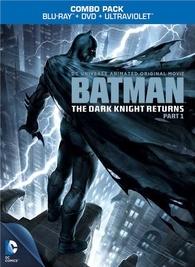 'Batman: The Dark Knight Returns - Part One' Blu-ray Dated[teaser]The first part of the animated adaptation of Frank Miller's highly acclaimed graphic novel will descend on Blu-ray in September. [/teaser] In an early announcement to retailers, Warner Brothers has slated 'Batman: The Dark Knight Returns - Part One' for Blu-ray on September 25. It is ten years after an aging Batman has retired, and Gotham City has sunk deeper into decadence and lawlessness. Now, when his city needs him most, the Dark Knight returns in a blaze of glory. Joined by Carrie Kelly, a teenage female Robin, Batman takes to the streets to end the threat of the mutant gangs that have overrun the city. And after facing off against his two greatest enemies, the Joker and Two-Face, for the final time, Batman finds himself in mortal combat with his former ally, Superman, in a battle that only one of them will survive. Specs and supplements have yet to be revealed, but the release will be a Blu-ray/DVD/Ultraviolet Digital Copy combo pack. You can find the latest specs for 'Batman: The Dark Knight Returns - Part One' linked from our Blu-ray Release Schedule, where it's indexed under September 25.Posted Thu Aug 2, 2012 at 11:05 AM PDT by:
 Hulu Plus Comes to Apple TV[teaser]That's a whole new range of viewing choices for customers, assuming they don't mind the subscription cost.[/teaser] When Apple TV launched it was a bit limited as far as content. It essentially only gave you access to iTunes and Netflix. Apple announced today that there's going to be just a bit more content added thanks to Hulu Plus, which will now appear on the home page of the Apple TV. If you want to sign up for Hulu Plus you can do so through Apple TV, iTunes or through Hulu directly, though first time users will want to sign up through HuluPlus/AppleTV for a one week free trial. After the week ends, it's $7.99 a month. Home Media MagazinePosted Thu Aug 2, 2012 at 11:00 AM PDT by:
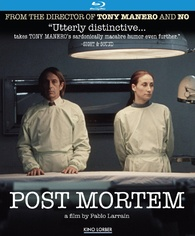 'Post Mortem' Blu-ray Dated and Detailed[teaser]The latest from acclaimed Chilean filmmaker Pablo Larraín will arrive on Blu-ray this August. [/teaser] In an early announcement to retailers, Kino has revealed 'Post Mortem' will be hitting Blu-ray on August 21. The second part of Larraín's celebrated trilogy about Chile during the dictatorial reign of Augusto Pinochet, 'Post Mortem' is a "grim, intense, mordantly comic little film" (A.O. Scott, New York Times) about a civil servant transformed by the 1973 military coup. Mario (Alfredo Castro, 'Tony Manero') is an unassuming state employee who transcribes notes during autopsies. Furtive and lonely, he becomes obsessed with his neighbor, the dance hall girl Nancy (Antonia Zegers), who is involved with a group of left-wing activists. With the coup, and the death of President Salvador Allende, Nancy's friends are hunted down, and Mario's hospital becomes clogged with the bodies of dissenters. Soon the violence filters into Mario's psyche, and he begins to break down, much like his country. Following the brilliant 'Tony Manero' (2008, available from Kino Lorber), and preceding the recently completed 'No' (2012), 'Post Mortem' is "a new and original vision of political terror" (J. Hoberman, Blouin Art Info) that remains urgently relevant to the repressive regimes of today. The Blu-ray will feature 1080p video, a DTS-HD Master Audio 5.1 soundtrack, and supplements include a still gallery and trailers. Suggested list price for the Blu-ray is $34.95. You can find the latest specs for 'Post Mortem' linked from our Blu-ray Release Schedule, where it's indexed under August 21.Posted Thu Aug 2, 2012 at 10:00 AM PDT by:
 Roku Streaming Stick Ready Devices Coming from Onkyo, Mitsubishi, Oppo, Insignia and More[teaser]The tiny streaming device will play nice with TVs and remotes from a handful of companies when it launches[/teaser]. Roku's Streaming Stick is an impressive gadget not too much bigger than a typical USB drive. What it does is plug into an HML compatible HDMI port and give your dumb TV the capabilities of a smart TV. It has built-in Wi-Fi and it's even made to work with your existing remote. Roku has revealed several companies that will be launching hardware that's "Roku ready," including Onkyo, Integra, Oppo, Apex, Mitsubishi, Insignia, Hitachi, Haier and Element. It's a significant list, though it's missing the major players in hardware manufacture. Roku says that some of these devices will bear a logo stating that they're compatible while others will actually ship with the bundle included. Source: EngadgetPosted Thu Aug 2, 2012 at 09:00 AM PDT by:
 'Strippers vs. Werewolves' Announced for Blu-ray[teaser]The battle for supremacy begins in late September. [/teaser] In an early announcement to retailers, Well Go USA will bring 'Strippers vs. Werewolves' to Blu-ray on September 25. A war between strippers and werewolves ensues when a member of a bloodthirsty pack of werewolves is murdered in a famous strip club. The girls who work there have until the next full moon before the werewolves' vicious leader sends his wolf pack to hunt down the killers and seek retribution. Problems arise for both parties when the wolf pack realizes the club owner is experienced in dealing with hostile lycanthropes and that one of their own is dating a dancer from the club. Specs have yet to be revealed, but the Blu-ray will include an audio commentary and behind-the-scenes featurette. Suggested list price for the Blu-ray is $24.98. You can find the latest specs for 'Strippers vs. Werewolves' linked from our Blu-ray Release Schedule, where it's indexed under September 25.Posted Thu Aug 2, 2012 at 08:00 AM PDT by:
 Google's Nexus Q Gets Delayed - Customers Who Preordered Get One Free[teaser]How's that for treating early adopters well?[/teaser] We've all been there before. You've preordered a Blu-ray or a videogame or a piece of gear only to find out it's been delayed. You really have no choice but to wait longer and you never end up getting anything in the way of an apology. Google does things a little differently. According to a statement by the company, pre-order customers will all be added to the preview program and will be sent a Nexus Q to them absolutely free. It's unclear whether this means that the customers will be refunded for their preorder and will get the device for free or that they'll be getting a second Nexus Q, but either way it's a great way to apologize for the issues. The delay is, according to Google, to make the device better. Further specifics were not mentioned. Source: EngadgetPosted Thu Aug 2, 2012 at 07:00 AM PDT by:
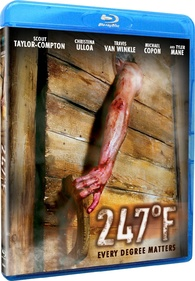 '247° F' Announced for Blu-ray[teaser]Blu-ray gets trapped in a sauna this October! [/teaser] In an early announcement to retailers, Starz/Anchor Bay has scheduled '247° F' for Blu-ray on October 23. When four friends travel to a lakeside cabin for a carefree weekend the fun turns into a nightmare when three of them end up locked in a hot sauna. Every minute counts and every degree matters as they fight for their lives in heat that is quickly approaching the deadly limit of 247-F. Specs and supplements haven't been revealed yet, but the suggested list price for the Blu-ray is $29.99. You can find the latest specs for '247° F' linked from our Blu-ray Release Schedule, where it's indexed under October 23.Posted Thu Aug 2, 2012 at 06:00 AM PDT by:
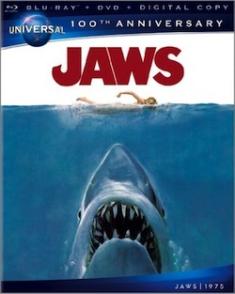 HDD Interviews Cast & Crew of 'JAWS' About the Blu-ray Restoration and Exclusive Documentaryby Michael S. Palmer [teaser]To celebrate the August 14th Blu-ray release of Steven Spielberg's horror classic, 'JAWS', Universal invited High-Def Digest to the Universal Studios backlot in Burbank, California to chat with the film's co-writer and production designer, the producer of a Blu-ray exclusive documentary, and a Universal executive who oversaw the film's 35mm restoration alongside Steven Spielberg himself.[/teaser] One of the most anticipated Blu-ray releases in the format's history, 'JAWS' is part of Universal's 100th Anniversay celebration, and is one of thirteen 2012 Blu-ray releases to receive a full film-resolution restoration (more on that in a minute). Interviews were conducted along the route of Universal's famous tram tour, so every five minutes, a new tram teaming with tourists pulled behind the four interview subjects and, to the screaming delight of everyone involved, the dock exploded in a roar of fire as a mechanical shark rose up to attack anyone with a camcorder. Simply put, it was a great atmosphere for interviews, but eight minutes with each man was far too short. First up, we have J. Michael Roddy, the producer of 'The Shark is Still Working'. This fan documentary premiered a few years ago, but appears here as a Blu-ray exclusive. The independently produced film, narrated by Chief Brody himself, took Mr. Roddy and his partners (James Gelet, Jake Gove, Erik Hollander, and Michael McCormack) years to complete. They are honored to be included on the Blu-ray. J. MICHAEL RODDY HDD: I've been reading about 'The Shark is Still Working' for many years. It was a pleasure to finally see it. How exciting is it for you, setting out to make a "fan documentary", to have it be an exclusive special feature on the 2012 'JAWS' Blu-ray Disc? J. MICHAEL RODDY: When the producers and I set out to make this documentary, we wanted to make the ultimate fan documentary. That's why we did it. We wanted it to be for the fans, from the fans. And, you know, it's interesting that's become its own genre now. We really kinda started that ball rolling and it took a long time to get here [7 years!]. The road here had many potholes like the original 'JAWS', which took a long time to get to the theatre after many trials and tribulations. We are so absolutely thrilled to now be a part of the Blu-ray and it now gives us, a small part in our minds, we're part of the 'JAWS' mythology. HDD: Take us back to the beginning. How did you guys go from fans to documentary filmmakers? JMR: It's interesting. We were all inspired by 'JAWS'. It was our favorite film. And we were in different areas of the country, working in different aspects of production. We had the opportunity to interview some of the locals on Martha's Vineyard and realized there were really compelling stories we had never heard before. So as we started to capture that, we realized no one was really talking about the impact. We all know the shark didn't work, but the reason we named our documentary 'The Shark is Still Working' is because the shark not working then means the shark still works 35 years later. So as we really started to define what that could be, the impact, and talking about the legacy of the film, we realized there were so many people positively influenced by this film: shark researchers, conservationists and, most importantly, some of our most amazing filmmakers working today -- Brian Singer, Robert Rodriguez, Stephen Soderbergh, Kevin Smith. They all cited 'JAWS' as the film that made them do what they do. And we said, that's a great story, and everything else fell into place. HDD: Your documentary covers the huge challenges faced during the film's production. What was the biggest obstacle in making your film? JMR: The biggest challenge to making 'The Shark is Still Working' is that it was independently produced by five guys that live in different areas of the country, who pooled their own resources together and just had the passion to tell the story. What kept us going is the fact that we were doing it for the fans and we were also doing it for the people who gave us the time -- Roy Schieder, Richard Dreyfuss, Steven Spielberg, Joe Alves, Carl Gottlieb. Every time we had an opportunity to speak with one of those guys, it became another weight of responsibility that became "we have to see this through to the finish line". And the fact that it's now part of the Blu-ray, which is amazing, just gives us...it's such a great end. HDD: What was the timeline for making the film? How did it go from a discussion ("Hey let's make this documentary") to the final cut? JMR: We would pool our money together and have interview trips. The Internet was our friend. We had a grassroots campaign and we had a website to let people know what we were doing. And what was amazing is that most of the movie websites that are out there really picked up on it and supported us. So we started getting contacted, saying "well you know I have this piece of information about 'JAWS'" or "my cousin was this person that was in 'JAWS'" or "he knows this person." It was just making the calls to say "this is what we want to do, do you want to be a part of it?" And everybody said yes. HDD: What was it like meeting Spielberg for the first time? JMR: Meeting Steven Spielberg was, by far, the coolest experience of this whole documentary production. The cool thing about it is he's just a film geek like us. He sat down and he loves to talk about it. He lives and breathes it. The enthusiasm he had for our film, which is more about the film's impact, he was like a kid in a candy store. He was fantastic. HDD: When did Universal first talk to you guys about being on the Blu-ray? JMR: We always hoped it would be part of some type of release. Like all the fans out there, when Blu-rays first came out, we were waiting for 'JAWS'. When's 'JAWS' going to be announced...when's 'JAWS' going to be announced? Probably late last year, Spielberg announced he was working on the restoration and, within a day, we got a call from Universal saying, "you know, you guys have bided your time, we really want your documentary to be a part of this amazing release. HDD: Awesome! So what would you say is the rarest footage you found, or something audiences may never have seen before, or something you learned that you didn't know about the making of 'JAWS'? JMR: Some of the rare footage and photos we have in the documentary have never been seen before. One of the coolest things about it is, as we started to talk to people, when 'JAWS' was made in 1974, there wasn't the security around a film like there is today. There wasn't the Internet so no one was nervous if someone took a picture. And we found all these people that had amazing photos and access to the set. Then we found 8MM footage of them making 'JAWS'. It's the highlight of the documentary for us because you get to see views of the shark where you can pick out what scene it is, but it's a different angle. Also, there are scenes like where the old man at the beginning of the film is complaining about the kids karate chopping his white picket fences. Well, they shot that scene and we have footage of them shooting it, and it's like, I never knew they shot that. That's amazing. HDD: What making-of documentaries inspired you guys to make this film? JMR: Our mark for this was we wanted this to be a companion to the Laurent Beuzerau 'The Making of JAWS' [also on the Blu-ray]. That is a fantastic documentary. The reason most of us originally bought laserdisc players is for that documentary. MIKE DARUTY, SVP, UNIVERSAL TECHNICAL OPERATIONS HDD: How many times has Universal restored 'JAWS' in the last 37 years? MIKE DARUTY: I believe this is probably the third time. We probably originally did it for VHS, and we would have redone it for DVD, and now for Blu-ray. HDD: What was the condition of the source materials? MD: We accessed the original 35mm negative for this restoration, which is the first time we've ever done that [for 'JAWS']. The negative was in a condition that's typical for its age and use. We scanned that original negative in 4K on a liquid gate scanner. The liquid gate helped with some of the surface scratches. Then we went through our normal processes of color correction and digital restoration -- removing scratches and repairing torn frames. There were a scene or two that had some film damage. We process all of that, bringing Steven in a couple times during the process to get his feedback and final approval, and then we output it, in this case a new 35mm negative so we could preserve it as well as make some prints. We also made a new 2K digital cinema version and then new Blu-ray HD elements. HDD: From the 4K or 2K master? MD: Everything was done in 4K. HDD: Were there any surprises? MD: We had never gone from the original negative before. Our prior transfers were from the 35mm interpositive, so the difference is the interpositive is a [color] timed element that goes through a wet gate process. The original negative is untimed, so it takes a lot more color timing. It's not a wet gate, even though we scanned it as a wet gate. It still has a lot of normal negative dirt and scratches and, in this case, a couple torn frames. So the challenge was color correcting it and matching shots captured on different days or at different times of day. Then it was about going in and just cleaning it up. And it looks better now that it's ever looked. HDD: Is there anything in the movie, after the 4K master was complete, you noticed new that you've never seen before? MD: I think just detail. There's much greater detail in this version because it's a much higher resolution. HDD: How many films are you restoring for Universal's 100th Anniversary? MD: As part of the centennial, we've restored thirteen titles on a full-film restoration basis, which is really unprecedented for any studio to restore that many titles in a one year period. It really demonstrates our commitment to our preserving our library. We've also done remastering on another twenty-thirty titles for Blu-ray. Some of those are titles for the 'Alfred Hitchcock Masterpiece Collection' and others. But these thirteen titles were all done on a film resolution basis. We've released some already, more that are our classic horror movies will be released in the Halloween timeframe and we also have some of Hitchcock's films as well. HDD: How does 'Vertigo' look? MD: 'Vertigo' will look great. You'll be excited to see it. HDD: What are some of your favorite restorations? MD: I think, as part of this year's thirteen, we worked on some classic titles. 'All Quiet on the Western Front' was a massive restoration.Posted Wed Aug 1, 2012 at 12:30 PM PDT by:
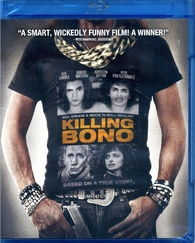 'Killing Bono' Blu-ray Announced[teaser]The 2010 comedy is in the works for Blu-ray in August. [/teaser] In an announcement to retailers, Arc Entertainment has set 'Killing Bono' for Blu-ray on August 7. 'Killing Bono' is a rock n’ roll comedy about two Irish brothers struggling to forge their path through the 1980’s music scene… whilst the meteoric rise to fame of their old school pals U2 only serves to cast them deeper into the shadows. Specs and supplements have yet to be revealed, but suggested list price for the Blu-ray is $20.99. You can find the latest specs for 'Killing Bono' linked from our Blu-ray Release Schedule, where it's indexed under August 7.Posted Wed Aug 1, 2012 at 12:00 PM PDT by:
 'Red Lights' Dated for Blu-ray[teaser]The latest thriller from acclaimed filmmaker Rodrigo Cortés is bound for Blu-ray in October. [/teaser] In an early announcement to retailers, Millennium Media will be releasing 'Red Lights' on Blu-ray on October 2. Veteran paranormal researchers Dr. Margaret Matheson (Sigourney Weaver) and Tom Buckley (Cillian Murphy) debunk fraudulent claims of ghost whispering, faith healing and other psychic phenomena by detecting what Matheson calls ''red lights,'' the subtle tricks behind every staged supernatural occurrence. But when the legendary blind psychic Simon Silver (Robert De Niro) comes out of retirement after 30 years, his once-fearless adversary Matheson warns Buckley to back off, fearing reprisal from the powerful Silver. Determined to discredit Silver, Buckley and his star student (Elizabeth Olsen) use every tool at their disposal to uncover the truth behind the charismatic, spoon-bending, mind reader. But Buckley is forced to reexamine his own core beliefs as his quest builds to a mind-blowing conclusion in this taut psychological thriller from award-winning writer and Rodrigo Cortés ('Buried'). Specs and supplements haven't been revealed yet, but the suggested list price for the Blu-ray is $29.99. You can find the latest specs for 'Red Lights' linked from our Blu-ray Release Schedule, where it's indexed under October 2.Posted Wed Aug 1, 2012 at 10:00 AM PDT by: