-
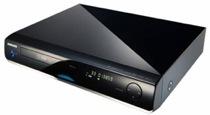 Samsung Fixes the 'Avatar' Blu-ray Issue[teaser]The firmware is out and now all Samsung Blu-ray players should be able to enjoy 'Avatar.' [/teaser] Early Samsung players – the BD-UP5000 and the BD-P1400 – had a bit of an issue with 'Avatar' when it came out on Blu-ray. Because of a new digital rights management (DRM) technology, the movie just plain wouldn't play on those earlier players. Thanks to a pair of firmware updates, the issue has now been resolved. If you own one of the two problematic players, you can jump onto Samsung's site, download and install the appropriate firmware, and you're good to go. What looked like a big compatibility problem is now a non-issue. But there's still a lingering question of just how long firmware updates will be able to future proof older players. Source: SlashgearPosted Sun May 2, 2010 at 02:15 PM PDT by:
 -
 '56 HD Advisor with Hardtop and Continental KitEditor's Note: Each Friday, High-Def Digest's own HD Advisor will answer a new round of questions from our readers. If you have home theater questions you need answered, send an email to [email protected]. If you've already sent a question and don't see it answered yet, please be patient as we work our way through them. To browse through previously answered questions, visit the main HD Advisor page. Answers by Joshua Zyber Correction re: HD Audio Downconversion Q: Last week, I read something in your Is HD Audio Worth it? answer that sounded strange to me. I've learned from you that a Dolby TrueHD track is completely different than a regular Dolby Digital track. When a Blu-ray has a Dolby TrueHD track, it has to also contain a standard Dolby Digital track for compatibility reasons. This is different than DTS-HD Master Audio, which has a "core" conventional DTS track inside it. What sounded strange to me was these words: "When Blu-ray players downconvert both Dolby TrueHD and DTS-HD Master Audio soundtracks to standard Dolby Digital or DTS for output to older A/V receivers, they do so at the maximum allowable bit rates for those formats." I don't see what you mean by a Blu-ray player downconverting Dolby TrueHD to a standard Dolby Digital. As we know, they are different. I wonder if what you meant was that, in the Blu-ray discs that have a standard Dolby Digital track, that track is recorded with a bit rate higher than the used in DVDs. Can you clarify? A: You are absolutely correct that I should have been more clear in that response. I used the word "downconvert" as shorthand to explain that (in the scenario described) the player outputs lossy Dolby Digital or DTS when playing Blu-ray discs authored with lossless Dolby TrueHD or DTS-HD Master Audio tracks. However, the word "downconvert" implies that the player itself applies processing to the original lossless tracks to scale them down or compress them. That is not the case. As you mentioned, a DTS-HD Master Audio contains an audio "core" in standard DTS format. If the Blu-ray player is connected to an older A/V receiver that isn't compatible with lossless audio, the player will extract the core and disregard the lossless extension. It then transmits that core to the receiver. This is, technically, different than "downconversion." Likewise, a Blu-ray authored with Dolby TrueHD audio must also contain a backwards-compatible Dolby Digital track. In this case, the lossy track is a separate entity, not a "core." Sometimes, the Dolby Digital track is "hidden," in that you can't actively select it from the disc's menus. However, if the player is connected to a receiver incompatible with TrueHD, it will ignore the TrueHD track and default to the DD track instead. Again, this is technically different than downconversion. I hope that clears it up. I apologize for the confusion this caused. 2k or 4k Video at Home? Q: If you have already answered this in some way before, you may just let me know where to find the answer. Some people went crazy buying movies in the DVD era. Now that Blu-ray is here, DVD is the new VHS. After 1080p, is the next jump in home theater resolution, such as 2k, going to see obvious diminishing returns? Not that you can predict the future, but mathematically. If people were purchase a lot of Blu-rays, is there a good chance that the next generation format might not feel so far removed from Blu-ray quality? A: You're right that a similar question was asked once before. But it's been a while, so the subject is worth revisiting. Our home video HD standard of 1080p is not far removed from the 2k resolution used in a majority of digital cinemas. Technically, 1080p refers to a resolution of 1920x1080 pixels. "2k" digital cinema is 2048x1080. That's only about a 7% increase in pixel density. Now consider that Blu-ray's 1080p resolution is a 500% increase over DVD. An upgrade from 1080p to 2k would not be the same sort of quantum leap improvement as we've seen going from standard definition to high definition. In terms of resolution, it would barely be noticeable at the screen sizes most home theater owners use. 2k digital cinema also has deeper color space that might help with the purity and accuracy of colors (and eliminate banding artifacts). Even still, all in all, this would very much be an incremental improvement. Some premium digital cinemas use high-end 4k projectors with a pixel resolution of 4096x2160. That's a more significant increase of more than 325% from 1080p. That can be greatly beneficial on large theater screens. However, in the home environment, all those extra pixels would have to be packed into the same screen sizes we're watching now. The result is that the pixels would be so small that the human eye couldn't resolve all that extra detail. This is much akin to why there's little point in buying a 15" 1080p display. At sizes that small, your eye can't tell the difference between 480p and 1080p. The pixels are just too tiny. Keep in mind also that the vast majority of modern feature films that are either shot digitally or use a Digital Intermediate stage during production are currently rendered and archived at 2k resolution. 4k productions are very rare. (Even 'Avatar' was shot with 2k digital cameras.) When a 2k movie is projected at a 4k theater, it's upconverted to the higher resolution, similar to how DVDs are upconverted for display on an HDTV. What all of this comes down to is that I think 1080p is the "sweet spot" where home video will remain for the foreseeable future. Some manufacturers may experiment with higher resolutions, but 1080p will very likely remain the standard for quite some time. 'Avatar' vs. Blu-ray Players Q: I just got an email from Best Buy because I ordered 'Avatar' from them. It is suggesting that I check my Blu-ray player for firmware updates. It states, "In order to provide the best possible picture and sound, this Blu-ray Disc uses advanced technology that may cause compatibility issues with some Blu-ray players." I can understand if it needs an update for newer copy protection or Java features, but what can newer firmware do with the main feature's picture and sound that couldn't be done before (especially considering this is a 2-D disc)? Is this maybe just a fib in order to excuse a disc that has compatibility issues with several players? A: You've got it exactly right. There's nothing a firmware update for your player will do to improve the picture or sound of a Blu-ray disc that otherwise plays without issue. (Meaning, the disc actually loads and plays through without glitches.) The notice from Best Buy was really referring to the BD+ copy protection that 20th Century Fox used on the disc, which has already been reported to cause incompatibility problems with many standalone Blu-ray players. Unfortunately, Fox is the most paranoid of all the major Hollywood studios when it comes to concerns about video piracy, and constantly changes its encryption protocols, to the detriment of law-abiding consumers who've purchased their product and can't get it to actually work. You'll notice the ambiguous wording of the Best Buy announcement. When it says, "In order to provide the best possible picture and sound," that doesn't mean that the firmware update will give you better picture or sound. It means that without the firmware update, your player may not provide you with picture or sound from this disc at all. Homework Assignment: You Be the Advisor The HD Advisor knows many things, but he doesn't know everything. Some questions are best answered with a consensus of opinions from our readers. If you can help to answer the following question, please post your response in our forum thread linked at the end of this article. Your advice and opinions matter too! Plasma Screen Cleaners Q: What screen cleaner you would recommend for my Pioneer plasma TV? I love my baby (and so does the girlfriend) and I want to keep her screen looking pretty. Pioneer said to use a dry microfiber cloth, but I've heard there are chemicals you can spray on a microfiber cloth and then clean the screen. Are these a waste of time, or do they really work? Do you have any personal experience with them? Check back soon for another round of answers. Keep those questions coming. Joshua Zyber's opinions are his own and do not necessarily reflect those of this site, its owners or employees.Posted Fri Apr 30, 2010 at 11:00 AM PDT by:
 -
 HDD Spotlight Bargain: 'Trick r' Treat' Blu-ray $13.99 at Amazon[teaser]It's Halloween in springtime! Michael Dougherty's acclaimed horror anthology is on sale at Amazon! [/teaser] The online retailer has reduced the price of 'Trick r' Treat' starring Brian Cox and Anna Paquin to only $13.99. Click here to order your copy before Sam (that creepy little kid in the burlap mask) sets his sights on YOU.Posted Fri Apr 30, 2010 at 10:30 AM PDT by:
 -
 Sony to Announce Google TV in May[teaser]Sources say Google I/O will be home to the big announcement of an Android based television. [/teaser] Sony's TV division hasn't exactly been doing well in the last few years. It's not that Sony isn't selling TVs – they are. It's just that they're not selling as many as they used to, and that's cause for some alarm. In cooperation with Google, Intel, and Logitech, Sony has been searching for a way to recapture the television market and give their sales figures a kick in the pants. We heard some rumors about potential of Google TV back in March, but it's been pretty quiet since then. Now it's been revealed that the announcement will be coming, and soon. The Google I/O conference is slated for May 19 and May 20, and the announcement is expected one one of those two days. The TV, according to Bloomberg, will use a custom Atom chip and a new version of Android, called Dragonpoint. All companies involved are currently declining to comment. Source: BloombergPosted Fri Apr 30, 2010 at 10:00 AM PDT by:
 -
 'The Illusionist' Blu-ray Detailed[teaser]The magical mystery unfolding on Blu-ray this June has been fully detailed. [/teaser] As previously reported, 20th Century Fox is bringing the catalog title 'The Illusionist' starring Edward Norton, Jessica Biel, and Paul Giamatti to Blu-ray on June 8. The movie was previously available on the format as an import from Italy as well as Canada. The Blu-ray/DVD combo pack will feature 1080p video, a DTS-HD Master Audio 5.1 soundtrack, and although there will be a director's commentary, a making-of featurette, and a Jessica Biel featurette, they apparently are found on the DVD only. Suggested list price for the Blu-ray is $24.99. You can find the latest specs for 'The Illusionist' linked from our Blu-ray Release Schedule, where it's indexed under June 8.Posted Fri Apr 30, 2010 at 09:40 AM PDT by:
 -
 DreamVision Debuts Starlight1 and Starlight2 HD Projectors[teaser]The new projectors sport high contrast ratios, expert calibration options, and an HQV video processor. [/teaser] DreamVision's latest projectors, the Starlight1 and Starlight2, are full 1080p projectors with an integrated 2.35:1 Cinemascope mode. They use a 3-chip LCOS engine and boast impressive contrast ratios of 32,000:1 (Starlight1) and 50,000:1 (Starlight2). That's just about double the contrast of DreamVision's last batch of projectors. They've also had some improvements in color reproduction, and thanks to DreamVision's own True Cinema Black technology they've improved dark color reproduction dramatically. "When watching a movie," says DreamVision, "black is really black." Both the Starlight1 and Starlight2 come equipped with an HQV video processor. Thanks to the processor, there are two different types of noise reduction, an improvement in color transitions, enhanced detail, and on the Starlight2, a Color Management System. DreamVision's new projectors are available at a price of $6,995 for the Starlight1 and $9,495 for the Starlight2. Source: DreamVision via Home ToysPosted Fri Apr 30, 2010 at 09:30 AM PDT by:
 -
 Sanyo Announces PLV-Z4000 HD Projector[teaser]The Z4000 boasts up to 216 billion color combinations and releases at the end of next month. [/teaser] The PLV-Z4000 is the latest projector to come out of Sanyo, and it offers just about everything you'd expect from a current high definition projector. To start with, it can handle video at a 1080p resolution, and at either 120 or 24 frames per second. It's a 3LCD projector, and thanks to its ability to double the input frame rate, Sanyo says it's able to virtually eliminate motion blur and artifacts. It uses the TopazReal HD system, a technology exclusive to Sanyo that the company says guarantees excellent optical performance. It uses 14-Bit signal processing and a new, highly efficient HD lens. It's also got a color management system that's capable of producing up to 216 billion different color combinations. "The high performance achieved by our TopazReal technology makes this projector an extraordinary value in today's home theater projector market," says Sanyo VP Sam Malik. "The PLV-Z4000's ability to display very high resolution artifact-free images with superb color accuracy, while being easy to install in any home theater environment, make it a great choice from the standpoint of both consumers and installers." You'll be able to pick up the PLV-Z4000 at the end of May for an MSRP of $2,495. Source: SanyoPosted Fri Apr 30, 2010 at 08:30 AM PDT by:
 -
 Sony Dash Personal Internet Viewer Now Available[teaser]Though limited in its portability, the Dash has some decent bang for the buck. [/teaser] The Sony Dash is out today at electronics stores across the country. The reaction to the device has been mixed, but all things considered, the dash might be a good option for some people, despite significant limitations. While the Dash looks like a nice portable device for streaming video, there's no battery in the Dash, which means no portability. If you don't mind that though, it could make a great screen to watch while cooking, cleaning, or doing other jobs around the house. The Dash sports a 7" WVGA screen. The 800 x 480 resolution isn't true 16:9, but it's not too far off. The capacitive touch screen is the only source of control, but since the Dash is entirely widget based, that should be more than enough. What's really cool about the Dash is its ability to stream video from sources like Netflix and YouTube. It may not have all the functionality of an iPad, but it doesn't have the same cost either. You can pick one up for $199. Source: Sony StylePosted Fri Apr 30, 2010 at 08:00 AM PDT by:
 -
 'Twilight Zone: Season One (1959)' Rumored for Blu-ray[teaser]There is a fifth dimension, beyond that which is known to man. It is a dimension as vast as space and as timeless as infinity. It is the middle ground between light and shadow, between science and superstition, and it lies between the pit of man's fears and the summit of his knowledge. This is the dimension of imagination. It is an area which we call the Twilight Zone. [/teaser] In an early announcement to retailers, it seems Image Entertainment is preparing 'Twilight Zone: Season One (1959)' for Blu-ray, although no date has been set yet. Specs and supplements have yet to be finalized, but the set is expected to contain all 36 episodes. Expected list price for the Blu-ray is $99.98. You can find the latest specs for 'Twilight Zone: Season One (1959)' linked from our Blu-ray Release Schedule, where it's indexed under PENDING.Posted Fri Apr 30, 2010 at 07:00 AM PDT by:
 -
 Kansai Airport Installs World's Largest Curved Plasma Display[teaser]At 200 inches, it's an impressive sight, but the real question is 'why?'[/teaser] Earlier this week, the Kansai Airport in Japan officially unveiled their newest installation, a 200 inch curved plasma display. It measures 4 meters high and 3 meters across, making it the largest display of its type. The videos being shown on the massive screen were created to introduce visitors to the airport and give some basic guidance as to how to get where you're going. It also serves as a primer on traditional Japanese culture, sightseeing spots in the area, and other things to do in the Kansai region. It makes sense that the airport has a nice big display for informing and entertaining, but the curve is a bit of a mystery, as is the orientation. Surely people would have been better served by a normally situated television mounted up against a wall. For what it's worth though, the strangely curved plasma has already brought more visitors into the airport. Source: Akihabara NewsPosted Fri Apr 30, 2010 at 06:00 AM PDT by: