HIGH-DEF DISC NEWS TAGGED "MARTIN SCORSESE"Receive High-Def Disc News via RSS

HDD Study Hall: Martin Scorsese

Wed Nov 30, 2011 at 04:25 PM ET
Tags: HDD Study Hall, Martin Scorsese, Luke Hickman, Fun Stuff (all tags)

by Luke Hickman

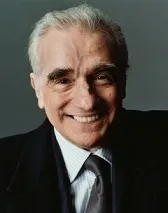
Without question, Martin Scorsese is one of the most influential filmmakers of all time. Although his achievements may not be measured through his count of Academy Awards, he is still revered as one of the finest cinematic storytellers around. His credits are interesting to read through because he does so much more than the average filmmaker. As well as writing and/or directing some of the most iconic films in history, he has produced, edited, acted in, and advised even more.

Scorsese entered the Hollywood scene with peers like George Lucas, Steven Spielberg, and Francis Ford Coppola. Together, they were known as the "Film School Generation," (though Spielberg was actually a dropout) contributing highly to the "New Hollywood Movement" also known as the "American New Wave." These four stormed into Hollywood and quickly made their mark. Along with other filmmakers characterized in the New Hollywood Movement, they brought artistic integrity back into mainstream cinema and changed the way the game was played. Mind you, at the time, they were four of the first new American filmmakers in a long time to make names for themselves.

Although he hit the ground directing, writing, and producing, Scorsese quickly dropped the latter two and focused his efforts in directing. During this phase, he made 'Alice Doesn't Live Here Anymore,' 'Taxi Driver' and 'Raging Bull,' just to name a few. Along the way he began making documentaries, short films, contributing to television series, and even tryig his hand at music videos. In 1990, Scorsese began writing again, and from there he began branching out in many different directions.

Instead of going through the list and revisiting five of his past credits, this edition of the HDD Study Hall will begin by taking a look at his life and many achievements and wrap up with a list of five Scorsese documentaries that many of us probably have not seen. Let's kick this thing off with a little game I like to call ...

Did you know ... ?

Did you know that Scorsese edited the 1970 'Woodstock' documentary? That's right. Click here to read Roger Ebert's brilliant write-up from Feb. 15, 1970 about how more than 120 hours of footage from the epic concert were filmed, compiled and condensed into a single Oscar-winning documentary. From shooting, to editing, to injuries, to helicopters and hippies - it's insane what went into making the historic film.

Did you know that Scorsese has directed 17 different actors to Oscar-nominated performances. Have you ever seen a bad actor give a fantastic performance? Whenever this rarity occurs, it is typically due to a strong director actually tweaking a solid performance out of his star. I'm not saying that Scorsese casts terrible actors in his films, but he knows how to mold an actor's performance to get what he wants. The number of acting nominations to come from his films speaks for itself. Of the 17 nominations, five went on to win the Oscar.

Did you know that Scorsese directed the music video for Michael Jackson's "Bad?" Fan of Michael Jackson or not, if you were watching music videos in the late '80s, you certainly remember seeing the video for "Bad" quite a bit. Well, Scorsese was the man behind the camera. On Michael Jackson's music video compilation DVD, the full "Bad" video runs at 17 minutes. However, the televised version you're probably familiar with was shortened to just a few minutes.

Did you know that "Marty" is an avid proponent of film preservation and restoration? In his new film 'Hugo,' he integrates his strong belief in these programs via the story's third act. In 1990, Scorsese created The Film Foundation, a non-profit organization whose sole purpose is to protect, preserve and restore films. For those of us who love Blu-rays with pristine transfers and clean prints, this is an organization to donate to. With Woody Allen, Francis Ford Coppola, Clint Eastwood, George Lucas, Robert Redford, Steven Spilberg, Paul Thomas Anderson, Wes Anderson, Curtis Hanson, Peter Jackson, Ang Lee, and Alexander Payne all working on the Board of Directors, this is one amazing organization that Scorsese has put together. Hopefully, they'll begin putting their restored movies on Blu-ray some time soon.

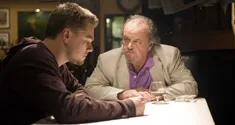
Did you know that it wasn't until his fourth Best Picture and Best Director nominations that he finally earned those two coveted Oscars? In 1980, 'Raging Bull' lost to Robert Redford's 'Ordinary People.' In 1990, 'Goodfellas' lost to Kevin Costner's 'Dances with Wolves.' And in 2004, 'The Aviator' lost to Clint Eastwood's 'Million Dollar Baby.' It wasn't until 2006 that he finally won both awards for 'The Departed,' beating out 'Babel,' 'Little Miss Sunshine,' 'Letters from Iwo Jima' and 'The Queen' for Best Picture, and Clint Eastwood ('Letters from Iwo Jima'), Stephen Frears ('The Queen'), Paul Greengrass ('United 93') and Alejandro González Iñárritu ('Babel') for Best Director.

Did you know that Scorsese serves as the executive producer of 'Boardwalk Empire?' He even directed and won an Emmy Award for the self-titled pilot episode. I haven't seen a second of this series, but now that I know this, I'm going to have to play catch-up.

5 Presumably Promising Scorsese Documentaries

'George Harrison: Living in the Material World'


Directed and produced by Scorsese, this new film premiered at the this year's Telluride Film Festival where it received fantastic reviews. The positive reviews boast about the film's intimate study of The Beatle's personal life. To achieve this deeply personal level, the film is full of new interviews and archival footage with the folks that Harrison surrounded himself with - Terry Gilliam, Eric Idle, John Lennon, Paul McCartney, Ringo Starr, Eric Clapton, Yoko Ono and Tom Petty. The only thing that the positive and negative reviews hold in common is the complaint that 'Living in a Material World' runs a too long. With a three and a half hour runtime, it's no wonder. Still not available on video, unless you caught it at a festival or saw it on BBC, you - like me - might have to wait a while to see this.

'My Voyage to Italy'


This 1999 film premiered at the Venice Film Festival. Much like 'George Harrison,' 'My Voyage to Italy' also features an extremely long runtime - 246 minutes. In it, Scorsese takes you on a journey through the Italian films that inspired and molded him the most. He introduces us to his family, takes us to his home, shows long clips from his very favorite Italian films that he grew up watching and explains the personal and social context to their importance. Many reviews cite specific moments within the film where Scorsese's voice-over reveals the tears that these clips bring to his eyes. These are films that literally move him and he openly dissects them and shares him intimate experiences about them. We all have films that we're passionate about, it sounds pretty amazing to have Scorsese share four hours of them with us.

'A Personal Journey with Martin Scorsese Through American Movies'


Yet another four-hour film, 'A Personal Journey' is much like 'My Voyage to Italy,' only with American films. The interesting thing about this film is Scorsese begins at the dawn of cinematic history and ends in 1969, the year that Scorsese began making films. Apparently, he says, "I wouldn't feel right commenting on myself or my contemporaries." These are the American films that inspired him to become a filmmaker. Unlike 'My Voyage to Italy,' 'A Personal Journey' features clips of front profile "confessional" style interviews with Scorsese explaining his connection to the films and their social relevance. As the clips roll, Scorsese also lends a voice-over narration. There's nothing cooler than watching someone knowledgeable explaining their deep passion. That's the reason this documentary made the list.

'No Direction Home: Bob Dylan'


The majority of Scorsese's documentaries revolve around music. 'No Direction Home' focuses on Bob Dylan's odd transformation over five years of his career. Through archival footage and modern interviews, 'No Direction Home' shows you how he went from struggling young folk artist to a lyrically vocal protester. Once again, this is another near 4-hour documentary that features one genius artist (Scorsese) fleshing out another (Dylan) through the creative medium that he's mastered.

'Public Speaking'


Of the five Scorsese documentaries that peaked my interest, this is the only one with a standard runtime - 84 minutes. HBO debuted this documentary last November. It dives into the personal and professional life of Fran Lebowitz, a well known satirical writer. She worked as a columnist under Andy Warhol and soon thereafter began publishing compilations of her works. In the early days of the 'Late Night with David Letterman,' she was a recurring guest. She's also popped up as a returning judge on 'Law & Order.' The purpose of 'Public Speaking' is to show her unique opinions on modern day living the New York city culture and lifestyle of which she has become a major figure.

See what people are saying about this story in our forums area, or check out other recent discussions.


Scorsese Wants You! (To Help Him Save Films) & Studios Finally Embrace Classic Blu-ray Titles

Thu Nov 11, 2010 at 03:05 PM ET
Tags: Martin Scorsese, Clint Eastwood, Industry Trends, Film Preservation, Blu-Con 2010, Michael S. Palmer (all tags)

by Michael S. Palmer

The Film Foundation

Just when I succumbed to the depressing notion of no Uncle Marty at last week's Blu-Con 2010, the Digital Entertainment Group (DEG) fired up a special announcement from filmmakers Martin Scorsese and Clint Eastwood.

As many of you well know, Scorsese established The Film Foundation in 1990 to protect and preserve motion picture history by saving and restoring projects slowing dying in film vaults around the world. They have saved over 500 motion pictures of all genres over the last twenty years, but there's still so much work to be done. To put it in perspective, half of all films made before 1950 have been lost forever. And currently, 100 million feet of film are in dire need of repair and restoration.


In a touching trailer which will soon be on millions of Blu-rays and DVDs, Scorsese and Eastwood show some marvelous restorations including their acclaimed work on 'The Red Shoes' and explain that films aren't meant to be locked away. They have to be presented and shown on a big screen.

For anyone wishing to donate, it's easy and can be done one frame at a time or in a more traditional manner.

Film Classics on Blu-ray


With the Please Give portion of Blu-Con out of the way, we settled into another panel featuring Jeff Baker from Warner Home Video, Rita Belda from Sony, Bob Buschi from Paramount, and Dave Shaw from Fox Home Entertainment. Moderated by the Digital Bits' Bill hunt, this panel was entiteld "Film Classics: New Opportunities for Blu-ray Catalogue." We watched clips from 'African Queen', 'The Bridge on the River Kwai', 'Sound of Music', and 'The Exorcist'. Sadly, they didn't look very good, but it wasn't Blu-ray's or their respective studios' faults. Some genius left blue theatrical lights on and pointed at the screens, which washed everything out and messed up the colors. Still, the Blu-rays could have passed for 35mm.

We've already mentioned in our Blu-Con coverage that there are so many great titles still not out on Blu-ray. For example, Warner Home Video has 6,700 titles in its library, but only ever put 2,300 on DVD. Now that Blu-ray is near Mainstream, the catalogue titles are seeing more profitable releases (Warners in particular has done a great job on titles like 'The Wizard of Oz' and 'North by Northwest').

But as opposed to past DVD catalogue releases, they can't just release the same old double dip. Especially in these economic times, studios must add value and content to the experience. In the case of 'The Bridge on the River Kwai', Sony had to figure out how to re-master source materials for a film that is widely known to have had camera problems during production. With 'The Exorcist', Warners found 37-year-old silent behind the scenes footage that had been film by the cinematographer. It was used to create brand new featurettes. Paramount re-mastered 'The Godfather' with Francis Ford Coppola and then not only marketed the film to cinephiles, but to new fans (apparently, Jon Montegne made a commercial calling it "the Italian Star Wars.") as well.

But what goes into choosing which titles are released when?

Warners said they evaluate titles on commercial viability, and then look at the film elements. Upwards of a year and half and a couple million dollars goes into restoring films, and that extended timeline allows them to plan a marketing strategy. For example, 'Blade Runner' didn't have huge box office numbers, but in the beginning of the Blu-ray format, sci-fi titles were selling well and 'Blade Runner' just so happens to be one of the most revered cult sci-fi classics of all time. Warners then started a 2 year process of restoration, working directly with director Ridley Scott. Fox said selecting a film is commercial, of course, but sometimes it's about artistic and cultural legacy. All titles won't break even on day one.

Why are they doing new High-Def master when some of them were just done a few years ago?

High-def transfers from even a few years ago aren't good enough for Blu-ray. Sony's been mastering in HD for 15 years, but all HD doesn't necessarily reflect today's standards. To do a really great, modern restoration, all the studios try to track down the original elements (in the case of 'Kwai', the original negative) and then scan them at the best resolution and quality available (most of this means a 4K scan, but of course we've seen 8K as well). Doing a high resolution scan avoids challenges with grain, which impacted the way masters looked ten to fifteen years ago (can anyone say so long noise reduction and edge enhancement?). Grain is minimized -- authentically, no funny stuff here -- the closer the digital scan's native resolution is to the film resolution, which varies by stock.

The 'African Queen' restoration proved to be a logistical challenge. The original source materials (a three strip Technicolor film) were in producer John Woolf's possession in London. But Woolf was so nervous of the film becoming damaged that he would only lend out one real at a time. So Paramount borrowed all 13 reels one at a time, scanned them at Kodak in London, and sent the scans back to Los Angeles.

But if the goal is to restore and preserve filmmaker intent, how then do they restore a film after everyone involved with the look of a film has passed away?

If the filmmakers are no longer around, studios search for available answer prints which would have been color timed, or they look for historical documentations. The restoration technicians really have to know film (eras, color qualities, etc). In terms of 'African Queen', ten years ago, Paramount screened the film for the cinematographer and recorded a commentary of his reactions (how it looked vs. how it should have looked). When Paramount was prepping this Blu-ray / restoration, the cinematographer and everyone else involved with the film had passed away, but the studio still had the commentary.

The good news for film fans is that the studios are no longer seeing Blu-ray as simply a format for modern action, horror, and sci-fi films. And because they're smelling a profit, we should be seeing a lot more classic titles that will look exceptional in 1080p -- not only the most filmic they've ever been in the home, but in some cases, they will look even better than in their original releases.

Up next, for better or worse, the studios are hoping to get a lot more films out on 3D, but it wasn't clear if this means a lot of conversions (it's an expensive process at $4-6Million per film) or simply releasing more recent 3D films on 3D Blu-ray.

What do you think, dear readers? What classics and catalogue titles do you most want to see on Blu-ray? What movies should be converted to 3D, and which ones shouldn't? Hit up the forums and share your opinions.

To check out the Film Classics panel for yourself, the folks over at Home Theater Forum taped the whole thing and posted it online:

See what people are saying about this story in our forums area, or check out other recent discussions.


» High-Def Digest home page


Like Us!