HIGH-DEF DISC NEWS TAGGED "DOLBY"Receive High-Def Disc News via RSS

Dolby 3D Will Enhance 3D Viewing Across the Board After Striking an Agreement with James Cameron's 3D Production House

Wed Apr 10, 2013 at 10:00 AM ET
Tags: Dolby, Philips (all tags)

Dolby 3D encode brings full resolution to 3D glasses devices and glasses free 3D streaming to any device regardless of the display technology.

Dolby Laboratories, Philips and the Cameron |Pace Group have signed an agreement to make Dolby 3D a direct part of CPG's 3D video Content production.

Cameron |Pace Group is led by co-founders James Cameron and Vince Pace, and is responbsible for 3D film capture of a majority of the top 3D films, concerts, sporting events, and other live and prerecorded content. Films such as 'Life of Pi,' Transformers: Dark of the Moon,' and 'TRON: Legacy' join concerts from Justin Bieber and U2, and nearly all 3D sports content as part of the Cameron | Pace Group's production credits.

Dolby 3D is a multifaceted 3D tech that aims to enhance and give viewers some control over 3D playback across the 3D ecosystem. Dolby boasts the ability to restore half resolution 3D content back to full using their technology.

The main thrust of the agreement is to enable glasses free 3D content to reach its largest audience. Dolby claims to be able to create a glasses free 3D experience that eliminates the need for a specific viewing position. The tech can be used to convert 2D content in real time to 3D, but by working with the Cameron | Pace Group, Dolby plans to source accurate 3D to all devices that support H.264 streaming in addition to 3D Blu-ray formats. Dolby cites the ability to bring glasses free, multiview 3D to tablets and Smartphones while only growing the data footprint by ten percent. Dolby's tech also supports adaptive bandwidth conditions.

In announcing the agreement, Vince Pace, Founder and Cochairman, CPG said, "James Cameron broke new ground in entertainment with his use of 3D in film, but it’s been a challenge to bring his vision to the home and to smartphones and tablets. The Dolby 3D format gives filmmakers the means to bring an artistic vision through production and distribution all the way to presentation, while delivering what we believe to be the best possible 3D experience to consumers—without the need for special glasses."

Source: Cameron |Pace group

See what people are saying about this story in our forums area, or check out other recent discussions.


Don't Miss 'The Croods' in Dolby ATMOS

Tue Mar 26, 2013 at 08:00 PM ET
Tags: Dolby, Dolby Atmos, Industry Trends (all tags)

By Michael S. Palmer

My favorite movie experiences are the surprises -- films from which you expect so little, everything on screen forces you to question avoiding it in the first place. Despite a filmmaking team that includes 'How to Train Your Dragon' co-director Chris Sanders, DreamWorks Animation's 'The Croods' was completely off my theatrical "must see" radar. Maybe it was the marketing; maybe I simply don't watch enough Saturday morning cartoons, but it just didn't seem worth my time. This gut-assumption continued when TV and radio ads quoted critics complimenting its "beautifully rendered" animation. 'Cause when a movie's no good, you can at least say it's pretty, right?

God, I love being wrong.

Last week, Dolby called, offering a couple free passes to see 'The Croods' in Dolby Atmos (I'm fortunate to live quite close to one of the equipped cinemas). After a brief hesitation, I figured why not. A free movie. A new sound experience. And a chance to tell our readers where this flick ranks next to auditory Atmos spectacles like 'Life of Pi', 'The Hobbit', and 'Taken 2'.

Basically, is it worth your hard-earned coin?

Very much so. 'The Croods' is tremendous fun thanks to terrific voice performances, a well-structured script, and, yup, beautifully rendered animation. Sure, academics could argue the film's thematics and character arcs aren't exactly subtle. Yet, in a four-quadrant family film, I never count that as a bad thing. Also, some of the settings and animals seem a little too 'Avatar' influenced, but overall, 'The Croods' has something for every audience. Brilliant colors, cute animals, and endless sight gags for the kiddos. A buried stream of darker jokes for the adults (like a running gag about the father hoping his mother-in-law dies). Fully stunning landscapes for the animation geeks. And we could spend hours discussing various creatures, which are inventive multi-animal combinations (mutations?).

Then there's Atmos for the sound geeks. Barring some catastrophe, this should make one hell of a 7.1 mix on Blu-ray, but if you live near an Atmos theatre (how do you know? check here), do yourself a favor check this movie out before the "print" moves. While not quite an audio masterpiece like 'Life of Pi', I enjoyed it more than 'The Hobbit' -- 'An Unexpected Journey' was a near-continuous assault, but 'The Croods' holds its show-stoppers for a few key sequences. Most of these involve The Croods running away from The End of the World, depicted as continents violently ripping apart, a thundering menace leveling mountains and splitting plains. These sequences are literally awesome. But my favorite Atmos moments were set in the cave sequence. After the family is separated in various tunnels, they call out to each other and, as this happens, the cinema auditorium turns INTO a cave environment.

My second favorite part about going to see 'The Croods' in Atmos wasn't the movie itself, but rather listening to the family sitting directly behind me. A Grandfather and Grandmother had taken their three Grandkids to see what seemed like everyone's first 3D picture. I have to assume these folks had no idea they were sitting in one of the best cinema auditoriums in the country (in terms of access to this brand new format). The Grandfather was particularly struck when the Atmos trailer/logo played before the feature film; in this one, the camera moves through an animated forest as a Maple Tree "helicopter seed" detaches, whips around the room, and splashes into a glassy pond. I heard further murmurs as various sound effects panned on and off the screen, around the cinema, and over our heads. The movie, thanks in no small part to the sound, impressed everyone that I could see. There were a lot of smiling, surprised faces in the lobby as we exited the theatre.

Obviously, that's just one family and sound mixes shouldn't really pull you OUT of the movie you're watching, but I go to movies with a slightly different analytical point of view compared to general audiences. I don't necessarily need an aggressive mix, but I try to compare and contrast various surround sound experiences to see how they're tricking my brain and affecting my emotional connection to the movie (to my suspension of disbelief).

Most Atmos mixes are terrific, authored by the best craftsman and artists Hollywood has to offer; for audio geeks, 'The Croods' offers a range of subtle and dynamic sound sequences that perfectly complement my favorite 2013 movie-surprise (thus far). Check out this movie on a big screen with the best sound possible before it's too late.

See what people are saying about this story in our forums area, or check out other recent discussions.


Dolby ATMOS Q&A: 'Life of Pi' and the Evolution of Sound

Tue Feb 05, 2013 at 07:15 PM ET
Tags: Dolby, Dolby Atmos (all tags)

by Michael S. Palmer

Last week, HDD was fortunate to attend a Dolby ATMOS Q&A session with the Oscar-nominated sound-mixing team behind Ang Lee's 'Life of Pi'. Not only was the panel informative in terms of the new theatrical surround sound format's history, but we actually got to hear 'Life of Pi' in ATMOS in the legendary Zanuck Theatre on the 20th Century Fox backlot, the very same room where the film was mixed. Please note, if you have not seen 'Life of Pi' and wish to remain 100% spoiler free, you might want to skip the three scene descriptions below.

Dolby's own Stuart Bowling served as moderator for the panel, which included: Ted Gagliano, president of post-production at 20th Century Fox. Ron Bartlett, sound re-recording mixer for 'Life of Pi', 'Prometheus', and 'A Good Day to Die Hard' and Doug Hemphill, sound re-recording mixer for 'Life of Pi', 'Blade Runner', 'Apocalypse Now', and 'The Dark Knight' (among many others). Erin Rettig, the Dolby ATMOS tech for 'Life of Pi". And Andy Potvin, a senior staff engineer for Dolby who help Fox install ATMOS in the Zanuck Theatre and assists clients with new technologies.

Dolby ATMOS is currently available in 70 cinemas, globally. 24 titles have been mixed in the format. And, as previously reported, the goal is to reach 1,000 screens before the year's end. The panel began with Andy Potvin describing how he oversaw the team that upgraded the Zanuck Theatre last summer. The technicians installed 50 JBL (model 7215) speakers, including five behind the screen, nine along each side wall, six on the back walls, and nine in each of the two overhead arrays.

The new format was in development for 8-10 years of testing to provide optional sound coverage (editor's note: when I played in Dolby's "sandbox", they hinted at a brand new surround format but would not confirm). Dolby ATMOS-equipped theatres (both for general audiences and Hollywood mixing stages) close the gap between the front, behind-the-screen, speakers and the side walls for better panning. Further, each speaker is full range, individually amplified, and there are extra subwoofers in the back so all the auditorium speakers have the same timbre. The dual overhead arrays are precisely aimed to not waste energy and, again, enhance panning.

Ted Gagliano then spoke about Fox's long history with various Dolby formats. Fox was actually the first studio to embrace ATMOS and, last year, gave Dolby access to 'Rise of the Planet of the Apes' to do an initial ATMOS demo for studios and filmmakers. Mr. Gagliano called ATMOS "different, immersive, and sonically like 3D."

After ATMOS was ready, 'Taken 2' became Fox' first ATMOS mix, but the film itself had already been finished, so the filmmakers went back in to add ATMOS elements [editor's note: this probably explains why the 'Taken 2' Blu-ray is only in 5.1 rather than 7.1]. 'Chasing Mavericks' came next, and was the first film fully mixed in the format, followed by 'Life of Pi'. Mr. Gagliano called ATMOS "a special format for a special movie" and went on to describe why he loves the format from both an audience and a studio perspective. Not only is it more immersive, but ATMOS software/hardware monitors all of its speakers to make sure everything in your cinema's working, to ensure audiences hear soundtracks as filmmakers intend.

Next, we watched the first of three clips from 'Life of Pi', the film's sinking ship set-piece. [BEGIN SPOILERS] If you haven't seen 'Life of Pi', this sequence follows our young hero, Pi, who has gone outside onto one of ship's top decks to see and feel a terrible thunderstorm first hand. What starts as wonderful fun takes a tragic turn, when giant waves besiege the boat, and she founders. Alarms wailing, and entire zoo's worth of animals panic, Pi desperately tries to go back to his family's cabin, only to find the water rapidly rising in the ship. Exhausted, Pi seeks out help, but crew members force the young man into a life boat, which crashes down into the torrential sea, Pi forced to watch the ship founder and sink with all of his loved one's on board. [END SPOILERS]

When I knew we were going to get to hear 'Life of Pi' in ATMOS (unfortunately, the one mix I missed theatrically), I was most excited for this sequence. It's bombastic and chaotic. A literal maelstrom. It really shows what ATMOS can do for action. Rain poured. Waves crashed overhead. You felt submerged underwater in various moments. It was terrific and terrifying and then, as the sequence transitioned from action to heartbreaking emotion, the score enveloped the room.

These are the scenes for which surround sound was made. I was blown away.

Afterwards, Ron Bartlett and Doug Hemphill spoke about their work on the film and their collaboration with director Ang Lee. Lee was apparently so enthusiastic about ATMOS he asked why there were no speakers in the floor. And the rule for 'Pi' became "when it serves the story, we will use it". For example, in the clip we saw, when the orchestral music comes up, Lee wanted to "give the audience a hug of empathy with the sound." So they wrapped the musical score around you, and pushed the choir element to the top rear.

Later, when they showed scenes to the film's composer, Mychael Danna, he first said, "this is a tasteful mix, but is it too tasteful?" Danna encourage Ron and Doug, who always mix films as an audience first, to push things.

The second clip was the film's flying fish sequence. [BEGIN SPOILERS] Pi is stuck on a raft with Richard Parker, a huge Bengal Tiger, and both are starving. Richard Parker has eaten the other "passengers", but now they're both starving until a school (flock?) of flying fish crash into, over, and around the boat. This is the moment where Pi stands up to Richard Parker, to make sure the beast isn't the only one who gets fresh fish. [END SPOILERS]

It's a pretty important moment in the movie, but as a demo, I was less impressed, if only because there was so much sound, it didn't wow me like the ship sequence. It was almost too dense, too much going on, that I wasn't able to tune into the audio-story being told. But I suppose the good news is that the sound certainly wasn't overwhelming the story and calling attention to itself.

Doug and Ron went on to described how Ang Lee wrestled with this sequence. The first cut included music as well as sound effects, but the music seemed to let the audience off the hook, so they took it out. With no music, the fight, the desperation, and the struggle became much more apparent.

This tought the sound team an important lesson. One of their collaborators -- Eugene Gerty, the Supervising Sound Editor -- couldn't be there for the panel, but everyone calls him "Eugenius". They were in the middle of mixing the flying fish sequence when Eugene started playing around with the controls, swirling sounds over heads, tons of objects everywhere. But the more objects on screen, Eugenius figured, the less literal you can be with the sound. You have to become more impressionistic.

SoundWorks Collection - The Sound of The Life of Pi from Michael Coleman on Vimeo.

The final clip was from Meerkat Island. [BEGIN SPOILERS] Imagine spending months at sea, alone with a blood thirsty tiger, and one day, you come upon a strange floating island in the middle of the ocean. A green oasis with beautiful large trees, and thousands upon thousands of friendly Meerkats huddled around crystalline pools of fresh drinking water. When Pi discovers this place, he thinks he is saved, but when night falls, Richard Parker flees the island, bounding back to the lifeboat. The Meerkats too have left the open plains and forest floor, climbing into the trees to sleep. What Pi sees is extraordinary, as the water in those strange pools turns to acid, killing and digesting fish. Pi then pulls a flower from the tree he's in and discovers at the center of it, a human tooth. [END SPOILERS]

Wow, as much as I love tremendously aggressive mixes with crashing waves, what really sells me on a quality mix is the quiet moments. A true sense of being there. And with ATMOS, it seems like you were on an island surrounded by thousands of fury critters, with a breeze softly blowing in the background, creaking branches and shifting leaves. This sequence really showed off ATMOS' immersion abilities. So very impressive.

Doug and Ron started wrapping up the panel with describing how ATMOS allowed them to take Mychael Danna's score, which is made up of hundreds of elements, and pan so many of the individual instruments as individual objects. They said the full range speakers really help keep "the integrity of the instruments." This Meerkat Island begins calm and then slowly becomes moody. Ron and Dough moved the score across the room, down along the walls, highlighting the gamelan, strings, and brass -- all of which are separate from the choir in the back.

Mixing, for Ron and Doug, comes down to creative sensitivity. Do you feel detached? "Did you smell the mixing?" Mr. Gagliano chimed in with great advice, "[ATMOS] is not about louder. It's about being more organic and natural."

The re-recording mixers also spoke about their next ATMOS mix, 'A Good Day to Die Hard'. In cinemas February 14, 'AGDTDH' has a lot of great stuff in it, but the more dense a movie's sound field, the more condensed (the more "mono") the picture becomes. They said their favorite moments are McClane father and son in a quiet moment in a big, open warehouse. "You can feel it."

Overall, Doug and Ron love ATMOS. Using it for the last few movies has been "like being a kid taking his parents car out for the first time." It's too late to see 'Life of Pi' in ATMOS, but look for this beautiful film on Blu-ray March 12 (2013). To see 'A Good Day to Die Hard' in ATMOS on 2/14 -- Yippe Kay Yee Mother Russia! -- check here for a list of Dolby ATMOS cinema screens and check here to find other Dolby formats in your area. Finally, if you'd like to learn a little more and watch the entire Q&A panel, here's the full 50 minutes:

Mixing "Life of Pi" in Dolby Atmos Sound Team Panel Discussion from Dolby Laboratories on Vimeo.

See what people are saying about this story in our forums area, or check out other recent discussions.


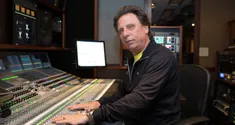
Dexter Season Six Release Party and Sound Mixer Interview

Fri Aug 10, 2012 at 02:15 PM ET
Tags: Dexter, Dolby, Dolby TrueHD, Atmos, 4K, UHDTV (all tags)

by Michael S. Palmer

To celebrate 'Dexter: The Sixth Season' coming to Blu-ray on August 14, Dolby Laboratories threw a release party this week at the famous Hollywood Roosevelt Hotel. 'Dexter: The Sixth Season', presented by Showtime and Paramount Home Entertainment, features a lossless 5.1 Dolby TrueHD soundtrack. Alas, there were no dead bodies like last year (or the year before), but we did have Cuban sandwiches as well as a two remote controlled yachts smashing into the poolside every few seconds. All in all, it was a fun evening.

I spent a few minutes chatting with Dolby's Craig Eggers about all things Dolby. First, we can expect to see some ATMOS updates within the next few months, including which upcoming films will be mixed in the format. As previously reported, Dolby premiered AMTOS at 14 US locations with Disney-Pixar's 'Brave', and will be working with cinemas to, hopefully, install 1,000 ATMOS locations by the summer of 2013. Still no word on ATMOS for the home.


Dolby Advanced 96K Upsampling, as tested by Mr. Josh Zyber and myself, will also announce a few new Blu-ray titles, most likely concert films. Advanced 96K Upsampling seems to be growing more in Asian markets, so those who like to import from China and Japan, you might want to keep your eyes peeled.


Craig and I also spent a few minutes chatting about the state of Blu-ray and high definition audio. Craig estimates we will see one more optical disc format to handle 4K or UHDTV. Another bright spot for audio comes courtesy of Dr. Dre; it's great to see people listening to full-sized headphones that provide an enhanced audio experience over earbuds.


After chatting with Mr. Eggers, Dolby was kind enough to hold short interviews with Peter Elia (Sound Re-recording Mixer) and Kevin Roache (Sound Re-recording Mixer) to talk about the Dolby TrueHD track on 'Dexter: The Sixth Season'. Here's the final video:

High Def Digest: Dexter Season 6 on Blu Ray in Dolby TrueHD from Dolby Laboratories on Vimeo.

Pick up 'Dexter: The Sixth Season' on Tuesday, August 14. 'Dexter: The Seventh Season' premieres on Showtime September 30th along with the second season of 'Homeland'.


Dolby Atmos Launch Locations Revealed

Fri Jun 08, 2012 at 02:00 PM ET
Tags: Dolby, Atmos (all tags)

If you're looking to get a sample of what may the future of sound, you're going to want to check this out.

Dolby Atmos is a tech that's been in development for a while and has incredibly cool applications. Using Atmos, Dolby is able to send sound absolutely anywhere they want. For example, if something is supposed to be passing over your left shoulder, you'll hear it pass over your left shoulder. It's very new and very cool.

If you want to experience this new tech, it'll be rolling out with 'Brave' at the theaters listed below.

• AMC Barrywoods 24 (Kansas City, MO)

• AMC Burbank 16 (Burbank, CA)

• AMC Century City 15 (Century City, CA)

• AMC Downtown Disney 24 (Lake Buena Vista, FL)

• AMC Garden State 16 (Paramus, NJ)

• AMC Van Ness 14 (San Francisco, CA)

• Arclight Sherman Oaks (Sherman Oaks, CA)

• Brenden Theatres at the Palms (Las Vegas, NV)

• Century at Pacific Commons and XD (Fremont, CA)

• Cinemark West Plano and XD (West Plano, TX)

• SilverCity-Yonge Eglinton Cinemas (Cineplex) (Toronto, ON)

• Cinetopia Vancouver Mall 23 (Vancouver, WA)

• Kerasotes Showplace ICON at Roosevelt Collection (Chicago, IL)

• The Dolby Theatre (Hollywood, CA)

See what people are saying about this story in our forums area, or check out other recent discussions.


Dolby Atmos Launch Locations Revealed

Fri Jun 08, 2012 at 02:00 PM ET
Tags: Dolby, Atmos (all tags)

If you're looking to get a sample of what may the future of sound, you're going to want to check this out.

Dolby Atmos is a tech that's been in development for a while and has incredibly cool applications. Using Atmos, Dolby is able to send sound absolutely anywhere they want. For example, if something is supposed to be passing over your left shoulder, you'll hear it pass over your left shoulder. It's very new and very cool.

If you want to experience this new tech, it'll be rolling out with 'Brave' at the theaters listed below.

• AMC Barrywoods 24 (Kansas City, MO)

• AMC Burbank 16 (Burbank, CA)

• AMC Century City 15 (Century City, CA)

• AMC Downtown Disney 24 (Lake Buena Vista, FL)

• AMC Garden State 16 (Paramus, NJ)

• AMC Van Ness 14 (San Francisco, CA)

• Arclight Sherman Oaks (Sherman Oaks, CA)

• Brenden Theatres at the Palms (Las Vegas, NV)

• Century at Pacific Commons and XD (Fremont, CA)

• Cinemark West Plano and XD (West Plano, TX)

• SilverCity-Yonge Eglinton Cinemas (Cineplex) (Toronto, ON)

• Cinetopia Vancouver Mall 23 (Vancouver, WA)

• Kerasotes Showplace ICON at Roosevelt Collection (Chicago, IL)

• The Dolby Theatre (Hollywood, CA)

See what people are saying about this story in our forums area, or check out other recent discussions.


HDD Demos Dolby Atmos and Dolby TrueHD Advanced 96K Upsampling

Mon May 21, 2012 at 03:05 PM ET
Tags: Dolby, Michael S. Palmer, Industry Trends (all tags)

By Michael S. Palmer

Before we get to the good stuff, the SEC, FCC, NCAA, or some governing body says the following disclosure is manditory. NOTE: this article exists because Dolby Laboratories bought me a round trip airfare to San Francisco, housed me in a hotel I probably couldn't (or wouldn't) afford normally, and stuffed me silly with meals and beverages of adult and/or caffeinated varieties. Take that for whatever value you apply, but at the end of the day, I'm just a guy -- probably a lot like you -- who loves home cinema and was fortunate enough to see what the pros are cooking up for our next generation theatrical and home theatre auditory experiences.

Second disclosure. I've been to Dolby Laboratories three times now. It's terribly depressing. Sorry, that's not true; these trips have been the most explosive audio experiences I've ever had, whether sitting in Mix Room A, which features seven Pelonis Signature Series Model 110P 2-way Passive Reference Monitors and a Velodyne Model DD-15BG Subwoofer, or the Dolby Cinema Lab, which is completely isolated from the rest of the building and set up for 26.3 surround sound. No, the depressing part about Dolby is returning home, flipping on my consumer surround sound system (Denon powering 7.1 KEF iQs), and realizing it all sucks-to-my-asthmar compared to the sonic bliss my spoiled ears had grown accustomed over the previous couple days.

Oh well, such is life.

Fidelity Forum 2.0 was a two day event with over 20 journalists and bloggers from a variety of sound hobbies. Everything from the guy who bled for the San Francisco Symphony and high-resolution stereo audiophile recordings, to guys like me who wants his action blockbuster Blu-rays to be swirling infernos of percussive chaos. HDD's own resident technical guru, Josh Zyber, also attended and, from what I understand, is writing up a couple articles as well. For our purposes here, consider this piece a general introduction and mini-review of what I experienced. In layman's terms, "on a scale of awesome to lame, how much should I get it up?" Josh will attempt to go more in depth with the technology itself.

Dolby TrueHD Advanced 96K Upsampling


Day one was dedicated to Dolby TrueHD Advanced 96K Upsampling, which has just been announced to the public. From my minimal experience getting to know the Dolby culture, it's evident how much Laboratory best describes this company. Their engineers and neuroscientists and craftsmen of all types seem to be driven by one simple question:

How can we make an audio experience better?

In our first demo, the question was, how can we improve Dolby TrueHD? But the challenge was where to make the change. They can't upgrade Blu-ray itself because the BDA (Blu-ray Disc Association) has strict product specs. You could put new chips or software into Blu-ray players or AV Receivers, but that could be terribly expensive for the consumer or processor heavy on the gear itself.

Then it hit them, what if the key to improving Dolby TrueHD was at the encoding level? What if there was an improvement that not only fits TrueHD's current capabilities -- up to eight full-range channels of 96 kHz/24-bit audio and six full-range channels of 192 kHz/24-bit audio -- but also works with gear consumers already have sitting on shelves and in closets?

I'm probably about to butcher this explanation, in terms of the science, but when sound is digitally recorded at 48 kHz, artifacts are introduced into the sound files. One of these is called Pre-Ringing; think of it like digital noise that shows up a millisecond before the real sound, and is most commonly found in things with fast attack rates -- drums, gunfire, explosions, glass breaking, etc. At 96 kHz, this phenomenon is apparently minimized.

What's important to remember here is that most (if not all) television and theatrical motion picture audio is recorded at 48 kHz. Because multi-track soundtracks are so complicated, and because source materials are recorded in many places, upgrading the mixing process to 96K would take a lot more gear and storage. But what if the professional sound designers could keep their current workflow, but still produce a better product?

Because TrueHD can natively handle 96K, Dolby thought if they could upsample finished audio from 48K to 96K, there would be a noticeable fidelity upgrade. But, again, what's the best way to make this happen? Sure, some AV Receivers have DACs (digital to analog converters) capable of such upsampling, but in a 7.1 mix, it requires a lot of horsepower. Also, up-resolution algorithms introduce their own flaws, which can only be fixed with expensive "apodizing" filters. How expensive? Consider Meridian Audio's 808.2 Signature Reference CD Player. It does everything we're talking about here…for $16,000.

Dolby realized that the only way for them to increase the fidelity of soundtracks and reduce digital artifacts while not making it more expensive for movie studios or consumers is after the mix, but before the TrueHD encoding process. So Dolby licensed Meridian's apodizing filter technology and cooked it into the latest version of their professional encoding software. This means we're about get all the benefit of 96K recordings from 48K source material without having to change anything in our systems (assuming your AVR is capable of doing 96K digital to analog conversions).

Okay, I've butchered the behind-the-scenes long enough. The most important questions are, does this really matter to the average consumer (the will I care quotient)?


To be honest, I was pretty skeptical. I can tell when someone's playing a low res .mp3 file on a nice home or car audio system because it sounds tinny and harsh, but Blu-ray sounds awesome as is. 48K has to be good enough, right?

To be fair, 48K is good enough and will most likely remain a standard for most Blu-ray presentations. But when you hear 96K, you might just hope studios encoding in TrueHD will click literally one button, in the encoding software bundle, and instantly upgrade all their Blu-ray soundtracks. Is it change-the-world dramatic? Not always. Sometimes the difference is subtle. And, it affected each listener a little different.

As a demo, Dolby played back-to-back recordings at 96K and 48K straight out of ProTools so there would be no difference in volume levels between the demos. We sampled scenes from 'The Lost Bladesmen', 'The Dark Knight', 'Kung Fu Panda', 'Flowers of War' and a couple music selection. To be very clear, the only demo currently slated to appear with Advanced 96K Upsampling is 'Flowers of War'; the other clips were for test purposes only, courtesy of the various studios.

To my ears, because I'm an action-junkie, 'The Dark Knight' scenes had the most impressive improvements. We heard the scenes where Batman HALO jumps into a Hong Kong skyscraper as well as Batman riding the Batpod (I mean to say motorcycle, whatever that's called) through the mall, an alley, and racing towards the Joker in the 18-wheeler (though sadly, the clip ended before it flipped). What I felt and heard, as we jumped back and forth between 96K and 48K, was akin to listening to the sound in a large room with lots of echoing surfaces, and then listening in a smaller room that had been professional calibrated. The 96K material sounded warmer and precise. Gunshots and shattering glass seemed more lifelike and realistic. At 48K, those sound were still pretty excellent (the speakers for this demo looked very expensive), but those percussive, explosive moments had much more noticeable harshness and edge to them.

As long as the studios don't charge a crazy-premium over standard Blu-rays -- they shouldn't because it doesn't cost extra, save for a little more encoding time -- I personally cannot wait to pick up Advanced 96K Upsampling Blu-ray titles.

In terms of what's available now, you can currently pick up 'San Francisco Symphony at 100' as well as the Joe Satriani concert film 'Saturated: Live in Montreal'. Also, as I said a moment ago, the Asian market release of Christian Bales 'The Flowers of War' (from Best * Original Production Limited) is slated to release this summer in the format; I'm not sure about the North American Blu-ray. To tell whether or not a title has this technology, look for the special gold badging, which will appear as a circular sticker (pictured), a gold bar along the lower portion of the Blu-ray's front cover, or as a technical specification on the Blu-ray's back cover.

For more information, be on the lookout for Josh's blog posts, read this detailed .pdf from Dolby, or check out these two videos. First, we have a short piece on the ' San Francisco Symphony at 100' Blu-ray Disc:

San Francisco Symphony at 100 Blu-ray Disc In Dolby TrueHD with advanced 96K Upsampling from Dolby Laboratories on Vimeo.

And, here's the full 45 minute Saturated Panel from Fidelity Forum 2.0:

Saturated: Live in Montreal Panel from Dolby Laboratories on Vimeo.

Dolby Atmos


On day two of Fidelity Forum 2.0, we finally heard the technology I've been most excited about: Dolby Atmos. Atmos was announced a couple weeks ago and, if you don't know what I'm talking about, have a look at this short video explaining the technology:

As I said above, we went into the Dolby Cinema Lab for this, which is set up for 26.3 surround sound, including six speakers on each side (two of which are full range), five rear speakers, and six overheads. The Atmos logo trailer was mixed at Dolby Burbank in a 38.1 speaker array, the Atmos launch demo took place in Las Vegas in a 47.3 configuration, and Skywalker Sound just built a new Atmos-capable mixing stage in a 41.3 setup.


Sounds complicated, right? Atmos actually begins with a 9.1 based configuration (the current Dolby 7.1 format plus stereo height channels), which sound designers will mix in a familiar workflow. However, what makes Atmos amazing is that it includes "object" mixing. Meaning, any individual sound effect or music clip can pan anywhere in a 180-degree hemisphere. The Atmos cinema processor -- which can be configured for any professional theatre -- will place that object discretely in as few or as many speakers as the filmmakers intend. What's particularly impressive is how scalable it all is for any venue. In terms of technical requirements, Dolby suggests a pair of height channel speakers for every pair of side channel speakers, full range surrounds because of added LFE capabilities, and individual speaker amplification (this allows for more discrete placement).

So how does it sound?

We were fortunate enough to demo the Atmos logo trailer (created by Erik Aadahl, best known for his sound work on 'Transformers: Dark of the Moon'), four sound only clips, the climax of 'Rise of the Planet of the Apes', and a secret clip about which I may not write despite it being the presentation highlight. Overall, when I first heard 7.1, I felt as though I had been sucked forward towards the screen. With Atmos, it sounds like you're literally in the world of the movie; the height channels are a big part of this, but the precision with which bullets ping and helicopters fly is impressive and perhaps the most lifelike I've ever encountered. But remember, all of these demos was designed to call attention to the new format; like anything, Atmos can be as aggressive or subtle as needed.

The Atmos logo sounds like a cross between the THX and 'Transformers'. It has a wide dynamic range with heart-stopping base and an incredibly immersive surround experience. The four sound-only clips were fun as well. A thunder and rain sequence was akin to sitting in a covered porch during a summer storm; I could hear the individual drops of rain hitting the ground, while others dripped off a roof. It was incredibly realistic. Next, they panned a song 360-degrees around the room, first in 5.1, and later in Atmos. The 5.1 had gaps, uneven levels, and bled across multiple speakers at a time. In Atmos, a single voice traveled in an exact line.

Then, Dolby took two conversations from 'The Dark Knight' and played them at the same time on the same side of the auditorium. In 5.1, you couldn't understand anything. In 7.1, things were clearer, but the conversations sounded on top of one another. In Atmos, it was like sitting at a restaurant and isolating two other tables conversing around you.

The last sound-only demo was originally created for Vodaphone commercials in the U.K. It began on a in-flight jetliner. After a terrifying crash sequence, a man swims to safety and encounters cannibals on a jungle island. While not as good as 'The Grey' plane crash, this was also incredibly immersive. Fellow passengers opening overhead bins sounded like they were doing so above you. In a moment where we were bobbing up and down under the water, you could hear the water rising up around you and receding. It was pretty cool.

'Rise of the Planet of the Apes' wasn't my favorite demo, but the sequence where the gorillas leaps into the crashing helicopter was pretty good. Perhaps in its current form a little too chaotic and not as discrete as the other clips, especially the finale that followed, which was perfect.

When properly mixed, Atmos is an unmatched force in theatrical motion picture sound capability, but when and where will you get to hear it?

Dolby just went over to Skywalker Sound to do a "test-mix" on Disney/Pixar's 'Brave'. If all goes well, Atmos will debut on 15 screens in the US when 'Brave' hits cinemas on June 22. Though the official list hasn't been released (look for that in the next couple weeks), these select cinemas will all be in major cities. AMC's "ETX" auditoriums, which already have built-in height channels, are likely conversion candidates.

Again, this is mostly a test. Atmos doesn't officially debut until next year, when Dolby is planning to run a "Road to 1000" campaign in hopes they'll have 1,000 Atmos screens by the summer of 2013. In the meantime, they plan to work with Hollywood's top filmmakers to mix the biggest movies in the format for next year.

To learn more about Atmos, here's the Launch Event and Panel:

Dolby Atmos Launch Event & Industry Panel from Dolby Laboratories on Vimeo.

Fidelity Forum 2.0 Wrap Up


Visiting the Laboratory is an aural treat. Despite the amazing demos, my favorite part was probably the visit to Mixing Room A, where we sampled the B.O.B. (featuring Halley Williams) song Airplanes and the Owl City song Fireflies in 7.1. Not only was the equipment drool-worthy (sorry about the puddle, fellas) and the room perfectly tuned, but we were able to isolate vocals and other track elements and learn how mutli-channel audio is mixed. Fascinating.

As for the other technology explored, Dolby TrueHD Advanced 96K Upsampling is a fun new home theatre improvement. I could hear it and I look forward to hearing as many movie soundtracks in the format as possible. Since I've already got the gear, why not, right? I suppose the only potential downside is the inevitable studio double-dip release, but that would probably happen anyway. Dolby Atmos won't be in our homes anytime soon, but as a theatrical experience, I'm eagerly waiting for 'Brave' and whatever follows.

Will either change the movies forever? For some, yes; for others, no. But at the end of the day, what's most important is Dolby, and many other companies out there, won't settle for what's "good enough."

Because they always need to make it better.

See what people are saying about this story in our forums area, or check out other recent discussions.


Dolby Announces 96k Upsampling for Better Blu-ray Audio

Fri May 18, 2012 at 10:00 AM ET
Tags: Dolby, Dolby TrueHD (all tags)

Dolby says their upsampling and filter process will also clean up artifacts like preringing.

You may have guessed, but here on High-Def Digest, we like our Blu-rays. All that video and audio quality packed onto a tiny disc is a pretty sweet setup, and it's about to get sweeter, thanks to the folks over at Dolby.

The company has created a new upsampling technique that allows for even better sound from your Blu-ray discs. Dolby accomplishes this by taking the upsampling that's often done by ultra-high end products and instead baking that into the disc from the beginning. By improving the audio before encoding, Dolby says that it's passing on the best possible sound on to users and minimizing the effect of artifacts along the way.

If you have a Blu-ray player or Receiver that's compatible with Dolby TrueHD, you won't have to do a thing to enjoy the new tech – no new hardware or software is required.

Dolby says that several authoring houses and other facilities are already on board including Deluxe Digital Studios and Technicolor.

Source: Dolby (PDF)

See what people are saying about this story in our forums area, or check out other recent discussions.


Dolby Announces 96k Upsampling for Better Blu-ray Audio

Fri May 18, 2012 at 10:00 AM ET
Tags: Dolby, Dolby TrueHD (all tags)

Dolby says their upsampling and filter process will also clean up artifacts like preringing.

You may have guessed, but here on High-Def Digest, we like our Blu-rays. All that video and audio quality packed onto a tiny disc is a pretty sweet setup, and it's about to get sweeter, thanks to the folks over at Dolby.

The company has created a new upsampling technique that allows for even better sound from your Blu-ray discs. Dolby accomplishes this by taking the upsampling that's often done by ultra-high end products and instead baking that into the disc from the beginning. By improving the audio before encoding, Dolby says that it's passing on the best possible sound on to users and minimizing the effect of artifacts along the way.

If you have a Blu-ray player or Receiver that's compatible with Dolby TrueHD, you won't have to do a thing to enjoy the new tech – no new hardware or software is required.

Dolby says that several authoring houses and other facilities are already on board including Deluxe Digital Studios and Technicolor.

Source: Dolby (PDF)

See what people are saying about this story in our forums area, or check out other recent discussions.


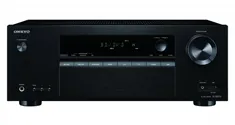
Onkyo Creates First Music Service to Utilize Dolby TrueHD 5.1

Fri May 11, 2012 at 12:00 PM ET
Tags: Streaming, Dolby, Onkyo, e-onkyo (all tags)

It's available now in Japan, and coming to the rest of the world this fall.

Streaming music has improved a great deal since it first came onto the scene, and Onkyo is taking it a step further with the e-onkyo music distribution service. It's the first service available that gives you lossless 5.1 channel Dolby TrueHD.

The selection is incredibly limited at the moment, with just 100 albums available. Your listening options are limited too – you'll need a compatible Onkyo receiver, like the upcoming TX-NR818 and TX-NR717.

"Consumer appreciation of the highest-quality audio playback experiences is increasing," says Dolby Senior VP Michael Bergeron. "Onkyo's e-music service with Dolby TrueHD gives the listener access to 100 percent studio master-quality audio, delivering unparalleled detail and immersion, and reproducing every nuance of the recording or concert event."

Source: Engadget

See what people are saying about this story in our forums area, or check out other recent discussions.


MORE HIGH-DEF DISC NEWS TAGGED "DOLBY":

» High-Def Digest home page


Like Us!