HIGH-DEF DISC NEWS TAGGED "CLINT EASTWOOD"Receive High-Def Disc News via RSS

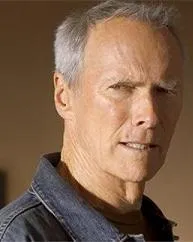
HDD Study Hall: Clint Eastwood

Thu Nov 10, 2011 at 03:45 PM ET
Tags: Clint Eastwood, Luke Hickman, HDD Study Hall, Fun Stuff (all tags)

by Luke Hickman

Placing both the known and the secret lives of J. Edgar Hoover on the big screen, opening nationwide tomorrow, is Clint Eastwood's new dramatic bio-pic 'J. Edgar.' With Eastwood seemingly always in the running for Academy Awards, I figured he would be a worthy topic for Study Hall, only this time we'll review his past in a different format. Instead of looking at a few of Eastwood's classic titles, we're going to take a look at the many filmmaking roles he's successfully filled over his 56-year career.

Acting

Eastwood started in the business in front of the camera. Until the last decade, he was known first and foremost as an actor. His first few years in Hollywood were spent playing small roles in television shows and uncredited bit parts in small movies - mostly war flicks and, as you know, westerns. It didn't take long for him to find his niche. After four short years in the business, Eastwood landed the role of Rowdy Yates in the popular television series 'Rawhide,' and the rest is history.

After 217 episodes of 'Rawhide,' Eastwood made his way back onto the silver screen in Sergio Leone's spaghetti western 'A Fistful of Dollars.' One year later, he appeared in Leone's 'For a Few Dollars More' and just one year after that, they again reteamed for 'The Good, the Bad and the Ugly.' Arguably, this trio of films, known as 'The Man with No Name Trilogy' is the most well-known credit on Eastwood's resume. Personally, 'The Good, the Bad and the Ugly' is not only my favorite western but my favorite of the films in which Eastwood stars.

Over the 14 years following his work with Leone, Eastwood appeared in at least one film a year - westerns, war films, and then crime dramas. In 1971, Eastwood kicked off a the five-film 'Dirty Harry' series, where he played a San Francisco cop who didn't play by the rules. Unlike 'The Man with No Name Trilogy,' Eastwood spread his Dirty Harry roles over 17 years, filling the gaps with notable titles 'The Outlaw Josey Wales,' 'Every Which Way But Loose' and 'Escape from Alcatraz.' Alng the way, he's received two nominations for acting in 'Million Dollar Baby' and 'Unforgiven,' but hasn't won.

The older he's gotten, the less films he's acted in. Eastwood's current focus is placed on producing and directing.

Directing

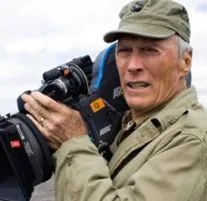
Eastwood began directing while shooting his 1971 film 'The Beguiled.' When not in front of the camera, he was behind a camera of his own shooting a making-of documentary about the film's director Don Siegel short called 'The Beguiled: The Storyteller.' He must have caught the directing bug because he stuck to it. His feature directorial debut was 'Play Misty for Me,' after which he directed some of his own westerns and war flicks, as well as one 'Dirty Harry' film.

Along the way, he would occasionally direct a film that he would not act in, but after 2004's 'Million Dollar Baby,' he's only returned for one film - 2008's 'Gran Torino.'

Eastwood won his first Academy Award for directing 'Unforgiven.' In 2005, he won another Academy Award for directing 'Million Dollar Baby.' He's also have had two other Academy Award directing nominations for 2003's 'Mystic River' and 2006's 'Letters From Iwo Jima.' Along the way he has directed ten actors to Oscar-nominated performances.

Producing

Since he started directing, Eastwood has produced nearly all of his own films, as well as a few musical and historical documentaries. If you see the Eastwood-produced 'You Must Rememeber This: The Warner Bros. Story' on your TV's listings, be sure to set your DVR to record this fascinating tale of the studio's formation, trials and successes from creation to modern releases.

As a producer, Eastwood has won two Best Picture Academy Awards for 'Unforgiven' and 'Million Dollar Baby,' as well as two additional nominations for 'Mystic River' and 'Letters From Iwo Jima.'

Composing

How many other director/producer/actors out there have also composed their own music? My guess is very few.

To date, Eastwood has composed six big screen scores. 'Mystic River,' 'Million Dollar Baby,' 'Flags of our Fathers,' 'Changeling' and 'Hereafter' were all his own films, but 2007's 'Grace is Gone' is the surprise title under his composing credits. Eastwood has no apparent connection to the filmmakers nor the studio that distributed the indie film, yet he composed the simple score. Perhaps he was drawn to the intimate script about a father (John Cusack - who appeared in the Eastwood directed 'Midnight in the Garden of Good and Evil') trying to cope with the death of his wife serving in the Middle East while looking for the right moment to break the news to their daughters.

Conclusion

Even though I personally view the Eastwood-directed flicks as hit-and-miss, there's no arguing that he's a filmmaking legend. The guy has proven himself in numerous roles within the Hollywood system.

See what people are saying about this story in our forums area, or check out other recent discussions.


Is Clint Eastwood Overrated as a Director?

Tue Mar 15, 2011 at 02:50 PM ET
Tags: Clint Eastwood, Aaron Peck, Fun Stuff (all tags)

by Aaron Peck

When 'Hereafter' hit theaters, I remember reading a post on Jim Emerson's Scanners blog (Emerson manages Roger Ebert's website), where he asked if one could truly pick a Clint Eastwood film out of a lineup. He acknowledged that he had no idea if Eastwood really had a significant visual or emotional style to his movies like say, Aronofsky or Lynch have. He went on to claim that certain filmmakers he knows consider Eastwood an amazing project manager, rather than an accomplished director. This got me to wondering, is Clint Eastwood overrated as a director?

Speaking for myself, I've had an affinity for Eastwood movies ever since 'Unforgiven'. When Eastwood’s name is attached, some sort of fanboy-itis inside of me takes over, like a 'Star Wars' nerd clamoring for any information from George Lucas. I don’t really know why that happens. Over the years, I’ve found that films directed by Eastwood move with a purpose and feeling that is hard to find in other movies. Even a mechanical plot like 'Absolute Power' feels slightly different under Eastwood’s directorial hand.

Truthfully though, I can’t think of anything visually that separates Eastwood from the pack. I can, however, think of the feeling I get when I watch something like 'Million Dollar Baby' or 'Changeling'. Eastwood is a lingerer. The camera stays with the characters, observing them, showing us their surroundings and how they interact with them. When so many directors out there are chopping their movies up into a blinding series of one and a half second shots, Eastwood lets the story play out methodically, often without cutting away. Remember in 'Absolute Power' when he ascends the stairs in the mansion as the camera follows him further and further up, never cutting away? Or as he watches Gene Hackman attack the young woman, unable to do anything to stop it? Those scenes are almost uncomfortably drawn out, clearly giving you the feeling that this is the work of a different kind of director.

In the 'Changeling,' Eastwood crafted one of the finest scenes I’ve witnessed in movies. Hyperbole, I know, but to this day I can’t get that moment out of my head. A child is discussing the horrors he endured and observed at a desolate farm where the man of the place was kidnapping local kids. The scene is terrifyingly real. Again, Eastwood lingers on the characters, letting us in on their fears, showing us the horror on their faces. Think back to 'Mystic River,' the same thing. The emotion seeps through the film. To me, that’s masterful direction and filmmaking. 'Hereafter' didn’t resonate all that well with some people. Most of the detractors claimed the film was too long and drawn-out. I would submit, however, that that is Eastwood’s signature style. He’s interested in his characters and their reactions, not just driving the plot along. He might not have a visual style that jumps out at you immediately, but I would argue that it is certainly there, and that what separates him from the pack is his attention to detail, the natural way his camera moves and observes, and the way he lets you truly peer into the shots to participate in the onscreen world he's created.

So, is Eastwood overrated as a director? I don’t think so. Not at all. By his name alone, he’s able to produce and direct films that would otherwise go unmade. You think anyone else out there could’ve gotten a movie like 'Hereafter' produced for a wide release, and gotten Matt Damon to star in it? Not a chance. Even though Eastwood doesn’t pull viewers in with some sort of showstopping visual style, he certainly imbues his films with real substance. Oh, and he’s a dynamite composer to boot.

See what people are saying about this story in our forums area, or check out other recent discussions.


Scorsese Wants You! (To Help Him Save Films) & Studios Finally Embrace Classic Blu-ray Titles

Thu Nov 11, 2010 at 03:05 PM ET
Tags: Martin Scorsese, Clint Eastwood, Industry Trends, Film Preservation, Blu-Con 2010, Michael S. Palmer (all tags)

by Michael S. Palmer

The Film Foundation

Just when I succumbed to the depressing notion of no Uncle Marty at last week's Blu-Con 2010, the Digital Entertainment Group (DEG) fired up a special announcement from filmmakers Martin Scorsese and Clint Eastwood.

As many of you well know, Scorsese established The Film Foundation in 1990 to protect and preserve motion picture history by saving and restoring projects slowing dying in film vaults around the world. They have saved over 500 motion pictures of all genres over the last twenty years, but there's still so much work to be done. To put it in perspective, half of all films made before 1950 have been lost forever. And currently, 100 million feet of film are in dire need of repair and restoration.


In a touching trailer which will soon be on millions of Blu-rays and DVDs, Scorsese and Eastwood show some marvelous restorations including their acclaimed work on 'The Red Shoes' and explain that films aren't meant to be locked away. They have to be presented and shown on a big screen.

For anyone wishing to donate, it's easy and can be done one frame at a time or in a more traditional manner.

Film Classics on Blu-ray


With the Please Give portion of Blu-Con out of the way, we settled into another panel featuring Jeff Baker from Warner Home Video, Rita Belda from Sony, Bob Buschi from Paramount, and Dave Shaw from Fox Home Entertainment. Moderated by the Digital Bits' Bill hunt, this panel was entiteld "Film Classics: New Opportunities for Blu-ray Catalogue." We watched clips from 'African Queen', 'The Bridge on the River Kwai', 'Sound of Music', and 'The Exorcist'. Sadly, they didn't look very good, but it wasn't Blu-ray's or their respective studios' faults. Some genius left blue theatrical lights on and pointed at the screens, which washed everything out and messed up the colors. Still, the Blu-rays could have passed for 35mm.

We've already mentioned in our Blu-Con coverage that there are so many great titles still not out on Blu-ray. For example, Warner Home Video has 6,700 titles in its library, but only ever put 2,300 on DVD. Now that Blu-ray is near Mainstream, the catalogue titles are seeing more profitable releases (Warners in particular has done a great job on titles like 'The Wizard of Oz' and 'North by Northwest').

But as opposed to past DVD catalogue releases, they can't just release the same old double dip. Especially in these economic times, studios must add value and content to the experience. In the case of 'The Bridge on the River Kwai', Sony had to figure out how to re-master source materials for a film that is widely known to have had camera problems during production. With 'The Exorcist', Warners found 37-year-old silent behind the scenes footage that had been film by the cinematographer. It was used to create brand new featurettes. Paramount re-mastered 'The Godfather' with Francis Ford Coppola and then not only marketed the film to cinephiles, but to new fans (apparently, Jon Montegne made a commercial calling it "the Italian Star Wars.") as well.

But what goes into choosing which titles are released when?

Warners said they evaluate titles on commercial viability, and then look at the film elements. Upwards of a year and half and a couple million dollars goes into restoring films, and that extended timeline allows them to plan a marketing strategy. For example, 'Blade Runner' didn't have huge box office numbers, but in the beginning of the Blu-ray format, sci-fi titles were selling well and 'Blade Runner' just so happens to be one of the most revered cult sci-fi classics of all time. Warners then started a 2 year process of restoration, working directly with director Ridley Scott. Fox said selecting a film is commercial, of course, but sometimes it's about artistic and cultural legacy. All titles won't break even on day one.

Why are they doing new High-Def master when some of them were just done a few years ago?

High-def transfers from even a few years ago aren't good enough for Blu-ray. Sony's been mastering in HD for 15 years, but all HD doesn't necessarily reflect today's standards. To do a really great, modern restoration, all the studios try to track down the original elements (in the case of 'Kwai', the original negative) and then scan them at the best resolution and quality available (most of this means a 4K scan, but of course we've seen 8K as well). Doing a high resolution scan avoids challenges with grain, which impacted the way masters looked ten to fifteen years ago (can anyone say so long noise reduction and edge enhancement?). Grain is minimized -- authentically, no funny stuff here -- the closer the digital scan's native resolution is to the film resolution, which varies by stock.

The 'African Queen' restoration proved to be a logistical challenge. The original source materials (a three strip Technicolor film) were in producer John Woolf's possession in London. But Woolf was so nervous of the film becoming damaged that he would only lend out one real at a time. So Paramount borrowed all 13 reels one at a time, scanned them at Kodak in London, and sent the scans back to Los Angeles.

But if the goal is to restore and preserve filmmaker intent, how then do they restore a film after everyone involved with the look of a film has passed away?

If the filmmakers are no longer around, studios search for available answer prints which would have been color timed, or they look for historical documentations. The restoration technicians really have to know film (eras, color qualities, etc). In terms of 'African Queen', ten years ago, Paramount screened the film for the cinematographer and recorded a commentary of his reactions (how it looked vs. how it should have looked). When Paramount was prepping this Blu-ray / restoration, the cinematographer and everyone else involved with the film had passed away, but the studio still had the commentary.

The good news for film fans is that the studios are no longer seeing Blu-ray as simply a format for modern action, horror, and sci-fi films. And because they're smelling a profit, we should be seeing a lot more classic titles that will look exceptional in 1080p -- not only the most filmic they've ever been in the home, but in some cases, they will look even better than in their original releases.

Up next, for better or worse, the studios are hoping to get a lot more films out on 3D, but it wasn't clear if this means a lot of conversions (it's an expensive process at $4-6Million per film) or simply releasing more recent 3D films on 3D Blu-ray.

What do you think, dear readers? What classics and catalogue titles do you most want to see on Blu-ray? What movies should be converted to 3D, and which ones shouldn't? Hit up the forums and share your opinions.

To check out the Film Classics panel for yourself, the folks over at Home Theater Forum taped the whole thing and posted it online:

See what people are saying about this story in our forums area, or check out other recent discussions.


» High-Def Digest home page


Like Us!